Introduction
The Mitered Langur (Presbytis mitrata) is a fascinating primate species that belongs to the family Cercopithecidae. Known for their agile movements and intriguing social structures, these langurs are an integral part of the ecosystems they inhabit. This article aims to provide an in-depth understanding of the Mitered Langur, covering aspects such as their physical characteristics, habitat, behavior, and conservation status.
Physical Description
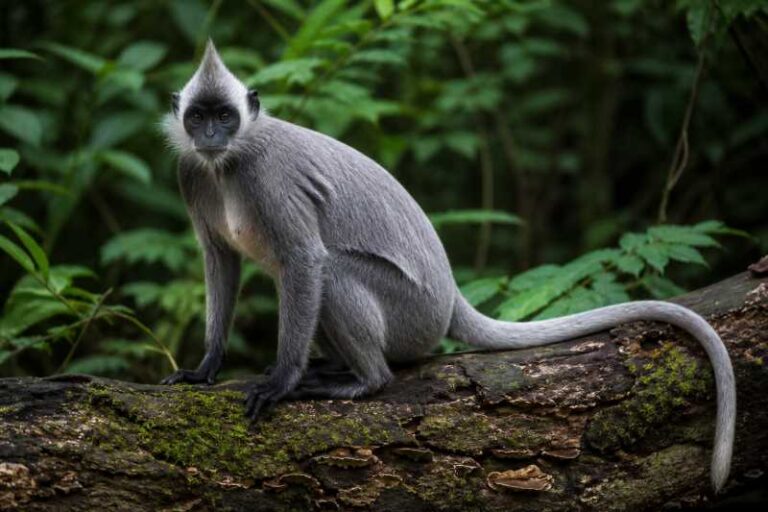
Mitered Langurs are medium-sized primates with a distinct appearance. They exhibit a predominantly grey coat with lighter underparts, while their face is encased by a striking white fringe that resembles a miter, hence their name. Adult Mitered Langurs typically weigh between 5 to 8 kilograms and measure around 40 to 60 centimeters in body length, excluding their long, balancing tails which can add another 50 to 85 centimeters.
Their expressive eyes and agile limbs make them well-adapted to their arboreal lifestyle. Males and females are similar in appearance, although males tend to be slightly larger. The species exhibits sexual dimorphism in terms of body size but not coloration.
Range and Habitat
Mitered Langurs are primarily found in Southeast Asia, with their range extending across parts of Indonesia, Malaysia, and possibly into Thailand. They inhabit tropical rainforests and are often found in both primary and secondary forests, as well as in mangrove forests along coastal regions.
These langurs are highly arboreal, spending the majority of their time in the forest canopy. They prefer dense foliage which provides ample food sources and protection from predators. Despite habitat fragmentation, they have shown some adaptability to disturbed habitats, although this poses additional risks to their survival.
Behavior and Diet
Mitered Langurs are diurnal, meaning they are active during the day and rest at night. They are social animals, typically living in groups of 10 to 20 individuals. These groups are usually composed of one dominant male, several females, and their offspring. Social interactions within the group are crucial, and grooming plays an important role in maintaining social bonds.
Their diet is primarily frugivorous, consisting mainly of fruits, although they are also known to consume leaves, flowers, and seeds. This varied diet allows them to adapt to seasonal changes in food availability. Their role as seed dispersers is vital for forest regeneration.
Identification Tips (field recognition cues)
Identifying Mitered Langurs in the wild can be facilitated by several key features:
- Facial Markings: Look for the distinctive white "miter" fringe around the face.
- Tail: Their long tails are often held high and are a distinguishing feature when spotting them in the canopy.
- Behavior: Observe their agile movements and social behavior. They are often seen in groups, foraging or resting together.
- Calls: Mitered Langurs are vocal primates. Listen for their distinctive calls, which are used for communication within their groups.
Conservation Status (with threats and protections)
The conservation status of the Mitered Langur is currently listed as Near Threatened according to the IUCN Red List. The primary threats to their survival include habitat loss due to deforestation, agricultural expansion, and urban development. Illegal hunting and the pet trade also pose significant risks.
Conservation efforts are underway to protect their habitat and mitigate these threats. Protected areas and national parks within their range offer some refuge, but enforcement of anti-poaching laws and habitat restoration efforts are crucial for their continued survival. Encouraging local communities to participate in conservation and sustainable practices is also essential.
Frequently Asked Questions
1. What is the primary diet of the Mitered Langur?
Mitered Langurs primarily feed on fruits, but their diet also includes leaves, flowers, and seeds. They are adaptable foragers, which helps them survive in varying environmental conditions.
2. Where can Mitered Langurs be found in the wild?
They are native to Southeast Asia, with populations primarily in Indonesia, Malaysia, and potentially Thailand, inhabiting tropical rainforests and mangrove forests.
3. How do Mitered Langurs contribute to their ecosystem?
As frugivores, Mitered Langurs play a crucial role in seed dispersal, aiding in forest regeneration and maintaining biodiversity within their habitat.
4. What are the main threats to the Mitered Langur?
The main threats include habitat destruction due to logging and agricultural expansion, as well as hunting and the illegal pet trade.
5. Are Mitered Langurs social animals?
Yes, they are highly social and live in groups that typically consist of one dominant male, several females, and their offspring. Social interactions are vital for group cohesion.
Related posts