Introduction
The Tsingy Forest Rail, scientifically known as Mentocrex beankaensis, is a remarkable bird species endemic to Madagascar. Its unique habitat preferences, elusive behavior, and distinct ecological niche make it a subject of fascination among ornithologists and conservationists. Discovered relatively recently, this species continues to intrigue researchers with its adaptations to the challenging terrains of the Tsingy de Bemaraha National Park, a UNESCO World Heritage Site.
Habitat and Distribution
The Tsingy Forest Rail inhabits the limestone karst formations of the Tsingy de Bemaraha, a region characterized by its dramatic limestone pinnacles, deep gorges, and dense deciduous forests. This habitat is not only visually stunning but also ecologically significant, providing a sanctuary for numerous endemic species. The Tsingy Forest Rail is primarily found in the understory of these deciduous forests, where it forages for invertebrates and other small prey.
Madagascar’s unique biodiversity is largely attributed to its geographical isolation. The island’s flora and fauna have evolved independently, leading to high levels of endemism. The Tsingy Forest Rail is a testament to this evolutionary process, showcasing adaptations that allow it to thrive in its specific habitat.
Physical Characteristics
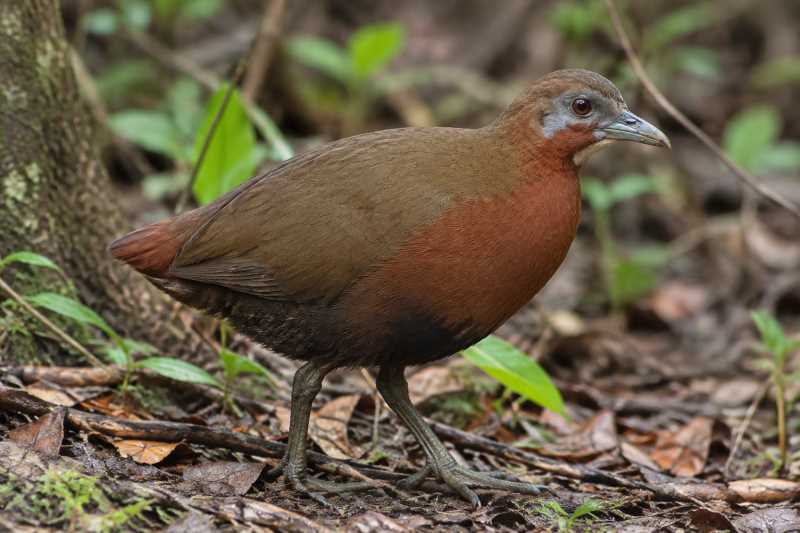
The Tsingy Forest Rail is a medium-sized bird, measuring approximately 30 cm in length. It exhibits a striking plumage with a combination of chestnut, black, and white markings that provide excellent camouflage against the forest floor. Its long legs and toes are adapted for navigating the rough terrain of the Tsingy formations, allowing it to move swiftly through the undergrowth.
The bird’s stout bill and strong legs are indicative of its ground-dwelling habits. Unlike many of its avian counterparts, the Tsingy Forest Rail is not a strong flyer, relying instead on its agility and speed to evade predators and forage effectively.
Behavior and Diet
The Tsingy Forest Rail is a shy and elusive bird, often remaining hidden within the dense foliage of its habitat. It is primarily terrestrial, spending most of its time on the ground in search of food. Its diet consists mainly of invertebrates such as insects and small arthropods, which it gleans from the leaf litter and undergrowth.
This species is known for its unique foraging behavior, often seen probing the soil and turning over leaf litter with its bill to uncover hidden prey. The Tsingy Forest Rail is also known to consume small amphibians and reptiles, showcasing its adaptability in a resource-scarce environment.
Reproduction and Life Cycle
Little is known about the reproductive habits of the Tsingy Forest Rail due to its elusive nature. However, like many rail species, it is presumed to be monogamous, forming pairs during the breeding season. Nests are likely constructed on the ground, concealed among dense vegetation to protect against predators.
The breeding season is speculated to coincide with the wet season, when food availability is at its peak. Clutch size, incubation period, and fledgling success rates remain subjects of ongoing research, as scientists strive to uncover more about this enigmatic bird.
Conservation Status
The Tsingy Forest Rail is currently classified as Vulnerable on the IUCN Red List, primarily due to habitat loss and degradation. The Tsingy de Bemaraha National Park, while protected, faces threats from illegal logging, agriculture, and mining activities. These human-induced pressures contribute to habitat fragmentation, posing significant risks to the survival of this species.
Conservation efforts are underway to protect the Tsingy Forest Rail and its habitat. Initiatives include habitat restoration, anti-poaching patrols, and community-based conservation programs aimed at promoting sustainable land use practices.
The Role of Tsingy Forest Rail in Ecosystem
As a ground-dwelling bird, the Tsingy Forest Rail plays a crucial role in the ecosystem of the Tsingy de Bemaraha. Its foraging activities help control insect populations, contributing to the ecological balance. Additionally, it serves as a prey species for larger predators, forming an integral part of the food web.
The presence of the Tsingy Forest Rail is also indicative of the health of its habitat. Its reliance on intact forest ecosystems underscores the importance of preserving these environments not only for the rail but also for the myriad of other species that share its home.
Research and Future Directions
Ongoing research is essential to further our understanding of the Tsingy Forest Rail. Studies focusing on its ecology, behavior, and population dynamics are critical for informing conservation strategies. Technological advancements, such as remote sensing and bioacoustic monitoring, offer new avenues for studying this elusive species in its natural habitat.
Collaborative efforts between researchers, conservation organizations, and local communities are vital for the long-term preservation of the Tsingy Forest Rail. By fostering a sense of stewardship and promoting awareness, these initiatives can help ensure the survival of this unique bird and the preservation of its remarkable habitat.
Conclusion
The Tsingy Forest Rail, with its distinctive adaptations and enigmatic presence, embodies the unique biodiversity of Madagascar. As a species intricately tied to its environment, it highlights the delicate balance that exists within these ecosystems. Protecting the Tsingy Forest Rail requires a concerted effort to address the threats facing its habitat and to promote sustainable practices that benefit both wildlife and local communities.
In the face of mounting environmental challenges, the Tsingy Forest Rail serves as a compelling symbol of the urgent need for conservation action. By safeguarding this species, we not only preserve a vital component of Madagascar’s natural heritage but also contribute to the broader goal of preserving global biodiversity.
References
- BirdLife International. (2023). Mentocrex beankaensis species factsheet. Retrieved from BirdLife International
- IUCN Red List of Threatened Species. (2023). Mentocrex beankaensis. Retrieved from IUCN Red List
- Goodman, S. M., & Hawkins, A. F. A. (2021). The Birds of Madagascar: A Summary of Recent Advances. In The Natural History of Madagascar. University of Chicago Press.
- Raherilalao, M. J., & Goodman, S. M. (2011). Malagasy Birds: Their Habitats, Distribution, and Conservation. Vahatra.
Acknowledgments
Special thanks to the conservationists and researchers dedicated to the study and protection of the Tsingy Forest Rail and the unique ecosystems of Madagascar.
Related posts