Introduction
The Arabian Barbastelle (Barbastella leucomelas) is a fascinating species of bat that has captured the interest of mammalogists and wildlife enthusiasts alike. Known for its elusive nature and distinctive appearance, this bat is an integral part of the Arabian Peninsula’s unique ecosystem. Despite its small size, the Arabian Barbastelle plays a crucial role in maintaining the balance of its habitat by controlling insect populations. This article delves into the various aspects of the Arabian Barbastelle’s life, from its physical characteristics to its behavior and conservation status.
Physical Description
The Arabian Barbastelle is a member of the family Vespertilionidae, which is characterized by its broad distribution and significant diversity. This species exhibits a relatively small size, with a forearm length ranging from 35 to 45 millimeters. The wingspan of the Arabian Barbastelle can reach up to 25 centimeters, allowing it to maneuver with remarkable agility through its environment.
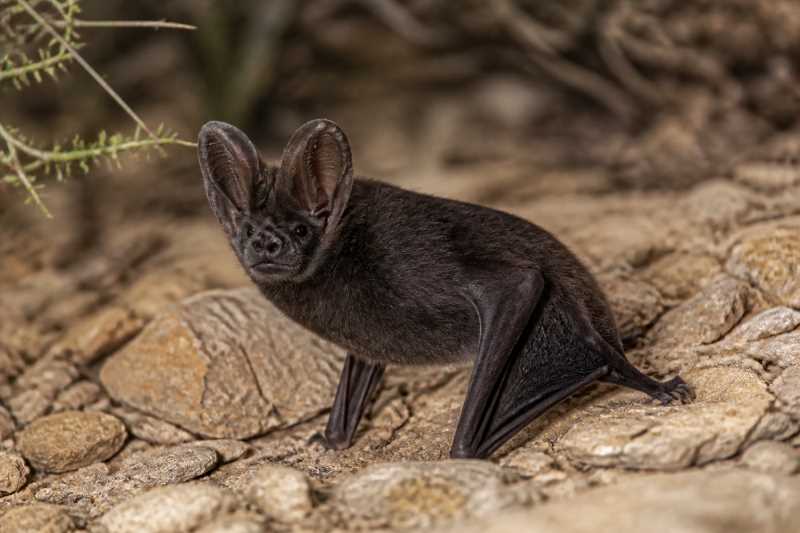
One of the most distinctive features of the Arabian Barbastelle is its facial appearance. The bat’s face is adorned with large, forward-facing ears that are connected by a skin fold across the forehead, giving it a unique appearance among bats. The ears are typically dark brown or black, matching the color of the bat’s fur, which is predominantly dark with a subtle, lighter underbelly. This coloration provides the Arabian Barbastelle with effective camouflage in its natural habitat.
The bat’s nose is slightly upturned, and its eyes are small and relatively inconspicuous, reflecting its nocturnal lifestyle. The Arabian Barbastelle’s dental formula is adapted to its diet, featuring sharp teeth designed for catching and consuming insects.
Range and Habitat
The Arabian Barbastelle is native to parts of the Arabian Peninsula, including regions within Saudi Arabia, Oman, and Yemen. It is typically found in arid and semi-arid environments, where it has adapted to survive in harsh conditions. This species favors rocky landscapes, caves, and crevices, which provide essential roosting sites and protection from predators.
In addition to natural habitats, the Arabian Barbastelle can sometimes be found in man-made structures such as abandoned buildings and ruins, where it seeks refuge during the day. The availability of suitable roosting and foraging sites significantly influences the distribution of this species within its range.
Behavior and Diet
The Arabian Barbastelle is primarily nocturnal, emerging from its roosts at dusk to embark on nightly foraging expeditions. Its diet consists mainly of insects, including moths, beetles, and other small arthropods. The bat employs echolocation to detect and capture its prey, using high-frequency calls that are beyond the range of human hearing.
This species is known for its agile flight, which allows it to navigate through narrow spaces and dense vegetation with ease. The Arabian Barbastelle’s echolocation calls are adapted to its specific hunting style, enabling it to detect prey in various environments.
Socially, the Arabian Barbastelle is thought to be relatively solitary, although some communal roosting has been observed. During the breeding season, males may exhibit territorial behavior to attract females. The details of its reproductive cycle remain poorly understood, highlighting the need for further research.
Identification Tips (Field Recognition Cues)
Identifying the Arabian Barbastelle in the field requires keen observation and an understanding of its distinguishing characteristics:
- Ear Shape and Size: Look for the bat’s large, distinctive ears that are connected by a membrane across the forehead.
- Fur Coloration: Note the dark brown or black coloration with a slightly lighter underbelly.
- Flight Pattern: Observe the bat’s agile and erratic flight, typical of insectivorous species.
- Echolocation Calls: Use specialized equipment to detect the high-frequency echolocation calls unique to the Arabian Barbastelle.
Conservation Status (with Threats and Protections)
The Arabian Barbastelle is currently listed as Near Threatened on the IUCN Red List. The primary threats to this species include habitat destruction and degradation, driven by urbanization and agricultural expansion. The loss of natural roosting sites and foraging areas poses a significant risk to the bat’s survival.
Conservation efforts are underway to protect the Arabian Barbastelle and its habitat. These include the establishment of protected areas, habitat restoration projects, and public awareness campaigns to highlight the ecological importance of bats.
Efforts to monitor populations and study the species’ ecology are crucial for developing effective conservation strategies. Researchers emphasize the need for international collaboration to safeguard this and other bat species across the Arabian Peninsula.
Frequently Asked Questions
What is the primary diet of the Arabian Barbastelle?
The Arabian Barbastelle primarily feeds on insects, including moths, beetles, and other small arthropods. Its echolocation abilities allow it to detect and capture prey effectively during its nocturnal foraging activities.
Where can the Arabian Barbastelle be found?
This species is native to the Arabian Peninsula, particularly in regions of Saudi Arabia, Oman, and Yemen. It inhabits arid and semi-arid environments, favoring rocky landscapes, caves, and crevices.
How does the Arabian Barbastelle use echolocation?
The Arabian Barbastelle uses echolocation to navigate and hunt for prey. It emits high-frequency calls that bounce off objects in the environment, allowing the bat to detect and locate insects even in complete darkness.
What are the main threats to the Arabian Barbastelle?
The primary threats to this species include habitat destruction due to urbanization and agricultural development. The loss of natural roosting and foraging sites significantly impacts the Arabian Barbastelle’s survival.
How can we help conserve the Arabian Barbastelle?
Conservation efforts include protecting habitats, establishing protected areas, and raising public awareness about the importance of bats in ecosystems. Supporting research and monitoring programs also plays a crucial role in the species’ conservation.
Related posts