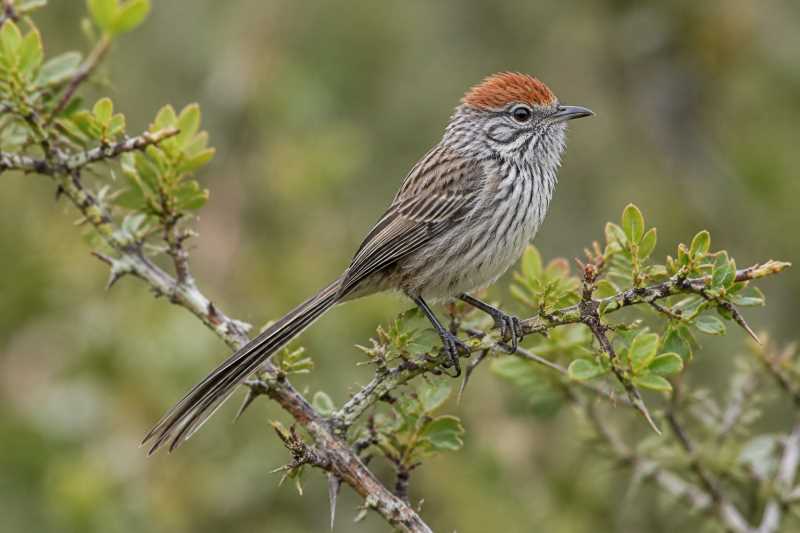
The Rusty-crowned Tit-Spinetail: A Unique Avian Marvel
The Rusty-crowned Tit-Spinetail (Leptasthenura pileata) is a captivating bird species that inhabits the diverse and ecologically rich regions of South America. This small passerine bird, belonging to the family Furnariidae, is renowned for its distinctive rusty-colored crown and remarkable adaptability to various habitats. As we delve into the fascinating world of this avian species, we uncover its unique characteristics, habitat preferences, behavioral patterns, and conservation status.
Taxonomy and Physical Description
The Rusty-crowned Tit-Spinetail is part of the Furnariidae family, a group known for their diverse morphologies and ecological niches. First described by the German ornithologist Jean Cabanis in 1873, the species’ scientific name, Leptasthenura pileata, reflects its slender tail (‘leptos’ meaning slender, and ‘oura’ meaning tail) and the distinctive rusty crown (‘pileata’ meaning capped or crowned).
This bird is relatively small, measuring about 14 to 16 centimeters in length, with a wingspan of approximately 20 centimeters. Its most striking feature is the rusty or chestnut-colored crown, which contrasts beautifully with its otherwise subdued plumage. The upper parts of the body are generally brownish-grey, while the underparts are lighter, often with a whitish or pale buff hue. The long, graduated tail, typical of spinetail species, adds to its elegance, aiding in agile flight through dense foliage.
Habitat and Distribution
The Rusty-crowned Tit-Spinetail is primarily found in the Andean regions, spanning across countries such as Argentina, Bolivia, Chile, and Peru. This bird is highly adaptable, inhabiting a range of ecosystems from subtropical and tropical dry forests to montane scrublands and high-altitude grasslands. It is commonly seen at elevations between 1,500 to 4,000 meters above sea level.
The adaptability of this species to various habitats is remarkable. In arid and semi-arid environments, the Rusty-crowned Tit-Spinetail often takes refuge in dense thickets and bushes, while in temperate regions, it is more likely to be found in open woodlands and forest edges. Such versatility in habitat selection is crucial for its survival, especially in the face of environmental changes and habitat destruction.
Behavior and Ecology
A highly active and social bird, the Rusty-crowned Tit-Spinetail is often observed in small flocks, particularly during the non-breeding season. These flocks may include mixed-species groups, showcasing the bird’s adaptability and cooperative behavior. Foraging typically occurs in the lower to mid-levels of the canopy, where it feeds on a variety of insects, spiders, and other small arthropods. The bird’s foraging technique involves agile acrobatics as it deftly maneuvers through branches and foliage to capture prey.
Breeding occurs during the austral spring and summer, from September to December. The Rusty-crowned Tit-Spinetail is known for its intricate nest-building skills. The nests are typically constructed in cavities or crevices in trees, rock faces, or even man-made structures. These nests are carefully lined with soft materials such as feathers, plant fibers, and moss to ensure a comfortable environment for the eggs and chicks.
The species lays a clutch of 2 to 4 eggs, which are incubated by both parents. After hatching, the chicks are fed a diet rich in insects and other invertebrates, allowing for rapid growth and development. Parental care extends beyond fledging, with young birds often remaining in family groups for several weeks post-independence.
Conservation Status and Threats
According to the International Union for Conservation of Nature (IUCN), the Rusty-crowned Tit-Spinetail is currently classified as "Least Concern." Despite this relatively stable status, the species faces several threats that could impact its populations in the future. Habitat loss due to agricultural expansion, deforestation, and urbanization poses significant risks, particularly in regions where land-use changes are rapid and unchecked.
Climate change also presents a potential threat, as alterations in temperature and precipitation patterns can affect the availability of suitable habitats and food resources. Conservation efforts, therefore, focus on habitat preservation and restoration, as well as monitoring population trends to ensure the species’ continued survival.
Conclusion
The Rusty-crowned Tit-Spinetail is a testament to the incredible diversity and adaptability of avian species in South America. Its distinctive appearance and versatile ecological preferences make it a fascinating subject of study for ornithologists and bird enthusiasts alike. By understanding and preserving the natural habitats of this remarkable bird, we not only ensure its survival but also contribute to the broader conservation of biodiversity in the region.
The Rusty-crowned Tit-Spinetail, with its vibrant crown and dynamic lifestyle, continues to captivate those who have the privilege of observing it in the wild. As environmental stewards, it is our responsibility to protect such unique species and the ecosystems they inhabit, ensuring that future generations can also appreciate their beauty and ecological significance.
Related posts