Amazonian Sac-winged Bat (Saccopteryx gymnura): A Comprehensive Guide
Introduction
The Amazonian Sac-winged Bat (Saccopteryx gymnura) is a fascinating species that inhabits the lush rainforests of the Amazon Basin. Known for their distinctive wing sacs and social behavior, these bats play a crucial role in the ecosystem by contributing to insect population control and pollination. This article delves into the intricate details of the Amazonian Sac-winged Bat, exploring its physical characteristics, habitat, behavior, and conservation status.
Physical Description
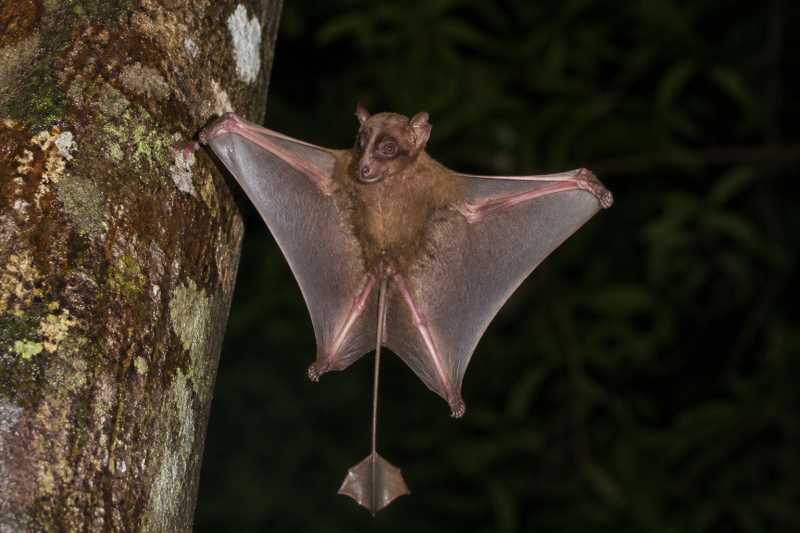
The Amazonian Sac-winged Bat is a small, agile bat characterized by its unique wing sacs, which are used for scent-marking and communication. Adults typically have a wingspan of approximately 28 to 32 centimeters and weigh between 4 to 7 grams. Their fur is generally dark brown or black, providing camouflage against the rainforest canopy. The wings are long and slender, adapted for maneuverability in dense foliage. Notably, males possess glandular sacs on their wings, which are more pronounced during the breeding season.
Range and Habitat
Saccopteryx gymnura is primarily found in the Amazon Basin, spanning across several countries including Brazil, Peru, Colombia, and Ecuador. These bats thrive in tropical rainforests, where they roost in small colonies under leaf litter, tree bark, or within hollow logs. Their habitat selection is often influenced by the availability of suitable roosting sites and abundant insect prey. These bats are also known to adapt to secondary forests and fragmented habitats, although their presence is more stable in undisturbed environments.
Behavior and Diet
Amazonian Sac-winged Bats are nocturnal creatures, emerging at dusk to forage for food. Their diet consists mainly of small insects such as moths, beetles, and mosquitoes, which they catch mid-flight using echolocation. These bats are highly social, often forming small colonies that exhibit complex social structures. Within these groups, males establish territories and use their wing sacs to emit pheromones, which play a pivotal role in mating and territory defense. The species is also known for its unique vocalizations, which facilitate communication and coordination within the colony.
Identification Tips (Field Recognition Cues)
Identifying the Amazonian Sac-winged Bat in the field requires keen observation skills. Key identification features include:
- Size and Shape: Small body size with long, slender wings.
- Coloration: Dark brown to black fur that blends with the canopy.
- Wing Sacs: Noticeable glandular sacs on the wings, particularly in males.
- Behavior: Observing their flight patterns at dusk, which are agile and erratic due to their insectivorous diet.
- Echolocation: Listening for their high-pitched calls, which can be detected with bat detectors.
Conservation Status (with Threats and Protections)
The Amazonian Sac-winged Bat is currently listed as Least Concern on the IUCN Red List, but it faces several threats that could impact its population stability. Habitat destruction due to logging, agriculture, and urban expansion poses a significant risk, as does climate change, which can alter the delicate balance of their rainforest ecosystem. Conservation efforts are focused on preserving natural habitats and establishing protected areas within the Amazon Basin. Research and monitoring programs are crucial to understanding the population dynamics and ecological roles of these bats, ensuring their continued survival in the wild.
Frequently Asked Questions
What is the primary diet of the Amazonian Sac-winged Bat?
The Amazonian Sac-winged Bat primarily feeds on small insects such as moths, beetles, and mosquitoes. These bats use echolocation to hunt and capture their prey mid-flight, contributing to insect population control in their rainforest habitat.
How do Amazonian Sac-winged Bats communicate?
These bats communicate using a combination of vocalizations and scent-marking. Males have specialized wing sacs that produce pheromones, which are used to attract mates and establish territories. Their vocalizations, which include high-pitched calls, are essential for maintaining social structures within colonies.
What threats do Amazonian Sac-winged Bats face?
The primary threats to Amazonian Sac-winged Bats include habitat destruction due to deforestation, agriculture, and urbanization. Climate change also poses a significant risk by altering their natural habitat. Conservation efforts are needed to protect their ecosystem and ensure their survival.
Where can Amazonian Sac-winged Bats be found?
These bats are found in the Amazon Basin, which spans across Brazil, Peru, Colombia, and Ecuador. They inhabit tropical rainforests and are often found roosting under leaf litter, tree bark, or within hollow logs.
How can I identify an Amazonian Sac-winged Bat in the wild?
To identify this species, look for its small size, dark brown or black fur, and distinctive wing sacs in males. Observe their agile flight patterns at dusk and listen for their high-pitched echolocation calls using a bat detector.
Related posts