Introduction
The Ankarana Sportive Lemur, scientifically known as Lepilemur ankaranensis, is a fascinating primate species endemic to Madagascar. This nocturnal lemur has garnered attention due to its unique behaviors and adaptation to the island’s distinctive ecosystem. As a member of the Lepilemuridae family, the Ankarana Sportive Lemur is part of a group of primates that has evolved in isolation on Madagascar, leading to high levels of endemism and diversity within the island’s lemur population.
The Ankarana Sportive Lemur is named after the Ankarana Reserve in northern Madagascar, which serves as its primary habitat. This region is renowned for its dramatic limestone formations and dense forests, providing a unique and challenging environment for its inhabitants. Understanding the Ankarana Sportive Lemur’s physical characteristics, behaviors, and ecological requirements is crucial for its conservation, especially given the increasing threats to its habitat.
Physical Description
The Ankarana Sportive Lemur is a small to medium-sized primate, typically measuring between 22 to 30 centimeters in body length, with a tail length of approximately 25 to 30 centimeters. It weighs around 0.7 to 1.0 kilograms, making it one of the smaller lemurs on the island.
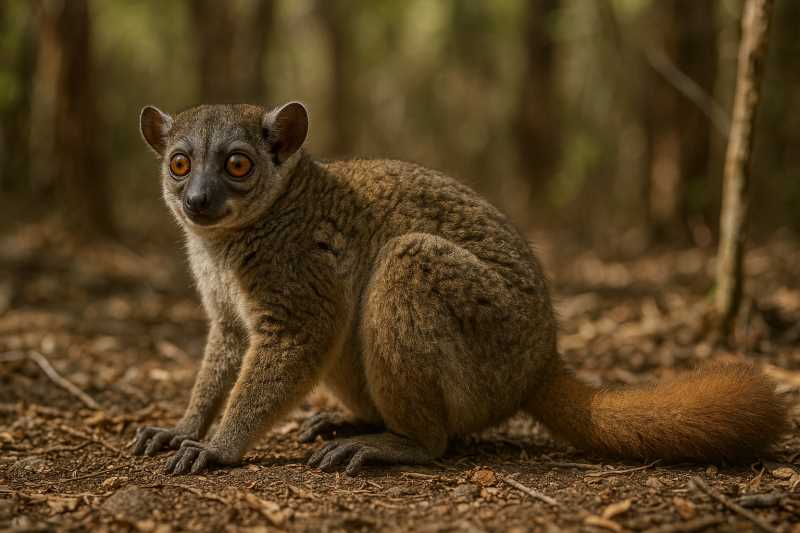
This lemur has a soft, dense coat that is generally grayish-brown on the upper parts and lighter on the underside. The fur provides excellent camouflage against the tree bark and limestone cliffs in its habitat. One of the distinctive features of the Ankarana Sportive Lemur is its large, round eyes, which are adapted for nocturnal vision, allowing it to navigate and forage efficiently during the night.
Its ears are relatively large and mobile, enabling it to detect even the faintest sounds in the dense forest. The lemur’s limbs are adapted for leaping, with powerful hind legs that facilitate agile movements across tree branches and rocky outcrops.
Range and Habitat
The Ankarana Sportive Lemur is primarily found in the limestone karst formations of the Ankarana Reserve in northern Madagascar. These formations create a rugged landscape of sharp pinnacles, deep canyons, and deciduous forests, providing a complex habitat for the lemurs. The region’s unique topography offers numerous hiding spots and feeding grounds, crucial for the survival of the species.
In addition to the Ankarana Reserve, this lemur can also be found in scattered populations across other forested areas in northern Madagascar. However, their distribution is highly fragmented due to deforestation and habitat degradation, limiting their range and making them vulnerable to environmental changes.
The Ankarana Sportive Lemur thrives in dry deciduous forests, where it can exploit the abundance of foliage and flowers. The dense canopy provides protection from predators and a rich source of food. The species is also known to inhabit secondary forests, demonstrating some adaptability to different forest types, though primary forests remain their preferred habitat.
Behavior and Diet
The Ankarana Sportive Lemur is primarily nocturnal, spending the daylight hours resting in tree hollows or dense foliage to avoid predators. At night, it becomes active, foraging for food and socializing with other lemurs.
Its diet is primarily folivorous, consisting mainly of leaves, which are abundant in its forest habitat. However, the lemur also supplements its diet with fruits, flowers, and occasionally bark or other plant materials. This varied diet helps the lemur to meet its nutritional needs and adapt to seasonal changes in food availability.
The Ankarana Sportive Lemur is known for its territorial behavior, with individuals or small family groups occupying specific home ranges. Males are particularly aggressive in defending their territories from intruders, using vocalizations and physical displays to assert dominance.
Communication among these lemurs includes a range of vocalizations, body postures, and scent markings, which help to establish social hierarchies and mating opportunities. During the breeding season, which typically occurs from May to July, males compete for access to females, and successful mating results in a single offspring born after a gestation period of about four months.
Identification Tips (Field Recognition Cues)
Identifying the Ankarana Sportive Lemur in the field requires attention to several key characteristics:
- Size and Build: Look for a small to medium-sized lemur with a compact body and relatively long tail.
- Fur Coloration: Note the grayish-brown coat with lighter underparts, which blends well with the forest environment.
- Eye Size: The large, round eyes are a distinctive feature, adapted for nocturnal activity.
- Behavior: Observe nocturnal activity patterns and territorial behaviors, including vocalizations.
- Habitat: Focus on dry deciduous forests within the Ankarana Reserve or similar environments.
Conservation Status (with Threats and Protections)
The Ankarana Sportive Lemur is currently classified as Endangered on the IUCN Red List. This status reflects the significant threats the species faces, primarily from habitat loss due to deforestation, slash-and-burn agriculture, and illegal logging. These activities have fragmented its habitat and reduced the available resources needed for survival.
Additionally, the lemur is threatened by hunting and trapping, although less so than some other lemur species. The Ankarana Reserve provides some protection, but enforcement of conservation laws remains a challenge.
Conservation efforts are underway to protect the Ankarana Sportive Lemur, including habitat restoration projects, anti-poaching initiatives, and community-based conservation programs. Raising awareness about the importance of preserving Madagascar’s unique biodiversity is also crucial for the long-term survival of this species.
Frequently Asked Questions
1. What is the primary diet of the Ankarana Sportive Lemur?
The Ankarana Sportive Lemur primarily feeds on leaves, but it also consumes fruits, flowers, and occasionally bark. This folivorous diet is supplemented by seasonal variations in food availability, allowing the lemur to adapt to changes in its environment.
2. Where can I find the Ankarana Sportive Lemur in the wild?
The Ankarana Sportive Lemur is found in the Ankarana Reserve in northern Madagascar, inhabiting dry deciduous forests and limestone karst formations. Small populations may also exist in other nearby forested areas, though their distribution is fragmented.
3. How does the Ankarana Sportive Lemur communicate?
Communication among Ankarana Sportive Lemurs involves vocalizations, body postures, and scent markings. These methods help establish social hierarchies, defend territories, and facilitate mating opportunities.
4. What are the main threats to the Ankarana Sportive Lemur?
The primary threats include habitat loss due to deforestation, agriculture, and illegal logging. Hunting and poaching, although less common, also pose risks. Conservation efforts focus on habitat protection and community engagement.
5. How can I help conserve the Ankarana Sportive Lemur?
Supporting conservation organizations, promoting sustainable land management practices, and raising awareness about the importance of preserving Madagascar’s unique ecosystems are effective ways to contribute to the conservation of the Ankarana Sportive Lemur.
Related posts