The Enigmatic Majesty of the Vanuatu Imperial Pigeon: Ducula bakeri
The Vanuatu Imperial Pigeon (Ducula bakeri) stands as a symbol of the rich and diverse avian life that thrives in the Pacific island nation of Vanuatu. This magnificent bird, with its distinct plumage and limited range, offers a glimpse into the unique biodiversity of the region. As we delve into the characteristics, habitat, and conservation status of Ducula bakeri, we uncover a story of ecological importance and the ongoing efforts to preserve this avian treasure.
Description and Characteristics
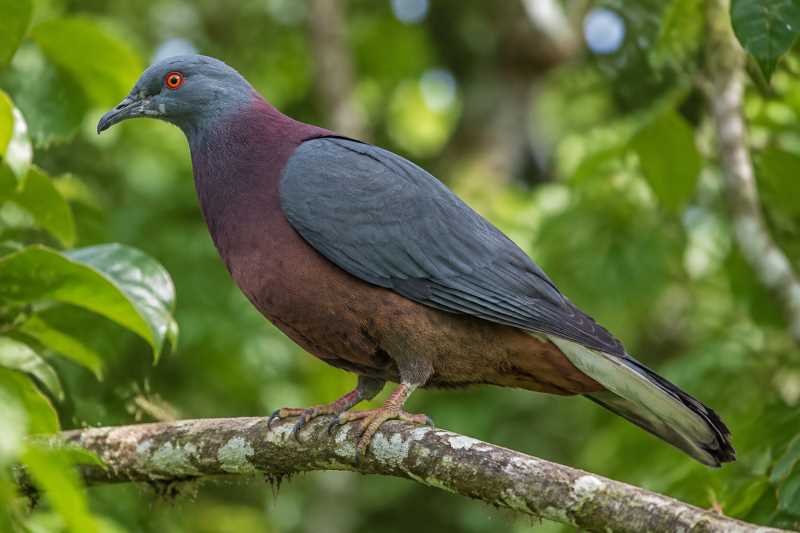
Ducula bakeri is a large, robust pigeon, notable for its striking appearance. Adults typically measure between 40 to 45 centimeters in length, making them one of the larger members of the Columbidae family. The plumage of the Vanuatu Imperial Pigeon is predominantly a slate-gray color, with a distinctive iridescent sheen that shimmers with shades of green and blue under sunlight. The bird’s head and neck are a paler gray, providing a subtle contrast to the darker body feathers.
The Vanuatu Imperial Pigeon possesses a strong and slightly curved bill, adapted for its frugivorous diet. Its eyes are a deep red, giving it a piercing gaze that enhances its majestic appearance. The feet are a dark red, adding to the bird’s distinctive look. Both males and females share similar plumage, making them difficult to distinguish in the wild.
Habitat and Distribution
Endemic to the archipelago of Vanuatu, Ducula bakeri occupies a limited range, primarily inhabiting lowland and montane forests. These pigeons are often found in undisturbed primary forests, where they can access a rich supply of fruiting trees and other vegetation. They tend to favor elevations ranging from sea level up to approximately 1,500 meters.
The distribution of the Vanuatu Imperial Pigeon is confined to several islands within the nation, including Espiritu Santo, Malakula, and Pentecost, among others. Their presence is closely tied to the availability of suitable forested habitats, which have been increasingly threatened by human activities.
Diet and Behavior
The Vanuatu Imperial Pigeon primarily feeds on a variety of fruits, making it an essential part of its ecosystem as a seed disperser. By consuming fruits and dispersing seeds through their droppings, these pigeons play a critical role in maintaining the health and diversity of their forest habitats.
Typically seen alone or in pairs, Ducula bakeri is known for its elusive behavior. These pigeons are often heard before they are seen, with their distinctive calls echoing through the forest canopy. Despite their large size, they are surprisingly adept at navigating through dense foliage.
Breeding behavior of the Vanuatu Imperial Pigeon remains relatively undocumented. However, like many other pigeons, they are presumed to build nests in trees and lay a single egg per breeding cycle.
Conservation Status and Threats
The International Union for Conservation of Nature (IUCN) currently classifies the Vanuatu Imperial Pigeon as Near Threatened. This designation reflects the ongoing pressures faced by the species, primarily due to habitat loss and fragmentation. Deforestation for agriculture, logging, and infrastructure development poses significant risks to the pigeon’s forested habitats.
Additionally, the introduction of invasive species such as rats and cats has further exacerbated the threats to Ducula bakeri. These predators pose a direct threat to the pigeons, particularly during nesting periods when eggs and young chicks are vulnerable.
Conservation efforts are underway to protect the Vanuatu Imperial Pigeon and its habitat. Initiatives include the establishment of protected areas, reforestation projects, and community education programs aimed at promoting sustainable land-use practices. Conservationists and local communities are working collaboratively to ensure that the majestic Ducula bakeri continues to grace the forests of Vanuatu.
The Importance of Conservation
The Vanuatu Imperial Pigeon is more than just a striking bird; it is an integral part of the ecological fabric of Vanuatu. Its role as a seed disperser helps sustain the very forests that provide a home to countless other species. Protecting Ducula bakeri, therefore, means safeguarding the biodiversity and ecological integrity of Vanuatu as a whole.
The conservation of this pigeon also highlights the broader issue of habitat protection across the Pacific islands. As human activities and climate change continue to impact these ecosystems, the need for concerted conservation efforts becomes ever more critical.
In conclusion, the Vanuatu Imperial Pigeon serves as a poignant reminder of the beauty and fragility of island ecosystems. By understanding and protecting this remarkable bird, we contribute to the preservation of a natural heritage that is unique to Vanuatu and vital to the world’s biodiversity.
Related posts