Himalayan Goral (Naemorhedus goral): A Comprehensive Guide
Introduction
The Himalayan goral (Naemorhedus goral), a fascinating and agile species of wild goat-antelope, is indigenous to the steep, rugged terrains of Asia. Renowned for its adaptability and resilience, this species thrives in the challenging environments of the Himalayas. Despite its nondescript appearance, the Himalayan goral plays a significant role in its ecosystem as both a grazer and prey for larger carnivores. This article delves into the various aspects of the Himalayan goral, including its physical characteristics, habitat, behavior, and conservation status, providing a thorough understanding of this elusive mammal.
Physical Description
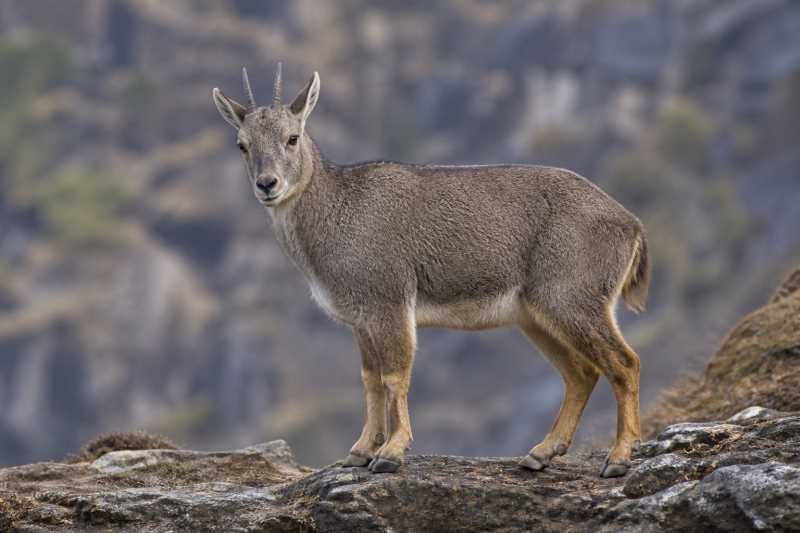
The Himalayan goral is a medium-sized ungulate that resembles a cross between a goat and an antelope. Adult gorals typically weigh between 25 to 40 kilograms (55 to 88 pounds) and stand at a shoulder height of approximately 60 to 75 centimeters (24 to 30 inches). The species exhibits sexual dimorphism, with males generally being larger and possessing more pronounced features than females.
Their fur is dense and coarse, primarily serving as insulation against the cold mountain climate. The coloration ranges from grayish-brown to dark reddish-brown, with a lighter underbelly. This color palette provides excellent camouflage against the rocky and forested backdrops of their habitat. Notably, gorals have short, backward-curving horns that grow up to 18 centimeters (about 7 inches) in length. Both males and females possess these horns, although they are more robust and slightly longer in males.
Range and Habitat
The Himalayan goral is primarily found across the mountain ranges of the Himalayas, extending through parts of Northern India, Nepal, Bhutan, and southern Tibet. Their range also includes sections of Pakistan and Myanmar. Their preferred habitat consists of steep, rugged slopes with rocky outcrops, interspersed with dense shrubbery and forested areas. These environments provide both the vegetation necessary for grazing and the cover required for protection against predators.
Gorals are altitudinally versatile, inhabiting elevations ranging from 1,000 to 4,000 meters (3,280 to 13,120 feet). This adaptability allows them to exploit a variety of ecological niches, from subtropical forests at lower elevations to alpine meadows and montane regions at higher altitudes.
Behavior and Diet
Himalayan gorals are crepuscular animals, meaning they are most active during the early morning and late afternoon. This activity pattern helps them avoid the heat of the day and potential predators. They are social animals, often found in small groups of 4 to 12 individuals, although solitary individuals, especially males, are not uncommon.
Their diet is primarily herbivorous, consisting of grasses, leaves, shoots, and shrubs. During winter months, when vegetation is sparse, they may rely on lichen and bark. Gorals are known for their climbing prowess, adeptly navigating steep terrain in search of food. This ability to access otherwise unreachable vegetation is a crucial survival strategy.
Identification Tips (Field Recognition Cues)
Identifying the Himalayan goral in the wild can be challenging due to their elusive nature and excellent camouflage. However, several key features can aid in their recognition:
- Coloration and Coat: Look for their characteristic grayish-brown to reddish-brown coat, which blends seamlessly with rocky and forested surroundings.
- Horns: Both males and females have small, backward-curving horns. Observers should look for these among the foliage.
- Body Size: Note their medium size, comparable to a small deer, standing about 60 to 75 centimeters tall at the shoulder.
- Behavior: Observe their movement patterns. Gorals are agile climbers and often ascend steep slopes to graze or escape threats.
- Vocalization: Listen for their distinct alarm calls, which are sharp, whistling sounds made in response to potential danger.
Conservation Status (with Threats and Protections)
The International Union for Conservation of Nature (IUCN) lists the Himalayan goral as "Near Threatened". While the species is not currently at immediate risk of extinction, it faces several threats that could impact its population in the future.
Threats
- Habitat Loss: Deforestation for agriculture and urban development is a significant threat, reducing the available habitat for gorals.
- Poaching: Gorals are hunted for their meat and horns, despite legal protections in many regions.
- Competition: Overgrazing by domestic livestock can lead to food shortages for gorals, as they compete for the same resources.
Protections
Conservation efforts are underway to mitigate these threats. Many regions within the goral’s range have established protected areas and wildlife reserves. Anti-poaching laws are enforced, and initiatives promoting sustainable land use aim to preserve natural habitats. Conservation organizations are also working to raise awareness about the ecological importance of gorals, promoting community involvement in their protection.
Frequently Asked Questions
What is the best time of day to observe Himalayan gorals in their natural habitat?
Himalayan gorals are most active during the early morning and late afternoon. These crepuscular periods are ideal for observing them as they forage for food. Observers should plan to visit during these times for the best chance of spotting them.
How do Himalayan gorals adapt to their cold, mountainous environment?
Himalayan gorals have several adaptations for surviving in cold climates, including a dense, insulating coat and the ability to graze on a variety of vegetation. Their agile climbing skills allow them to navigate steep, rocky terrain, accessing food sources that are inaccessible to other species.
Are Himalayan gorals endangered?
The Himalayan goral is classified as "Near Threatened" by the IUCN. While not currently endangered, they face threats from habitat loss, poaching, and competition with livestock, which could impact their population if not addressed.
What predators do Himalayan gorals face in the wild?
Himalayan gorals are preyed upon by several large carnivores, including snow leopards, wolves, and leopards. Their agility and keen senses are crucial for evading these predators.
How can local communities help in the conservation of Himalayan gorals?
Local communities can contribute to conservation efforts by participating in habitat preservation projects, adhering to anti-poaching regulations, and promoting sustainable land-use practices. Education and awareness programs can also foster a sense of stewardship toward gorals and their environment.
Related posts