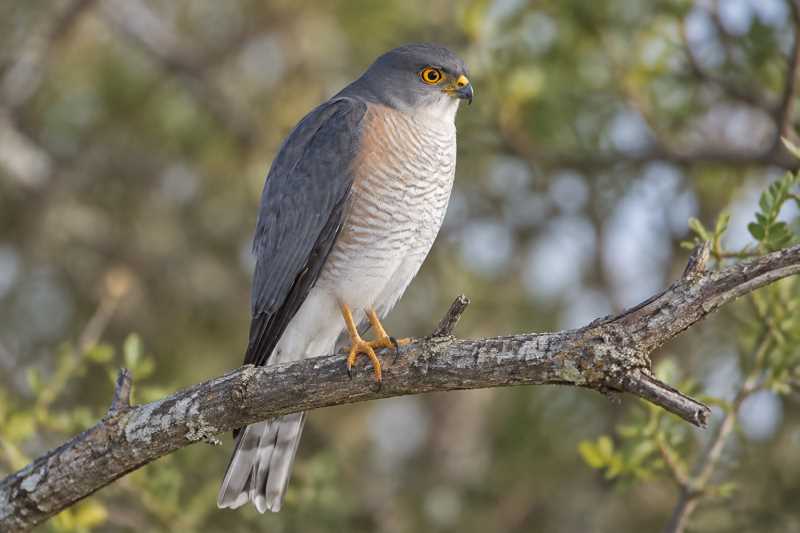
The Enigmatic Little Sparrowhawk: A Closer Look at Tachyspiza minulla
The world of birds is filled with fascinating species, each with its unique charm and ecological significance. Among these avian wonders is the Little Sparrowhawk, scientifically known as Tachyspiza minulla. This diminutive raptor, despite its small size, commands considerable interest due to its intriguing behaviors and vital role in its habitat. In this article, we delve into the life and characteristics of the Little Sparrowhawk, exploring its habitat, behavior, and conservation status.
Habitat and Distribution
The Little Sparrowhawk is predominantly found in sub-Saharan Africa, occupying a range that extends from Senegal in the west to Ethiopia in the east, and southwards to South Africa. It inhabits a variety of ecosystems, including savannas, woodlands, and forest margins. These environments provide ample opportunities for the sparrowhawk to hunt and thrive.
Adaptability is a hallmark of the Little Sparrowhawk, allowing it to occupy diverse habitats. It is often found in areas with scattered trees, which offer perching sites and cover for hunting. The ability to live in both pristine and disturbed habitats underscores its resilience in the face of environmental changes.
Physical Characteristics
The Little Sparrowhawk is aptly named due to its small stature, measuring about 20 to 25 centimeters in length. It is one of the smallest raptors in Africa, with a wingspan ranging from 39 to 45 centimeters. Despite its modest size, it exhibits the characteristic sharp talons and hooked beak typical of birds of prey.
Plumage varies between the sexes, with males generally showcasing a slate-grey upper body and a whitish underside adorned with fine barring. Females, on the other hand, tend to be slightly larger and exhibit a more pronounced barring on their chests. This sexual dimorphism not only aids in identification but also plays a role in their breeding dynamics.
Behavior and Diet
The Little Sparrowhawk is predominantly a solitary bird, except during the breeding season when it pairs up. It is known for its stealth and agility, traits that serve it well in hunting. Its diet mainly consists of small birds, insects, and occasionally small mammals. The bird’s hunting method involves perching silently before launching a swift attack on unsuspecting prey.
Its keen vision and rapid flight make the Little Sparrowhawk an efficient predator. Despite its predatory nature, it remains an elusive species, often going unnoticed due to its secretive habits. Observers often note its characteristic flight, which is a combination of rapid wing beats and gliding.
Breeding and Nesting
Breeding season for the Little Sparrowhawk varies across its range but generally coincides with the rainy season, when food is abundant. The birds build their nests high in the trees, using a combination of twigs and leaves, lined with softer materials.
Clutch sizes typically range from two to four eggs, and both parents share the responsibility of incubation and feeding the chicks. This cooperative behavior ensures a higher survival rate for the offspring, critical for maintaining their populations.
Conservation Status
Currently, the Little Sparrowhawk is listed as ‘Least Concern’ by the IUCN Red List of Threatened Species. This status reflects its broad distribution and relatively stable population numbers. However, like many species, it faces threats from habitat destruction and environmental changes.
Deforestation and conversion of land for agriculture pose significant risks to their habitats. Conservation efforts focused on preserving natural habitats and promoting sustainable land-use practices are essential for safeguarding the future of the Little Sparrowhawk.
Importance in Ecosystem
The Little Sparrowhawk plays a vital role in its ecosystem as both predator and prey. As a predator, it helps control populations of small birds and insects, maintaining a balanced ecosystem. Conversely, it serves as prey for larger raptors, contributing to the complex food web.
Its presence indicates a healthy ecosystem, as it requires a certain level of biodiversity to thrive. Efforts to conserve the Little Sparrowhawk thus have broader implications for the preservation of biodiversity in African landscapes.
Conclusion
The Little Sparrowhawk, with its dynamic presence and ecological significance, is a testament to the diversity and complexity of avian life. Understanding and appreciating such species is crucial for fostering a greater commitment to biodiversity conservation. As we learn more about species like Tachyspiza minulla, we are reminded of the intricate connections within nature and our responsibility to protect these fascinating creatures for future generations.
Related posts