Introduction
Sick’s Swift (Chaetura meridionalis) is a small swift in the family Apodidae. It is named after the German ornithologist Helmut Sick and is found mainly in south-eastern South America. The species is a fast, aerial insectivore that spends much of its time flying over forests, woodland, scrub, farmland and towns.
Physical Description
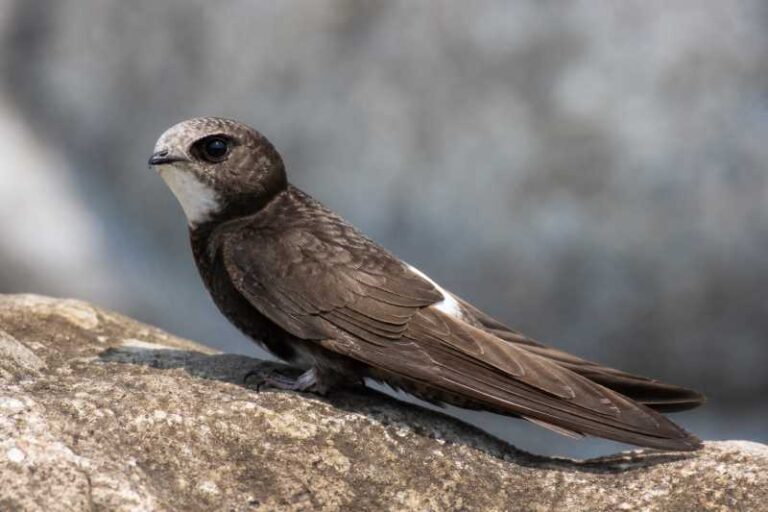
Sick’s Swift measures approximately 12–13.5 centimetres in length. The upperparts and wings are dark brown, while the rump and upper tail-coverts are greyer. The throat is usually pale or whitish, contrasting with the darker brown underparts.
The tail is short and square-ended, with small projecting shafts at the tips of the rectrices. The wings are long, narrow and strongly pointed, giving the bird a streamlined silhouette in flight. Males and females are not known to show obvious differences in field plumage, and juveniles are not reliably distinguished from adults during ordinary observation.
Range and Habitat
Sick’s Swift breeds in southern and eastern Brazil, eastern Bolivia, Paraguay, and northern and central Argentina. It is a seasonal migrant, with birds moving northwards outside the breeding season. Some individuals may also make shorter local movements in response to weather and food availability.
The species is associated with lowland and foothill habitats, including forest edges, secondary woodland, open woodland, scrub and clearings. It may also be seen over agricultural landscapes and urban areas, particularly during seasonal movements. Most records are from lower elevations, generally below about 900 metres, although occasional observations have been reported at higher elevations.
During the breeding season, Sick’s Swift uses natural cavities in trees and palms. It may also use suitable man-made structures, including chimneys and other vertical cavities, where these are available.
Where to See This Species
Parque Nacional Iguazú, Misiones, Argentina
Sick’s Swift is listed as present in the official biodiversity records for Parque Nacional Iguazú. The park’s extensive subtropical Atlantic Forest, forest edges and open areas provide suitable habitat for aerial foraging. Look overhead along forest margins and clearings, particularly during periods of seasonal movement.
Nearby accommodation: Puerto Iguazú is the main gateway town, with hotels, guest houses, lodges, campsites and self-catering accommodation.
Parque Estadual Itaberaba, São Paulo, Brazil
The São Paulo protected-area guide records Sick’s Swift as a migratory species using the park region. Its Atlantic Forest, open vegetation and surrounding landscape offer suitable airspace for feeding swifts. Observation is likely to be most productive during the species’ seasonal presence in south-eastern Brazil.
Nearby accommodation: The surrounding municipalities of the Cantareira region provide hotels, guest houses and self-catering accommodation, with larger accommodation centres available around São Paulo and Guarulhos.
Parque Morumbi Sul, São Paulo, Brazil
The municipal park’s wildlife information specifically records Sick’s Swift among the migratory birds that use the area for shelter or feeding. The park’s open lawns, planted areas and nearby urban green spaces can attract flying insects, making the open sky above the park worth scanning.
Nearby accommodation: São Paulo offers a wide range of hotels, guest houses, hostels and serviced apartments, with public transport access to the park area.
Behaviour and Diet
Sick’s Swift spends most of its life in the air and is rarely seen perched. It has a rapid, twisting flight with frequent changes of direction and may fly low over roads, clearings and forest edges while feeding. It often rises higher over forest and open country later in the day.
The diet consists mainly of flying insects, including flies, beetles, termites and other small aerial insects. Feeding birds may gather in small groups or join mixed flocks of swifts and swallows where insect prey is abundant.
Breeding generally takes place during the warmer and wetter part of the year in the southern portion of the range. The nest is a small open cup attached to the inside of a cavity or against a vertical surface. It is made from dry plant material secured with adhesive saliva. Documented nests have been found in tree cavities, including hollows in quebracho trees, as well as in palms and some man-made structures.
Clutches may contain three to five white eggs. The female incubates the eggs, while both parents feed the young. Nestlings remain dependent until they are sufficiently developed for sustained flight.
Identification Tips
- Look for a small, dark swift with long pointed wings and a short, square tail.
- The grey rump and upper tail-coverts contrast subtly with the darker back and wings.
- A pale or whitish throat may be visible, especially in good light or when the bird banks during flight.
- The species is usually identified by its combination of size, short tail, greyish rump and overall brown plumage rather than by a single distinctive marking.
- Identification among Chaetura swifts can be difficult. Flight behaviour, tail shape, rump colour, throat pattern and the known local species should all be considered together.
- Swifts should not be confused with swallows. Swifts have longer, more sickle-shaped wings, a shorter tail and a less buoyant, more powerful flight.
Conservation Status
Sick’s Swift is classified as Least Concern on the IUCN Red List. Its population size has not been reliably quantified, and a current global population trend is not available.
The species has a broad distribution and is considered common in parts of its breeding range. Potential local pressures include the loss of mature trees and nesting cavities, changes to woodland and forest-edge habitats, and reductions in flying-insect availability. Protecting native woodland, retaining suitable hollow trees and avoiding the unnecessary destruction of active nests can help maintain local populations.
Frequently Asked Questions
Where does Sick’s Swift live?
Sick’s Swift breeds in southern and eastern Brazil, eastern Bolivia, Paraguay, and northern and central Argentina. It makes seasonal movements and may occur farther north outside the breeding season.
Is Sick’s Swift a migratory bird?
Yes. It is a seasonal migrant, although the timing and extent of movements vary across its range. Some local movements may also occur when weather or food availability changes.
What does Sick’s Swift eat?
It feeds mainly on flying insects caught in the air. Its prey includes flies, beetles, termites and other small insects.
Where does Sick’s Swift nest?
It nests in sheltered cavities and on vertical surfaces. Natural sites include hollow trees and palms, while suitable chimneys and other man-made structures may also be used.
How can Sick’s Swift be identified in flight?
Look for a small, dark swift with long pointed wings, a short square tail, a greyish rump and, often, a pale throat. It usually flies rapidly and erratically over woodland edges, clearings or urban areas.
Is Sick’s Swift threatened?
The species is currently listed as Least Concern. No reliable global population estimate or confirmed overall decline is available, but local habitat loss and the removal of nesting cavities may affect some populations.
References
- IOC World Bird List
- IUCN Red List of Threatened Species
- Sistema de Información de Biodiversidad, Administración de Parques Nacionales, Argentina
Related posts