
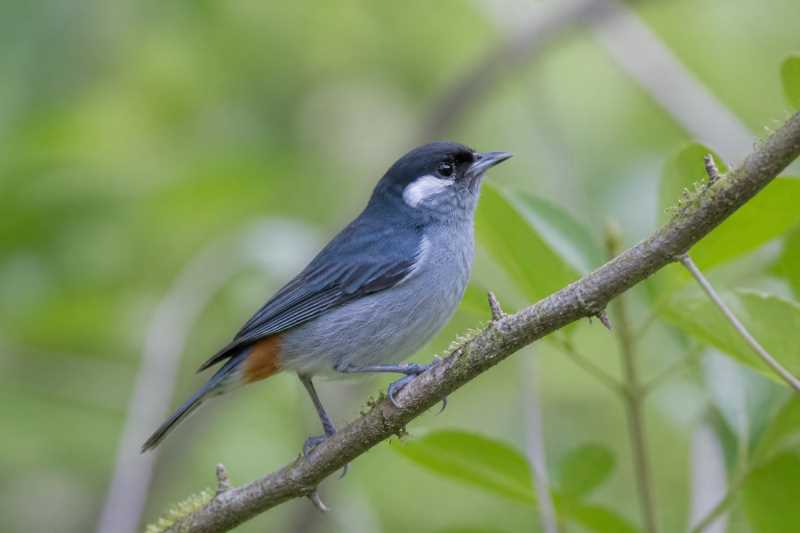
White-eared Conebill: A Hidden Jewel of the Andes
The White-eared Conebill (Conirostrum leucogenys) is a fascinating and elusive bird species that inhabits the cloud forests of the Andes. Known for its striking appearance and unique ecological niche, this small passerine bird is a subject of interest for ornithologists and bird watchers alike. This article delves into the characteristics, habitat, behavior, and conservation status of the White-eared Conebill, shedding light on the importance of preserving its natural environment.
Taxonomy and Description
Belonging to the family Thraupidae, the White-eared Conebill is a member of the genus Conirostrum, which comprises several species of small, primarily insectivorous birds. The species name, leucogenys, is derived from Greek, meaning ‘white-cheeked’, aptly describing its distinctive facial markings.
The White-eared Conebill measures approximately 11-12 cm in length and weighs around 10 grams. Males and females exhibit subtle sexual dimorphism, with males showcasing a more vibrant plumage. The bird’s most striking feature is its white ear patch, contrasting sharply with its otherwise dark plumage. The upperparts are predominantly bluish-black, while the underparts are lighter, often exhibiting a bluish-gray hue.
Habitat and Distribution
The White-eared Conebill is endemic to the Andean region, primarily found in countries such as Colombia, Ecuador, Peru, and Venezuela. This bird favors montane cloud forests, thriving at altitudes ranging from 1500 to 3000 meters. These ecosystems are characterized by high humidity, frequent cloud cover, and rich biodiversity.
The dense foliage and complex structure of cloud forests provide an ideal habitat for the White-eared Conebill. These birds are typically found in the mid to upper canopy, where they can forage for insects and spiders, which constitute the bulk of their diet. The presence of abundant epiphytes and mosses in these forests supports a diverse insect population, catering to the conebill’s dietary needs.
Behavior and Ecology
White-eared Conebills are known for their active foraging behavior. They are often seen flitting through the canopy, deftly maneuvering among branches in search of food. Their slender, conical bills are adapted for gleaning insects from foliage, bark, and epiphytes. While primarily insectivorous, they may also consume small fruits and nectar when available.
These birds are generally observed in pairs or small family groups, although they may join mixed-species foraging flocks, especially during the non-breeding season. This social behavior not only enhances foraging efficiency but also offers protection against predators.
The breeding season of the White-eared Conebill coincides with the onset of the wet season, which varies geographically across its range. Nesting sites are typically located in the dense foliage of the forest canopy, where the female builds a small cup-shaped nest. The clutch size usually consists of two to three eggs, with both parents participating in incubation and feeding of the chicks.
Conservation and Threats
The White-eared Conebill is currently classified as a species of Least Concern by the IUCN Red List. However, this does not imply that the species is free from threats. The primary concern for the White-eared Conebill is habitat destruction due to deforestation, driven by agricultural expansion, logging, and mining activities.
Cloud forests are among the most threatened ecosystems in the world, with significant portions of these habitats already lost or degraded. The fragmentation of these forests poses a significant risk to the White-eared Conebill, as it relies heavily on the complex canopy structure for foraging and nesting.
Conservation efforts aimed at preserving cloud forests are crucial for sustaining the populations of the White-eared Conebill. Protected areas and national parks in the Andes play a vital role in safeguarding these habitats. Additionally, community-based conservation initiatives that promote sustainable land-use practices are essential for mitigating deforestation and preserving biodiversity.
Conclusion
The White-eared Conebill, with its striking appearance and ecological significance, is a testament to the rich biodiversity of the Andean cloud forests. While currently not facing immediate extinction threats, the species’ dependence on intact forest ecosystems underscores the importance of conservation efforts in the region. Protecting these habitats not only ensures the survival of the White-eared Conebill but also preserves the myriad of species that call the cloud forests home.
For bird enthusiasts and conservationists, the White-eared Conebill serves as a reminder of the delicate balance within ecosystems and the ongoing need for vigilance in protecting our planet’s natural treasures.
Related posts


