The Pink-footed Shearwater: A Seafaring Marvel of the Pacific
The Pink-footed Shearwater (Ardenna creatopus) is a captivating seabird that has intrigued ornithologists and bird enthusiasts alike with its unique characteristics and remarkable migratory patterns. Nestled primarily along the coasts of Chile and venturing into the vast expanse of the Pacific Ocean, this bird serves as a key species in understanding marine ecosystems and the impacts of environmental change.
Physical Characteristics and Behavioral Traits
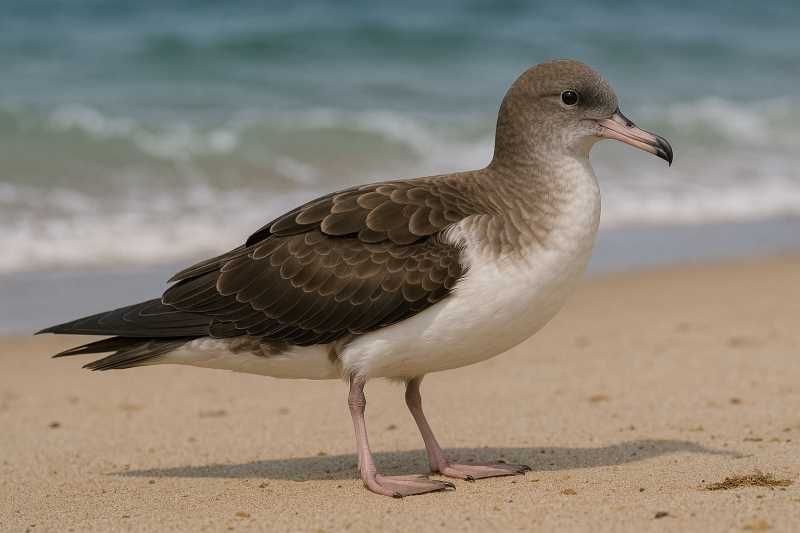
The Pink-footed Shearwater is medium-sized, typically measuring about 40-45 cm in length with a wingspan ranging from 95-110 cm. Its plumage is a blend of brown and white, with the upperparts predominantly dark brown and the underparts white, providing a striking contrast that is visible during its graceful flight over ocean waves. True to its name, the bird’s legs and feet have a distinctive pink hue, which, along with its slender bill, aids in differentiating it from other shearwater species.
These birds are known for their dynamic soaring flight, utilizing the wind currents to glide effortlessly over the ocean. Their diet primarily consists of fish, squid, and crustaceans, which they skillfully catch by diving and surface seizing. The Pink-footed Shearwater is also a social species, often seen in flocks, particularly during feeding and migratory activities.
Habitat and Migration
The breeding grounds of the Pink-footed Shearwater are restricted to a few islands off the coast of Chile, namely Mocha, Robinson Crusoe, and Santa Clara. These islands provide a safe haven for nesting, with burrows often dug into the ground or among rocky crevices. The breeding season is a critical time when these birds are most vulnerable to predators and human activities.
Following the breeding season, the Pink-footed Shearwater embarks on an extensive migratory journey northward, reaching as far as the Pacific coasts of North America. This migration is not only a testament to their endurance but also highlights their role in connecting marine environments across hemispheres. During migration, they are often spotted off the coasts of California, Oregon, Washington, and British Columbia, feeding in rich, upwelling zones and contributing to the biodiversity of these marine ecosystems.
Conservation Status and Threats
The Pink-footed Shearwater is currently classified as Vulnerable by the International Union for Conservation of Nature (IUCN). This status is primarily due to threats such as habitat destruction, especially on their breeding islands, and bycatch in fisheries. On land, invasive species such as rats and cats pose significant risks by preying on eggs and chicks.
Conservation efforts are critical to ensure the survival of this species. Initiatives include habitat restoration on breeding islands, implementing sustainable fishing practices to reduce bycatch, and international cooperation across their migratory range. Awareness and education programs are also vital in engaging local communities in conservation activities, emphasizing the importance of preserving this species and its habitat.
The Importance of the Pink-footed Shearwater
The Pink-footed Shearwater is not only an integral part of marine biodiversity but also an indicator of ocean health. Monitoring their populations and migratory patterns provides insights into changes in marine environments, such as shifts in prey availability and the impacts of climate change. Their presence in different marine regions underscores the interconnectedness of ocean ecosystems and the need for comprehensive conservation strategies.
In conclusion, the Pink-footed Shearwater stands as a symbol of the challenges and wonders of marine life. Protecting this remarkable bird requires a coordinated effort across nations, bridging the gap between science, policy, and community action. By safeguarding the Pink-footed Shearwater, we ensure the resilience of marine ecosystems and the continuation of their majestic journey across the Pacific.
Related posts