A Comprehensive Guide to the Orange-billed Sparrow (Arremon aurantiirostris)
Introduction
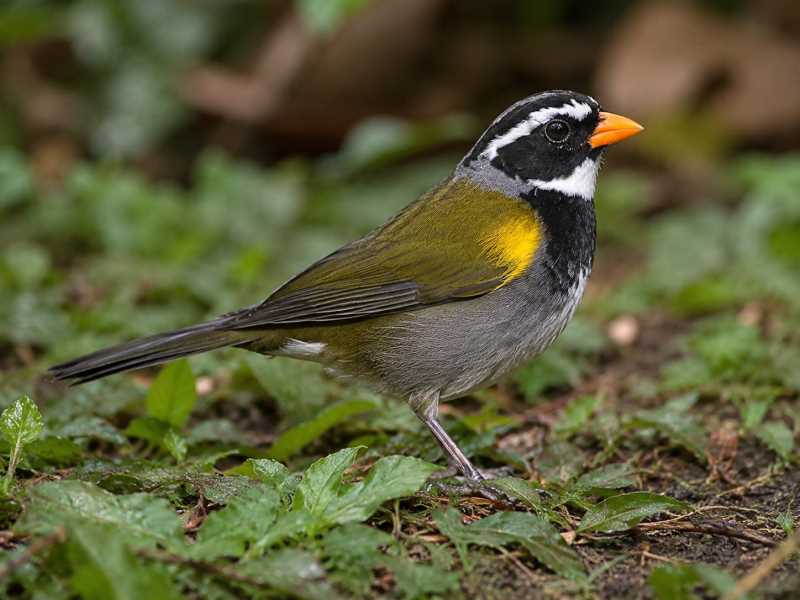
The Orange-billed Sparrow, scientifically known as Arremon aurantiirostris, is a captivating species belonging to the family Passerellidae. This bird is known for its vibrant orange bill, which contrasts beautifully with its otherwise muted plumage. A native of the Neotropics, the Orange-billed Sparrow’s habitat spans across several Central and South American countries, where it thrives in the dense undergrowth of tropical and subtropical forests.
In this article, we will explore the various facets of this intriguing bird species, from its taxonomy and physical characteristics to its behavior, habitat, and conservation status. The Orange-billed Sparrow is a fascinating subject for ornithologists and bird enthusiasts alike, not only for its striking appearance but also for its ecological significance.
Taxonomy and Classification
The Orange-billed Sparrow belongs to the genus Arremon within the family Passerellidae. This family is a diverse group of birds commonly referred to as New World sparrows. The scientific name, Arremon aurantiirostris, is derived from Latin, with “aurantiirostris” meaning “orange-billed.” This descriptive name aptly highlights one of the bird’s most distinctive features.
There are several subspecies of the Orange-billed Sparrow, which are distributed across different geographical regions:
1. **Arremon aurantiirostris aurantiirostris**: Found in Costa Rica and western Panama.
2. **Arremon aurantiirostris saturatus**: Located in eastern Panama and northwestern Colombia.
3. **Arremon aurantiirostris rufidorsalis**: Inhabits regions in Colombia and northwestern Ecuador.
4. **Arremon aurantiirostris elsae**: Found in eastern Ecuador and northern Peru.
Each subspecies exhibits slight variations in plumage and size, adapted to their specific habitats.
Physical Characteristics
The Orange-billed Sparrow is a medium-sized bird, measuring approximately 14 to 16 cm in length and weighing between 25 to 35 grams. The most striking feature of this bird is its bright orange bill, which stands out against its otherwise subtle coloration.
The plumage is primarily olive-green to gray, with a distinctive white throat and a black face mask that extends over the eyes. The underparts are generally lighter, with a mix of white and gray. The wings and tail feathers are dark with subtle olive-green edges, providing a harmonious blend of colors that aids in camouflage within its natural habitat.
The legs and feet are pinkish, and its eyes are dark and expressive, adding to its overall allure. Males and females are similar in appearance, although some subtle differences may exist in plumage intensity.
Habitat and Distribution
The Orange-billed Sparrow is primarily found in the humid lowland and foothill forests of Central and South America. Its range includes countries such as Costa Rica, Panama, Colombia, Ecuador, and Peru. The bird favors dense undergrowth and forest edges, where it can forage for food while remaining relatively concealed from predators.
Within these forests, the Orange-billed Sparrow thrives in both primary and secondary growth areas. It can often be found near streams and other water bodies, which provide a rich source of food and nesting material. The bird’s adaptability to various forest habitats makes it a resilient species, capable of surviving in fragmented landscapes.
Behavior and Diet
The Orange-billed Sparrow is a ground forager, spending much of its time searching for food among the leaf litter and low vegetation. Its diet consists primarily of seeds, fruits, and insects, providing a balanced intake of nutrients essential for its survival.
This sparrow is often observed foraging alone or in pairs, although it may join mixed-species flocks during certain times of the year. Its foraging strategy involves hopping along the forest floor, using its strong bill to uncover hidden food items.
In terms of behavior, the Orange-billed Sparrow is known for its shy and elusive nature. It tends to remain hidden within the dense foliage, making it a challenge for birdwatchers to spot. However, its distinctive song, a series of melodious whistles and trills, often gives away its presence.
Breeding and Reproduction
The breeding season for the Orange-billed Sparrow varies depending on its geographical location, but it generally coincides with the rainy season when food is abundant. During this time, males establish territories and engage in vocal displays to attract mates.
Nesting occurs close to the ground in dense vegetation, where the female constructs a cup-shaped nest using twigs, leaves, and other plant materials. The female typically lays two to three eggs, which she incubates for approximately 12 to 14 days.
Once the chicks hatch, both parents participate in feeding and caring for the young. The fledglings leave the nest about two weeks after hatching, although they remain dependent on their parents for food and protection for several more weeks.
Conservation Status and Threats
The Orange-billed Sparrow is currently listed as a species of Least Concern by the International Union for Conservation of Nature (IUCN). This classification indicates that the species is not currently facing a significant risk of extinction.
However, like many forest-dwelling species, the Orange-billed Sparrow is susceptible to habitat loss due to deforestation and land conversion for agriculture and urban development. Conservation efforts aimed at preserving tropical and subtropical forests are crucial for maintaining healthy populations of this and other forest-dependent species.
Protecting large contiguous tracts of forest, as well as promoting sustainable land-use practices, will help ensure the long-term survival of the Orange-billed Sparrow and its ecosystem.
Conclusion
The Orange-billed Sparrow is a remarkable example of the diversity and beauty found within the Neotropical avian community. Its vibrant appearance, enigmatic behavior, and ecological role make it an important species for both scientific study and conservation efforts.
As we continue to explore and document the natural world, birds like the Orange-billed Sparrow remind us of the intricate connections within ecosystems and the need to preserve these habitats for future generations. Through education and conservation initiatives, we can work towards a future where the Orange-billed Sparrow and countless other species continue to thrive in their natural environments.
References
1. BirdLife International. (2021). *Arremon aurantiirostris*. The IUCN Red List of Threatened Species 2021.
2. Ridgely, R. S., & Gwynne, J. A. (1989). *A Guide to the Birds of Panama: With Costa Rica, Nicaragua, and Honduras*. Princeton University Press.
3. Stiles, F. G., & Skutch, A. F. (1989). *A Guide to the Birds of Costa Rica*. Cornell University Press.
4. Hilty, S. L., & Brown, W. L. (1986). *A Guide to the Birds of Colombia*. Princeton University Press.
—
Related posts