The Kea (Nestor notabilis): A Comprehensive Exploration
The Kea (Nestor notabilis) is a fascinating parrot native to the South Island of New Zealand, renowned for its intelligence, curiosity, and adaptability. Endemic to the alpine regions, this bird has captured the interest of ornithologists and nature enthusiasts alike, not only for its remarkable cognitive abilities but also for its unique ecological niche.
Taxonomy and Evolution
Belonging to the family Strigopidae, the Kea is closely related to the Kākā and the extinct Norfolk Kākā. The genus Nestor is part of an ancient group of parrots that diverged from other parrots around 80 million years ago. This early divergence makes the Kea one of the most primitive members of the parrot family, providing valuable insights into the evolutionary history of these birds.
Physical Characteristics
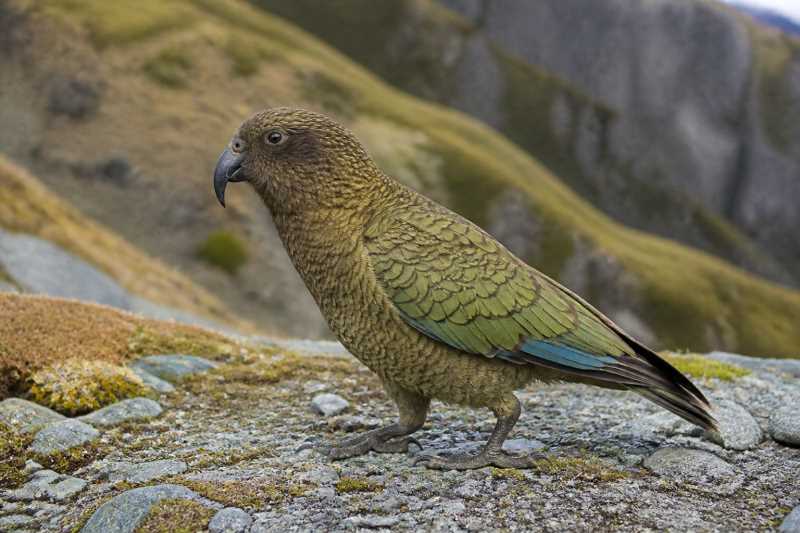
Kea are medium to large-sized parrots, typically measuring about 46 to 50 centimeters in length and weighing between 800 to 1000 grams. Their plumage is predominantly olive-green, with a distinctive orange-red underwing and lower back, which becomes visible during flight. The upper mandible is long and curved, adapted for digging and foraging, while their strong legs and claws make them adept climbers.
Habitat and Distribution
The Kea inhabits the alpine and subalpine regions of the South Island, thriving in environments ranging from forested valleys to snow-covered peaks. They are particularly fond of areas with abundant scree slopes and alpine meadows, where they forage for a variety of food sources.
Diet and Foraging Behavior
Kea are omnivorous, with a diet that includes leaves, roots, fruits, seeds, nectar, and insects. They are also known to scavenge from carcasses and have been observed preying on sheep, an unusual behavior for parrots, which has led to a complex relationship with local farmers. Their foraging techniques are diverse and innovative, often involving the use of tools, which is rare among birds.
Social Structure and Behavior
Kea are social birds, often seen in groups. Their social interactions are complex, involving a range of vocalizations and behaviors that suggest a high level of social intelligence. They engage in playful activities, both among themselves and with inanimate objects, indicating cognitive capacities that have been compared to those of primates.
Intelligence and Problem-Solving
The intelligence of the Kea is well-documented, with numerous studies highlighting their problem-solving abilities and innovative behaviors. They are capable of solving puzzles, using tools, and even cooperating with one another to achieve a common goal. This intelligence is thought to be an adaptation to their challenging alpine environment, where finding food requires ingenuity and persistence.
Conservation Status
Currently classified as vulnerable by the IUCN Red List, the Kea faces several threats, including habitat destruction, human persecution, and predation by introduced species such as stoats, possums, and cats. Conservation efforts are underway to mitigate these threats, including habitat protection, public education, and research initiatives aimed at understanding Kea ecology and behavior.
Human Interaction and Cultural Significance
Historically, Kea have had a contentious relationship with humans, particularly in agricultural areas where they were once considered pests. This led to large-scale culling efforts in the late 19th and early 20th centuries. However, perceptions have shifted over time as the ecological and intellectual value of the Kea has become more widely recognized.
Today, the Kea is a symbol of New Zealand’s unique wildlife and a popular subject for ecotourism. Their playful nature and curiosity make them a favorite among visitors, and they have become ambassadors for conservation efforts in the region.
Challenges and Future Directions
The future of the Kea depends on ongoing conservation efforts and the ability to mitigate threats posed by human activities and invasive species. Research continues to play a crucial role in understanding their complex behaviors and ecological needs, which is vital for developing effective conservation strategies.
Public engagement is also essential, as fostering a greater appreciation for these birds can lead to increased support for conservation initiatives. Education programs aimed at farmers and local communities can help reduce conflicts and promote coexistence with this remarkable species.
In conclusion, the Kea is not only an emblem of the wild beauty of New Zealand’s landscapes but also a testament to the intelligence and adaptability of nature’s creations. Preserving their populations and habitats is not just an ecological priority but a moral one, ensuring that future generations can marvel at these extraordinary birds.
Related posts