Denham’s Bustard: A Majestic Bird of the African Savannas
The Denham’s Bustard (Neotis denhami) is an impressive bird species found predominantly in the grasslands and savannas of Sub-Saharan Africa. Recognized for its substantial size and striking appearance, this bird plays a crucial role in the ecosystems it inhabits. Despite its prominence, the Denham’s Bustard faces numerous challenges related to habitat loss and human activities. This article delves into the characteristics, behavior, and conservation efforts surrounding this remarkable species.
Description and Physical Characteristics
Denham’s Bustard is one of the largest flying birds native to Africa, with males measuring up to 120 cm (47 inches) in length and weighing as much as 8.5 kilograms (18.7 pounds). Females are slightly smaller, typically reaching around 100 cm (39 inches) and weighing up to 4 kilograms (8.8 pounds). The species exhibits sexual dimorphism, with males being notably larger than females.
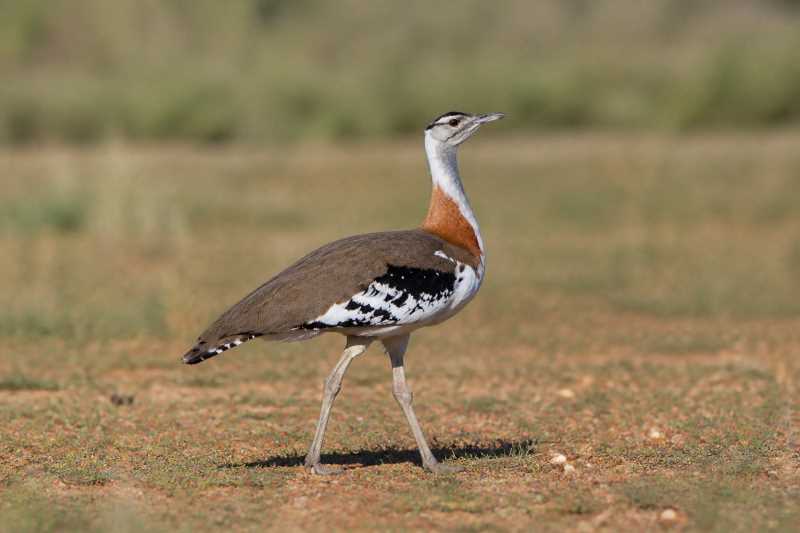
The plumage of Denham’s Bustard is predominantly grey-brown, providing effective camouflage in their natural habitats. Their underparts are white, with a characteristic black and white pattern on their wings, visible during flight. The head is adorned with a striking black crown and a contrasting white throat, making them easily distinguishable from other bustard species.
Habitat and Distribution
Denham’s Bustard is primarily distributed across the open grasslands and savannas of Sub-Saharan Africa. Their range extends from Senegal in the west, across to Ethiopia and Uganda in the east, and down to South Africa. They prefer areas with short grass and scattered trees, which offer both feeding opportunities and cover from predators.
These birds are generally sedentary but may undertake local movements in response to seasonal changes in food availability and habitat conditions. Their choice of habitat is often influenced by the presence of grazing mammals, as these animals help maintain the open grassland environment that Denham’s Bustards prefer.
Behavior and Diet
Denham’s Bustard is primarily terrestrial, spending most of its time on the ground searching for food. Their diet is omnivorous, consisting of a wide variety of insects, small vertebrates, seeds, and plant material. During the breeding season, insects form a significant part of their diet, providing essential proteins for egg production and chick development.
These birds are known for their elaborate courtship displays, performed by males to attract females. The display involves puffing out their neck and chest feathers, extending their wings, and producing deep booming calls that can be heard over long distances. This performance not only showcases their physical condition but also establishes dominance over rival males.
Denham’s Bustards are generally solitary or found in small groups, except during the breeding season when males gather in leks to compete for the attention of females. After mating, females are solely responsible for incubating the eggs and raising the chicks, which hatch after an incubation period of around 23 to 25 days.
Conservation Status and Threats
The International Union for Conservation of Nature (IUCN) currently classifies Denham’s Bustard as Near Threatened. The species faces several challenges, including habitat loss due to agricultural expansion, urbanization, and infrastructure development. Additionally, they are vulnerable to hunting and disturbance from human activities, particularly in areas where they are considered pests to crops.
Conservation efforts for Denham’s Bustard focus on habitat protection and management. Establishing protected areas and promoting sustainable land-use practices are crucial for safeguarding their habitats. Community-based conservation programs, which involve local communities in the protection and management of natural resources, have shown promise in mitigating some of the threats faced by these birds.
The Importance of Denham’s Bustard in Ecosystems
Denham’s Bustard plays a vital role in the ecosystems it inhabits. As both predator and prey, they contribute to the ecological balance by controlling insect populations and providing food for larger predators. Their presence also indicates healthy grassland ecosystems, as they require substantial tracts of undisturbed habitat to thrive.
Moreover, Denham’s Bustard serves as an umbrella species for conservation efforts, meaning that protecting their habitats also benefits other species that share the same environment. This makes them a focal point for biodiversity conservation in the regions they inhabit.
Conclusion
The Denham’s Bustard is a fascinating species that embodies the beauty and complexity of Africa’s grassland ecosystems. While they face significant challenges, concerted conservation efforts can help ensure their survival for future generations. By fostering greater awareness and implementing sustainable practices, we can protect these magnificent birds and the landscapes they call home.
Preserving the Denham’s Bustard is not only about saving a single species but also about maintaining the integrity of the ecosystems they inhabit. As we continue to explore and understand these environments, the Denham’s Bustard stands as a symbol of the delicate balance that sustains life in the African savannas.
Related posts