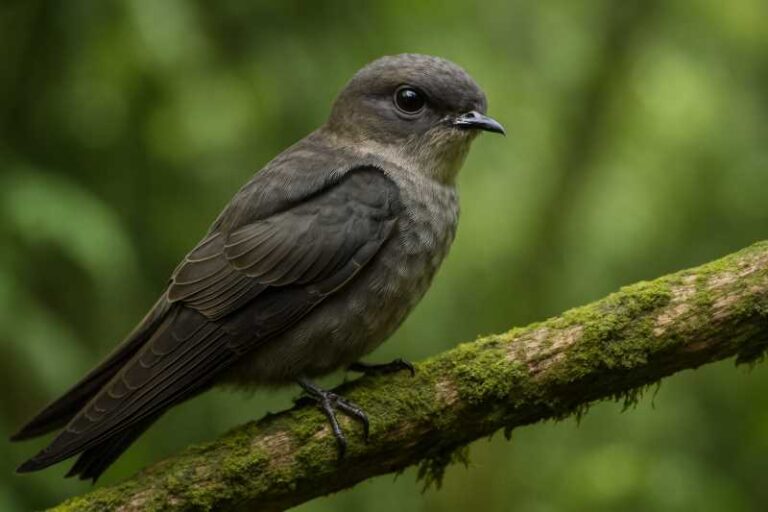
The Greyish Eagle-Owl: An Enigmatic Avian Predator
Perched atop towering trees with an air of silent majesty, the Greyish Eagle-Owl (Bubo cinerascens) is an enigmatic presence in the world of avian predators. This large, powerful owl, belonging to the Strigidae family, is renowned for its distinctive appearance and formidable hunting prowess. Found predominantly in the vast landscapes of sub-Saharan Africa, the Greyish Eagle-Owl is a fascinating subject for ornithologists and bird enthusiasts alike.
Physical Characteristics
The Greyish Eagle-Owl is a striking bird, characterized by its robust build and impressive wingspan, which can reach up to 150 centimeters. Its plumage is primarily a subtle mix of grey and brown, providing an effective camouflage against the bark of trees and the scrubland of its habitat. The facial disk is marked by a pale grey color, accentuating the intense orange-yellow eyes that are a defining feature of this species. The owl’s talons are formidable, designed to capture and subdue prey with precision.
Habitat and Distribution
Native to the diverse ecosystems of sub-Saharan Africa, the Greyish Eagle-Owl thrives in a variety of habitats, ranging from savannas and woodlands to semi-arid regions and forested areas. Its adaptability to different environments is a testament to its evolutionary success. The owl’s range extends from Senegal in the west to Ethiopia in the east, and as far south as Angola and Zambia.
Behavior and Diet
The Greyish Eagle-Owl is primarily nocturnal, utilizing the cover of darkness to hunt for its prey. Its diet is diverse, consisting mainly of small mammals such as rodents and bats, but also includes birds, reptiles, and insects. The owl’s keen sense of hearing and exceptional night vision make it a highly efficient predator, capable of detecting the faintest movements in the underbrush.
One of the most fascinating aspects of the Greyish Eagle-Owl’s behavior is its vocalization. The owl’s call is a deep, booming hoot, often used to communicate with potential mates or to establish territory. These calls can be heard echoing through the night, a haunting but beautiful sound that underscores the owl’s presence in its habitat.
Reproduction and Lifespan
Breeding season for the Greyish Eagle-Owl typically occurs during the dry months when food is more abundant. The female lays between two to four eggs, which are incubated for about 35 days. The nest, often a simple scrape on the ground or a shallow cavity in a tree, is fiercely guarded by both parents.
Once hatched, the chicks are dependent on their parents for food and protection. They fledge around seven weeks of age but remain reliant on their parents for several months as they learn to hunt and fend for themselves. In the wild, the Greyish Eagle-Owl can live for up to 15 years, although captivity can extend this lifespan significantly.
Conservation Status
Currently, the Greyish Eagle-Owl is listed as a species of Least Concern by the International Union for Conservation of Nature (IUCN). While its population is considered stable, habitat destruction and human encroachment pose potential threats. Conservation efforts are crucial to ensure that this majestic bird continues to thrive in its natural habitat.
Conclusion
The Greyish Eagle-Owl is a remarkable bird of prey, embodying the beauty and intricacy of the natural world. Its adaptability, hunting skills, and striking appearance make it a subject of great interest for scientists and birdwatchers. As with many species, continued conservation efforts are essential to preserve the diverse ecosystems that support the Greyish Eagle-Owl and countless other creatures that share its habitat.
In understanding and appreciating the Greyish Eagle-Owl, we gain insight into the complex web of life that sustains our planet. As stewards of the earth, it is our responsibility to protect and conserve these magnificent birds for future generations to admire and study.
Related posts