Olive-backed Pipit: A Comprehensive Overview of Its Habitat, Behavior, and Conservation
The Olive-backed Pipit (Anthus hodgsoni) is a small passerine bird that has piqued the interest of ornithologists and bird enthusiasts alike. Known for its distinctive olive-brown back and streaked underparts, this bird is a member of the Motacillidae family, which includes other pipits and wagtails. Found primarily across the Palearctic region, the Olive-backed Pipit is a fascinating subject due to its migratory behavior and varied habitats.
Distribution and Habitat
The Olive-backed Pipit boasts a wide geographical range, breeding in the northern parts of Asia, including Siberia and the Himalayas. During the winter months, it migrates southwards to regions such as Southeast Asia, the Indian subcontinent, and occasionally as far as Indonesia. This migratory pattern is a testament to the bird’s adaptability and resilience.
In terms of habitat, the Olive-backed Pipit shows a preference for forested areas. During the breeding season, it is often found in coniferous or mixed forests, favoring dense undergrowth that provides ample cover and food sources. In winter, these birds adapt to a variety of environments, including open woodlands, gardens, and scrublands.
Physical Characteristics
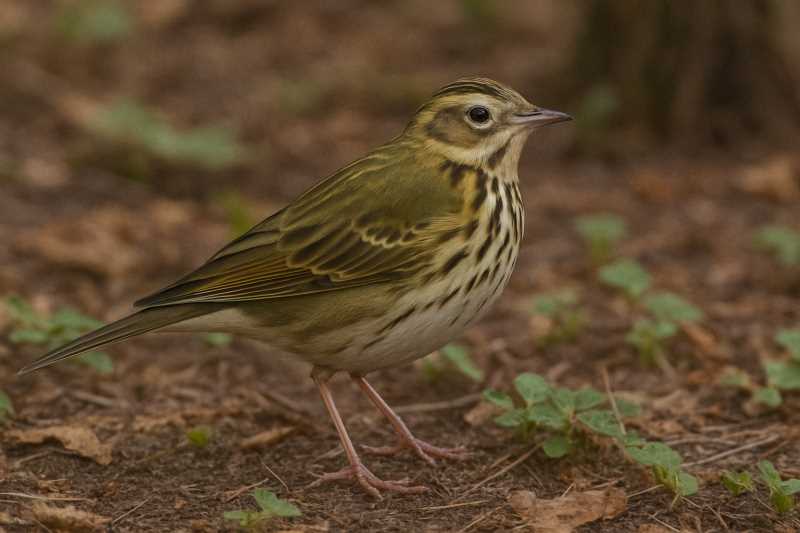
Measuring approximately 15 to 17 centimeters in length, the Olive-backed Pipit is a small yet striking bird. Its namesake olive-brown back provides effective camouflage against the forest floor, while its streaked breast and belly aid in blending into its natural environment. The bird’s white eye-ring and pale supercilium, or eyebrow line, are distinctive features that help in its identification.
Behavior and Diet
The Olive-backed Pipit is known for its ground-dwelling habits, often seen walking or running rather than hopping. This behavior is typical of pipits and is an efficient way to forage for food. Its diet is primarily composed of insects and other small invertebrates, although it will occasionally consume seeds and berries, particularly in the winter months.
One of the most remarkable aspects of the Olive-backed Pipit’s behavior is its song and call. The male’s song is a series of high-pitched notes, often delivered in flight during the breeding season. This melodic display is a key component of its mating ritual and territory establishment.
Reproduction
Breeding occurs in the spring and summer months when the Olive-backed Pipit returns to its northern territories. The female typically lays a clutch of 4 to 5 eggs, which she incubates for approximately two weeks. The nest is usually a cup-shaped structure made from grasses and twigs, well-hidden within dense vegetation on the forest floor.
After hatching, both parents are involved in feeding the chicks, which fledge about two weeks after birth. The high level of parental care ensures a good survival rate for the offspring, contributing to the species’ stable population.
Conservation Status
The Olive-backed Pipit is currently listed as a species of ‘Least Concern’ by the International Union for Conservation of Nature (IUCN). This status reflects its wide distribution and relatively stable population numbers. However, habitat loss due to deforestation and agricultural expansion poses potential threats to certain populations. Conservation efforts aimed at preserving forest habitats are crucial to ensuring the long-term survival of this species.
Conclusion
The Olive-backed Pipit is a captivating subject for both scientific study and birdwatching enthusiasts. Its wide distribution, distinctive appearance, and unique behaviors make it an important species within its ecosystem. Continued research and conservation efforts are essential to maintain the stability of its populations and ensure that future generations can enjoy the presence of this remarkable bird.
As habitats continue to change under human influence, the Olive-backed Pipit serves as a reminder of the delicate balance within natural ecosystems and the importance of preserving biodiversity.
Related posts