The Golden-rumped Euphonia: A Jewel of the Avian World
The Golden-rumped Euphonia (Chlorophonia cyanocephala) is a captivating bird species that graces the forests of South America with its vibrant plumage and melodious song. This dazzling bird, belonging to the family Fringillidae, mesmerizes ornithologists and birdwatchers alike with its striking appearance and intriguing behaviors. In this article, we delve into the enchanting world of the Golden-rumped Euphonia, exploring its habitat, physical characteristics, behavior, and conservation status.
Habitat and Distribution
The Golden-rumped Euphonia is predominantly found in the neotropical regions, inhabiting the lush forests and woodlands of countries such as Brazil, Colombia, Ecuador, Peru, and Venezuela. These birds are typically found at elevations ranging from 1,000 to 2,800 meters, thriving in both subtropical and tropical moist lowland forests and montane forests. Their preference for such habitats underscores the importance of forest conservation in ensuring the survival of this species.
Physical Characteristics
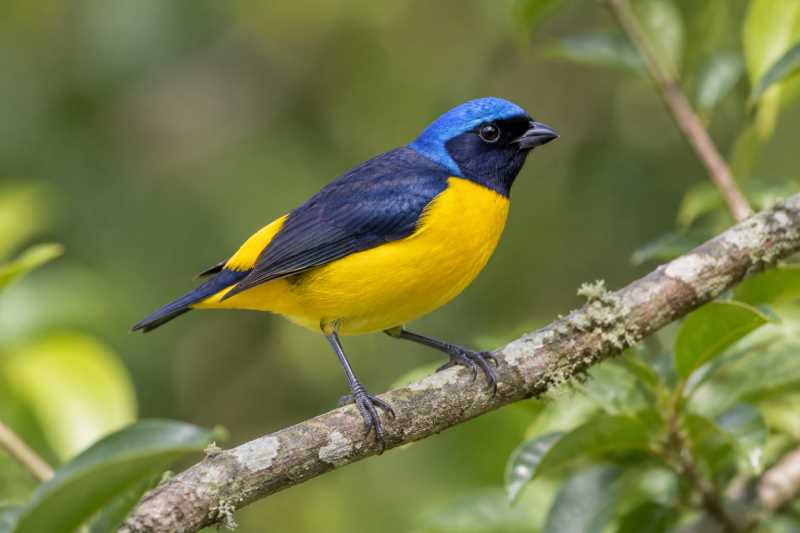
The Golden-rumped Euphonia is renowned for its distinctive and vibrant plumage. Adult males exhibit a striking combination of colors, with a bright yellow belly and a stunning golden rump that gives the bird its name. The contrasting deep blue or cyanocephalic head and back accentuate the bird’s resplendent appearance. Females, on the other hand, are slightly more subdued in their coloring, with olive-green upperparts and a less pronounced golden rump.
Measuring approximately 10 to 11 centimeters in length and weighing around 12 to 14 grams, the Golden-rumped Euphonia is relatively small. Despite their diminutive size, these birds are easily recognizable due to their vivid coloration and energetic flight patterns.
Behavior and Diet
Golden-rumped Euphonias are social creatures, often seen in small flocks or pairs as they forage for food. Their diet primarily consists of fruits and seeds, with a strong preference for mistletoe berries and other small fruits found in the forest canopy. These birds play a crucial role in seed dispersal, aiding in the propagation of various plant species throughout their habitat.
In addition to their frugivorous diet, Golden-rumped Euphonias are known to occasionally consume insects and spiders, particularly during the breeding season when the demand for protein-rich food increases. Their ability to adapt their diet based on seasonal availability showcases their ecological versatility.
Vocalization
The vocal repertoire of the Golden-rumped Euphonia is as impressive as its plumage. These birds are known for their melodious and complex songs, which are often used during courtship displays and territorial defense. Their songs consist of a series of high-pitched notes and trills, creating a symphony that resonates through the forest. The male’s song is particularly notable for its varied tempo and pitch, designed to attract potential mates and establish dominance over rivals.
Reproduction and Nesting
Breeding seasons for the Golden-rumped Euphonia vary depending on their geographical location, but they typically coincide with the rainy season when food resources are abundant. During courtship, males perform elaborate displays, showcasing their vibrant plumage and vocal prowess to entice females.
Once a pair bonds, they work together to build a small, cup-shaped nest, often concealed within dense foliage or vine tangles. The female lays a clutch of two to four eggs, which she incubates for about two weeks. Both parents share the responsibility of feeding and caring for the chicks, ensuring their survival until they fledge.
Conservation Status
The Golden-rumped Euphonia is currently listed as a species of least concern by the International Union for Conservation of Nature (IUCN). However, like many forest-dependent species, it faces potential threats from habitat loss due to deforestation and land conversion for agriculture and urban development. Conservation efforts focusing on preserving vital forest habitats are essential for safeguarding the future of this species.
Conclusion
The Golden-rumped Euphonia is a remarkable avian species that captivates with its beauty and charm. Its vibrant plumage, melodious song, and ecological significance make it a true jewel of the neotropical forests. As we continue to understand and appreciate the intricate web of life within these ecosystems, the conservation of species like the Golden-rumped Euphonia becomes ever more critical. By protecting their habitats, we not only ensure the survival of these magnificent birds but also contribute to the preservation of the biodiversity that enriches our planet.
In conclusion, the Golden-rumped Euphonia serves as a reminder of the wonders that nature holds and the responsibility we bear to protect it for future generations. As bird lovers and conservationists, it is our duty to champion the cause of these avian gems and strive for a harmonious coexistence with the natural world.
Related posts