Crimson-rumped Myzomela: A Jewel of the Solomon Islands
In the vast tapestry of avian biodiversity, the Crimson-rumped Myzomela (Myzomela eichhorni) stands out as a vibrant thread, weaving its presence through the dense, humid canopies of the Solomon Islands. This small passerine bird, belonging to the family Meliphagidae, is a true testament to the wonders of island biogeography and the evolutionary marvels it spawns.
Taxonomy and Nomenclature
The genus Myzomela includes over 30 species, predominantly distributed across Australia, New Guinea, and the Pacific Islands. The Crimson-rumped Myzomela, first described by Ernst Hartert in 1924, is named after Dr. J. F. Eichhorn, commemorating his contributions to the understanding of Pacific avifauna. The name ‘myzomela’ itself is derived from Greek, meaning ‘suction honey’, indicative of the bird’s nectarivorous habits.
Physical Characteristics
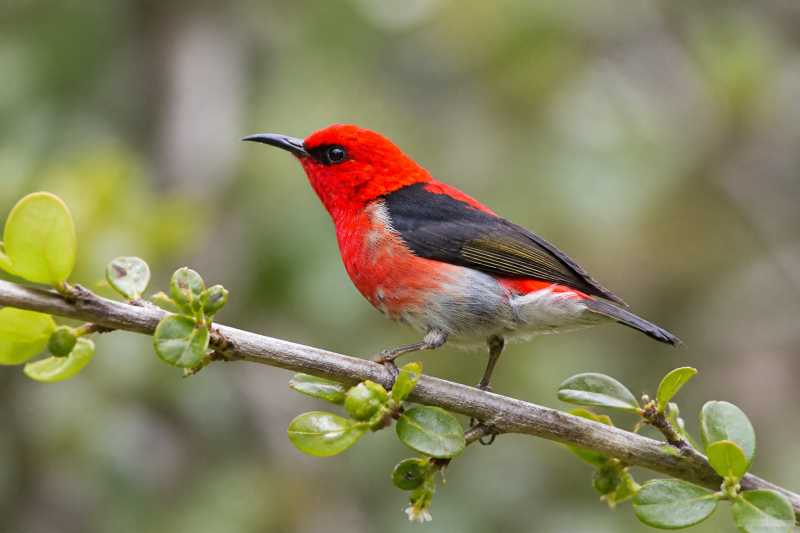
The Crimson-rumped Myzomela is a small bird, measuring about 11 cm in length. Its most striking feature, as its name suggests, is the vivid crimson patch on its rump, a stark contrast to its otherwise olive-green plumage. The males are particularly distinctive with brighter coloration, serving as an attraction during the breeding season. Females, while less vibrant, share the characteristic crimson patch but with more subdued tones.
The bird’s slender, curved bill is perfectly adapted for its nectar-feeding lifestyle, allowing it to access a variety of floral resources. Its long, brush-tipped tongue works in concert with the bill to extract nectar efficiently, though it also feeds on insects and other small arthropods, supplementing its diet with essential proteins.
Habitat and Distribution
Endemic to the Solomon Islands, the Crimson-rumped Myzomela inhabits lowland and montane rainforests, favoring areas rich in flowering plants. It is most commonly found on the islands of Bougainville and Choiseul, but its presence is recorded on several smaller islands in the archipelago. The bird’s preference for native forests underscores the importance of habitat conservation in maintaining its populations.
Behavior and Ecology
The Crimson-rumped Myzomela is an active and agile bird, often seen flitting among the canopy in search of nectar. Its flight is rapid and somewhat erratic, a trait that aids in avoiding predators. These birds are known for their territorial behavior, particularly during the breeding season, when males become aggressively defensive of their chosen patches of flowering trees.
Vocal communication is a key aspect of their behavior. The myzomela’s calls are a series of high-pitched whistles and chirps, often used to assert territory or during courtship displays. These vocalizations, combined with visual displays of their vibrant plumage, play a crucial role in mate attraction and territorial defense.
Breeding and Reproduction
Breeding in the Crimson-rumped Myzomela is closely tied to the flowering seasons of native plants, ensuring an abundant food supply for raising young. Nesting occurs in the dense foliage of forest canopies, with the female constructing a small, cup-shaped nest from twigs, leaves, and spider silk.
The female typically lays two to three eggs, which she incubates alone. During this period, the male takes on the role of protector and provider, ensuring a steady supply of food for the incubating female. Once hatched, both parents are involved in feeding and caring for the chicks until they fledge.
Conservation Status
Currently, the Crimson-rumped Myzomela is listed as Least Concern by the IUCN. However, like many island species, it faces potential threats from habitat loss due to deforestation and the impacts of climate change. Invasive species also pose a significant risk, as they can alter the delicate balance of island ecosystems.
Efforts to conserve the natural habitats of the Solomon Islands are crucial in safeguarding the future of this species. Initiatives that promote sustainable land use and the protection of native forests are essential in this regard, ensuring that the vibrant song of the Crimson-rumped Myzomela continues to grace the canopies of its island home.
Conclusion
The Crimson-rumped Myzomela is more than just a bird; it is a symbol of the unique biodiversity found in the Solomon Islands. Its vibrant presence is a reminder of the intricate ecological webs that sustain life on these islands. As we look to the future, the conservation of such species serves as a testament to our commitment to preserving the natural wonders of our world for generations to come.
Related posts