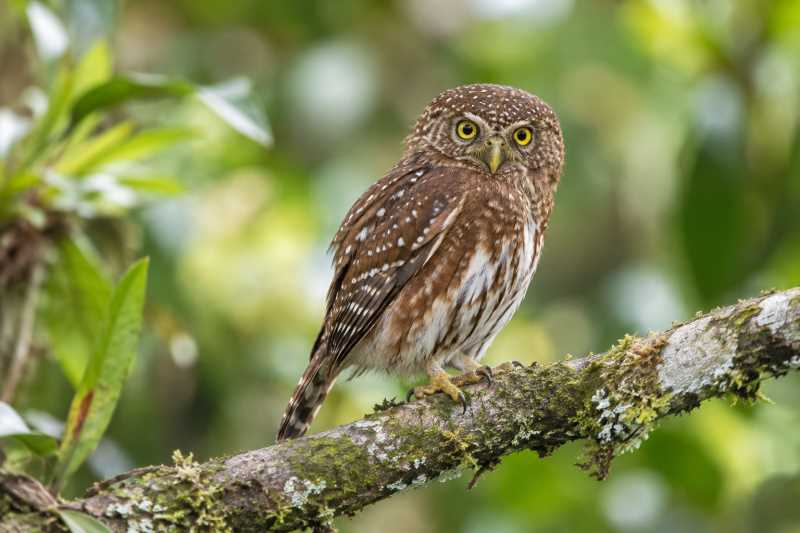
Costa Rican Pygmy Owl: A Hidden Gem of the Cloud Forests
Nestled in the lush cloud forests of Central America, the Costa Rican Pygmy Owl (Glaucidium costaricanum) is a small, enigmatic bird that captivates ornithologists and birdwatchers alike. Known for its diminutive size and elusive nature, this species plays a vital role in the biodiversity of its habitat while embodying the rich ecological tapestry of Costa Rica.
A Detailed Description of the Species
The Costa Rican Pygmy Owl is a relatively small bird, measuring approximately 6 to 7 inches in length. Despite its small stature, it possesses a robust build with a rounded head, lacking the characteristic ear tufts found in some other owl species. The owl’s plumage is a blend of rich browns, with intricate white spotting that offers excellent camouflage among the forest canopy.
Its facial disc, a vital adaptation for sound localization, is less pronounced than in other owls but is still effective for its nocturnal lifestyle. The eyes of the Costa Rican Pygmy Owl are a striking yellow, providing acute vision necessary for hunting in low light conditions. Its beak is short and hooked, perfectly adapted for its carnivorous diet.
Habitat and Distribution
Endemic to the cloud forests of Costa Rica and Western Panama, the Costa Rican Pygmy Owl thrives in high-altitude regions, typically between 1,200 to 3,000 meters. These habitats provide a dense canopy and ample opportunities for hunting small prey. The cloud forests, characterized by persistent, low-level cloud cover, offer a unique microclimate that supports a wide range of flora and fauna.
The distribution of this owl is relatively limited, which heightens its conservation importance. It is primarily found in protected areas such as Monteverde Cloud Forest Reserve and Braulio Carrillo National Park, where conservation efforts are focused on preserving these critical habitats.
Behavior and Diet
Despite its small size, the Costa Rican Pygmy Owl is a formidable hunter. It is primarily insectivorous, preying on large insects such as beetles and grasshoppers. However, its diet also includes small birds and mammals, which it captures with surprising agility.
This owl is diurnal, a rarity among its nocturnal relatives, and is often observed during the early morning and late afternoon. It employs a sit-and-wait hunting strategy, perching silently until prey is spotted. Its flight is quick and direct, allowing for rapid pursuit of moving targets.
Vocalizations play a crucial role in its behavior, with a series of high-pitched toots used for communication and territory establishment. These calls can often be heard echoing through the forest, a distinctive sound that aids birdwatchers in locating these elusive birds.
Conservation Status and Challenges
The Costa Rican Pygmy Owl is currently listed as Least Concern by the IUCN Red List. However, like many species dependent on specific habitats, it faces threats from habitat destruction. Deforestation for agriculture and urban development poses significant risks to the cloud forests where these owls reside.
Conservation efforts in Costa Rica have been robust, with a significant portion of the country’s land designated as protected areas. These efforts aim to mitigate habitat loss and promote sustainable tourism, which can benefit both the local economy and wildlife conservation.
Additionally, climate change presents a looming threat, as shifts in temperature and precipitation patterns could alter the delicate ecosystems of the cloud forests. Ongoing research and conservation initiatives are crucial to understanding and addressing these impacts to ensure the long-term survival of the Costa Rican Pygmy Owl.
Ecotourism and the Role of Birdwatching
Costa Rica is a renowned destination for ecotourism, attracting visitors from around the globe eager to experience its diverse wildlife. Birdwatching, in particular, has become a pivotal activity, drawing attention to the country’s rich avian biodiversity.
The Costa Rican Pygmy Owl, with its captivating presence, is a sought-after species for birdwatchers. Local guides and conservation groups often organize birdwatching tours, offering opportunities to observe these owls in their natural habitat while educating participants on the importance of conservation.
Such initiatives not only contribute to the local economy but also foster a greater appreciation for the delicate balance of ecosystems. They highlight the interconnectedness of species and the need for concerted efforts to preserve the natural world.
Conclusion
The Costa Rican Pygmy Owl is a testament to the incredible biodiversity found within the cloud forests of Central America. Its presence underscores the importance of conservation and sustainable practices as we strive to protect the natural habitats that support such unique species.
Through continued research, education, and conservation efforts, we can ensure that future generations will have the opportunity to marvel at this tiny but mighty predator. The Costa Rican Pygmy Owl is not just a symbol of the region’s natural beauty but also a reminder of the intricate web of life that we are all a part of.
Related posts