The Enigmatic Beauty of the Chocolate-backed Kingfisher
The Chocolate-backed Kingfisher (Halcyon badia) is a captivating bird species that inhabits the dense, tropical rainforests of West and Central Africa. This elusive bird, with its vibrant plumage and melodious calls, has intrigued ornithologists and birdwatchers alike. Despite its striking appearance, the Chocolate-backed Kingfisher remains one of the more enigmatic members of the Halcyon genus.
A Distinctive Appearance
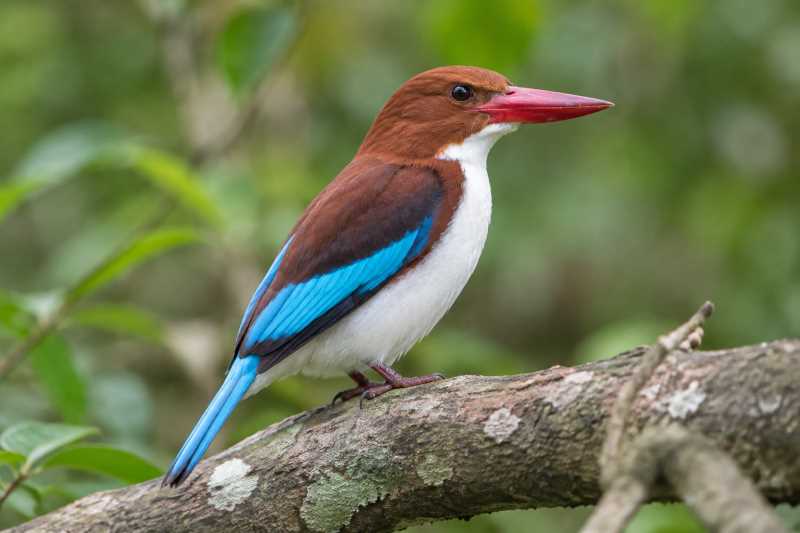
The Chocolate-backed Kingfisher is aptly named for its rich, chocolate-brown back and wings. This distinctive coloration sets it apart from other kingfishers, which often boast bright blues and greens. The contrast between its dark back and the lighter, rufous underparts is striking, adding to its allure. A vivid blue patch on its rump and a distinct white throat further enhance its visual appeal.
A medium-sized kingfisher, Halcyon badia typically measures 20 to 23 centimeters in length. Its robust beak, characteristic of kingfishers, is adapted for catching a variety of prey. These birds have large, expressive eyes that provide excellent vision, crucial for locating prey in the dimly lit forest understory.
Habitat and Range
The Chocolate-backed Kingfisher is endemic to the tropical rainforests of West and Central Africa, with its range extending from Sierra Leone to Uganda. It thrives in humid, lowland forests, often near rivers or streams, where it finds an abundance of food. Preferring the dense canopy, this kingfisher is seldom seen in open areas, making sightings a rare and treasured experience for birdwatchers.
Feeding Habits
Unlike many kingfishers that primarily feed on fish, the Chocolate-backed Kingfisher has a varied diet. It is primarily insectivorous, feasting on beetles, grasshoppers, and other insects found within the forest. It also consumes small reptiles and occasionally small fish. Its hunting technique involves perching quietly on a branch, scanning the surroundings intently before swooping down to snatch its prey.
The Chocolate-backed Kingfisher’s feeding habits play a vital role in controlling insect populations in its ecosystem, highlighting its ecological importance. Its ability to adapt its diet based on availability ensures its survival across its extensive range.
Breeding and Behavior
The breeding season for the Chocolate-backed Kingfisher typically coincides with the onset of the rainy season, when food is abundant. These birds are cavity nesters, often selecting tree holes or abandoned burrows for nesting. The female lays a clutch of two to three eggs, which both parents diligently incubate.
Chick rearing is a cooperative effort, with both parents involved in feeding and protecting the young. The fledglings are dependent on their parents for several weeks post-hatching, gradually learning to hunt and fend for themselves.
Despite being solitary hunters, Chocolate-backed Kingfishers exhibit social behavior during the breeding season. Their calls, a series of melodious whistles, are often used to communicate with mates and establish territory. These vocalizations add to the symphony of sounds in the rainforest, enhancing its vibrant ambiance.
Conservation Status
Currently, the Chocolate-backed Kingfisher is classified as Least Concern by the International Union for Conservation of Nature (IUCN). However, like many rainforest inhabitants, it faces threats from habitat loss due to deforestation and human encroachment.
Conservation efforts focused on habitat preservation are crucial for ensuring the survival of this species. Protecting large tracts of contiguous forest and promoting sustainable land-use practices are essential strategies to mitigate the impact of human activities on its habitat.
A Symbol of Biodiversity
The Chocolate-backed Kingfisher, with its unique appearance and behavior, symbolizes the rich biodiversity found within Africa’s tropical rainforests. Its presence indicates a healthy, vibrant ecosystem, underscoring the importance of preserving these critical habitats.
For ornithologists and bird enthusiasts, the Chocolate-backed Kingfisher remains a species of great interest. Continued research and conservation efforts are vital to understanding and protecting this elusive bird, ensuring that it continues to enchant future generations with its beauty and enigmatic charm.
Conclusion
The Chocolate-backed Kingfisher is more than a bird; it is a vital component of its ecosystem and a reminder of the intricate connections within nature. Protecting this species and its habitat is imperative for maintaining the ecological balance and preserving the natural heritage of Africa’s rainforests.
Related posts