The Enigmatic Rufous-bellied Kookaburra: A Jewel of the Avian World
The Rufous-bellied Kookaburra (Dacelo gaudichaud) stands as a remarkable testament to the diversity and splendor of avian life. Native to the dense tropical forests of New Guinea and the neighboring islands, this bird is a fascinating subject for ornithologists and bird enthusiasts alike. Its distinctive features and behaviors not only captivate those who study it but also contribute significantly to the ecological tapestry of its habitat.
A Glimpse into the World of the Rufous-bellied Kookaburra
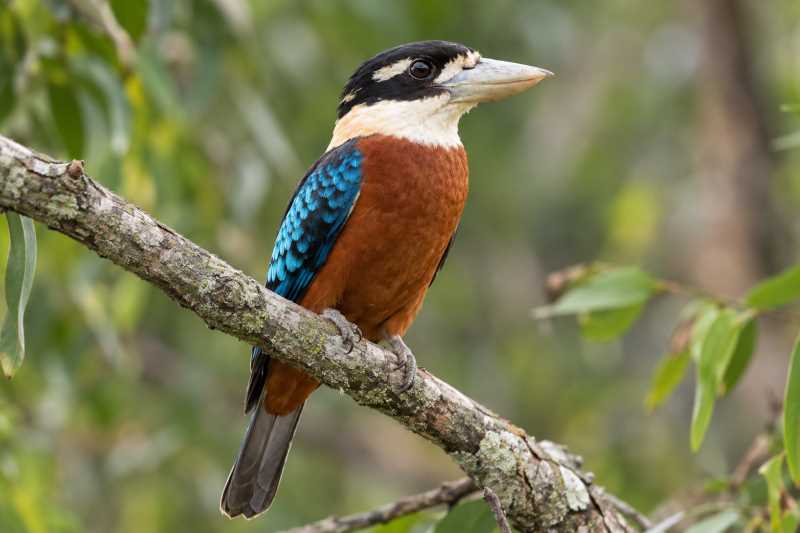
Measuring around 28 to 33 cm in length, the Rufous-bellied Kookaburra is noted for its striking plumage. As its name suggests, this bird is characterized by its rufous-colored belly, which contrasts beautifully with its otherwise predominantly blue and white body. The head is adorned with a prominent crest, and its large, stout bill is a signature feature shared by other members of the kingfisher family.
The Rufous-bellied Kookaburra is often mistaken for its more famous relative, the Laughing Kookaburra of Australia. However, it sets itself apart through not only its unique coloration but also its distinctive call. Unlike the Laughing Kookaburra’s iconic laughter, the Rufous-bellied Kookaburra emits a more subdued series of cackles and chuckles, adding a melodic charm to the forest soundscape.
Habitat and Distribution
Thriving primarily in the lowland rainforests of New Guinea, the Rufous-bellied Kookaburra favors habitats with dense canopy coverage. It is often found near water bodies, such as rivers and swamps, which provide ample hunting grounds for its diet. The bird’s range extends from the Vogelkop Peninsula in the west to the southeastern regions of the island, including some adjacent islands.
This kookaburra is a resident bird, meaning it does not undertake long migratory journeys. Its survival depends largely on the health of its rainforest habitat, making it particularly vulnerable to deforestation and habitat degradation. The preservation of these ecosystems is crucial for maintaining the biodiversity that supports the Rufous-bellied Kookaburra and countless other species.
Feeding Habits and Diet
As a member of the kingfisher family, the Rufous-bellied Kookaburra is a skilled hunter. Its diet is diverse, consisting of insects, small reptiles, and amphibians, which it typically captures with a swift, precise dive. The bird’s robust bill is instrumental in subduing its prey, while its keen eyesight allows it to spot potential meals from a considerable distance.
Unlike the aquatic hunting techniques of many kingfishers, the Rufous-bellied Kookaburra primarily hunts on the ground or in the trees. This adaptation reflects the varied ecological niches the bird occupies and underscores its role in controlling insect and small vertebrate populations within its habitat.
Breeding and Social Behavior
The breeding behavior of the Rufous-bellied Kookaburra is as intriguing as its hunting prowess. These birds are monogamous, forming long-term pair bonds that are reinforced through cooperative activities such as territory defense and nest building. Breeding pairs often utilize tree hollows or abandoned termite mounds for nesting sites, providing a secure environment for raising their young.
Courtship involves a series of mutual displays, including vocal duets and physical posturing. Once a pair has formed, they work together to incubate the eggs and care for the hatchlings. This cooperative breeding strategy extends to other family members, with offspring from previous years sometimes assisting in raising the new brood.
Conservation Status and Challenges
Currently, the Rufous-bellied Kookaburra is classified as a species of "Least Concern" by the International Union for Conservation of Nature (IUCN). However, this status does not exempt it from the challenges faced by many rainforest dwellers. Deforestation, driven by logging and agricultural expansion, poses a significant threat to its habitat. Conservation efforts aimed at protecting New Guinea’s rainforests are vital for ensuring the survival of the Rufous-bellied Kookaburra and the rich biodiversity of the region.
In addition to habitat preservation, public education and community engagement play crucial roles in the conservation strategy. By fostering an appreciation for the unique wildlife of New Guinea, conservationists hope to inspire local and global efforts to safeguard these precious ecosystems.
Conclusion
The Rufous-bellied Kookaburra is more than just a vibrant bird; it is a symbol of the intricate interdependencies within the rainforest ecosystem. As we strive to protect this remarkable species and its habitat, we are reminded of the broader imperative to preserve the natural world in all its diversity. Through concerted conservation efforts, there is hope that future generations will continue to marvel at the beauty and complexity of avian wonders like the Rufous-bellied Kookaburra.
As we deepen our understanding of this enchanting bird, we are reminded of our own role in the stewardship of the planet, ensuring that the forests of New Guinea remain a thriving sanctuary for all its inhabitants.
Related posts