The Enigmatic Cloud-Forest Screech Owl: A Jewel of the Andean Highlands
The Cloud-forest Screech Owl (Megascops marshalli) is a captivating yet elusive species that inhabits the lofty cloud forests of South America. This small owl, shrouded in mystery and enigma, is a testament to the rich biodiversity of the Andean highlands. Despite its diminutive size and elusive nature, the Cloud-forest Screech Owl plays a vital role in the ecosystem, and its continued survival is crucial to maintaining the ecological balance of its habitat.
Taxonomy and Classification
The Cloud-forest Screech Owl belongs to the family Strigidae and the genus Megascops, which encompasses a diverse group of screech owls found throughout the Americas. Megascops marshalli was first described in 2002, highlighting the relatively recent scientific interest in this species. Named in honor of John Marshall, a pioneer in the study of Neotropical wildlife, this species represents a unique branch of the evolutionary tree.
Description and Morphology
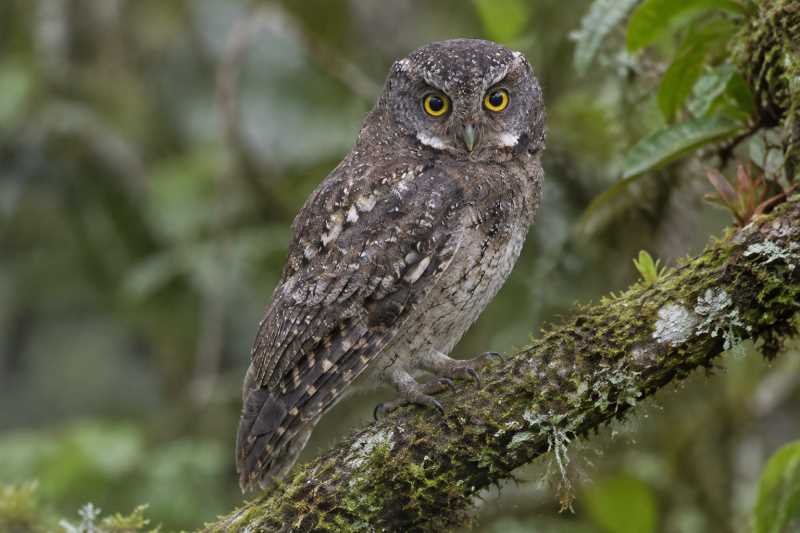
The Cloud-forest Screech Owl is a small bird, typically measuring around 20 to 25 centimeters in length. Its plumage is a complex mosaic of browns, grays, and whites, providing excellent camouflage against the bark and foliage of its forest home. The owl’s facial disc is characteristically rounded, with prominent ear tufts that enhance its keen auditory abilities. Large, yellowish eyes give it a striking appearance, adapted for night vision, which is essential for its nocturnal lifestyle.
Habitat and Distribution
As its name suggests, the Cloud-forest Screech Owl inhabits montane cloud forests, primarily in the eastern Andes of Peru and Bolivia. These forests are characterized by high humidity, persistent cloud cover, and rich biodiversity. The owl typically resides at elevations ranging from 1,800 to 2,500 meters above sea level, where the dense canopy and abundant undergrowth provide both shelter and hunting grounds.
Behavior and Ecology
The Cloud-forest Screech Owl is primarily nocturnal, emerging from its daytime roosts at dusk to hunt for prey. Its diet consists mainly of insects, small mammals, and occasionally other birds. The owl employs a sit-and-wait hunting strategy, perching silently on a branch before swooping down on unsuspecting prey with swift precision.
Vocalizations play a significant role in the owl’s behavior, serving as both territorial markers and mating calls. The species is known for its distinctive trills and whistles, which can be heard echoing through the forest during the breeding season.
Conservation Status and Threats
Currently, the Cloud-forest Screech Owl is classified as Near Threatened by the International Union for Conservation of Nature (IUCN). This status reflects the ongoing threats to its habitat, primarily due to deforestation and land conversion for agriculture. The cloud forests of the Andes are under significant pressure, with logging and farming steadily encroaching upon these vital ecosystems.
Conservation efforts are crucial to ensuring the survival of Megascops marshalli. Protecting the remaining cloud forests is paramount, and initiatives such as establishing protected areas and promoting sustainable land-use practices are vital steps in this direction.
The Importance of Scientific Research
Despite being a relatively recent discovery, the Cloud-forest Screech Owl has already contributed to a greater understanding of Andean biodiversity. Ongoing research is essential for monitoring the population dynamics and ecological needs of this species. Field studies focusing on its behavior, breeding patterns, and habitat requirements can inform conservation strategies and help mitigate the threats it faces.
Collaborative efforts between local communities, governments, and international conservation organizations are necessary to safeguard the future of the Cloud-forest Screech Owl. Education and awareness campaigns can also play a pivotal role in fostering a sense of stewardship among local populations, encouraging them to participate in conservation initiatives.
Conclusion
The Cloud-forest Screech Owl, with its enigmatic presence and vital ecological role, stands as a symbol of the unique and irreplaceable biodiversity of the Andean cloud forests. Its survival depends on our collective efforts to preserve its habitat and address the threats posed by human activities. By prioritizing conservation and sustainable practices, we can ensure that this remarkable species continues to thrive in the misty heights of the Andes, enchanting future generations with its haunting calls and elusive beauty.
Related posts