The Enigmatic Beauty of the Cream-breasted Fruit Dove (Ptilinopus merrilli)
Nestled within the lush, verdant forests of the Philippines, a small, vibrant bird graces the treetops with its presence: the Cream-breasted Fruit Dove (Ptilinopus merrilli). This exquisite bird, known for its striking plumage and melodious calls, is a member of the family Columbidae and symbolizes the rich biodiversity found in the Philippines. As we delve into the life and habitat of this remarkable species, we uncover its unique characteristics, ecological significance, and the challenges it faces in its natural environment.
A Glimpse into the Physical Characteristics
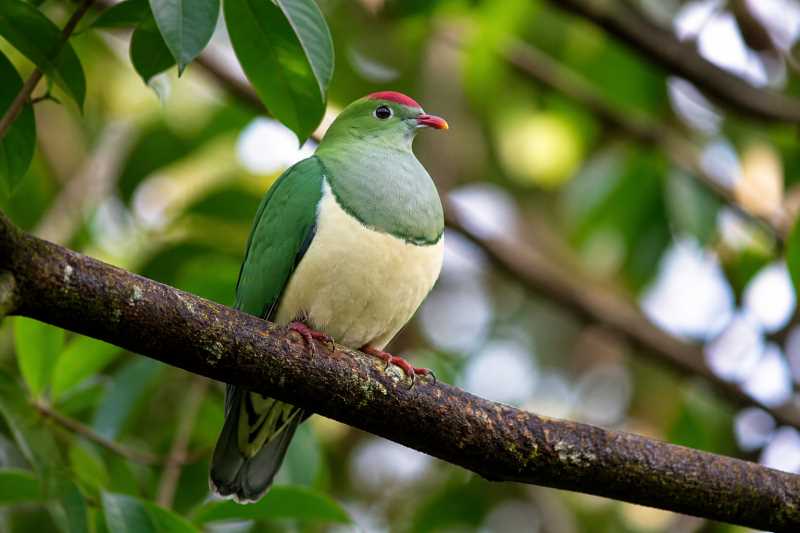
The Cream-breasted Fruit Dove is a medium-sized bird, measuring approximately 20 to 22 centimeters in length. True to its name, this bird boasts a creamy white breast, which beautifully contrasts with its olive-green back and wings. Its head is adorned with a subtle yet enchanting blend of pale green and gray, while a distinctive band of maroon crowns its chest. The eyes are bright and expressive, adding an element of curiosity and intelligence to its demeanor.
The dove’s small, rounded body and short tail are complemented by its slender, orange-yellow bill, which serves as an essential tool for foraging. The legs, a striking yellow, are adapted for perching among the branches of fruiting trees, where it spends much of its time.
Habitat and Distribution
Endemic to the Philippines, the Cream-breasted Fruit Dove is primarily found on the islands of Luzon, Mindanao, and several smaller surrounding islands. It thrives in lowland and mid-montane forests, where it can be seen flitting gracefully among the canopy layers. These doves prefer dense, moist forests where fruit is abundant, as their diet consists predominantly of figs and other small fruits.
The fragmentation of its forest habitat poses a significant threat to the Cream-breasted Fruit Dove, with deforestation for agriculture and urban development leading to a reduction in suitable living spaces. Despite these challenges, the dove remains relatively adaptable, occasionally venturing into secondary forests and plantations in search of food.
Ecological Role and Behavior
The Cream-breasted Fruit Dove plays a vital role in its ecosystem as a seed disperser. By consuming a variety of fruits and subsequently excreting the seeds, these doves contribute to the propagation of plant species across their habitat. This mutualistic relationship underscores the importance of preserving both the dove and its natural environment.
In terms of behavior, these doves are generally shy and elusive, often remaining hidden within the forest canopy. They are typically solitary or found in pairs, although small groups may gather in fruit-rich areas. Their call, a soft, melodic cooing, is often heard before the birds are seen, echoing through the forest as a gentle reminder of their presence.
Reproduction and Lifespan
The breeding season for the Cream-breasted Fruit Dove is not well documented, but like many fruit doves, it is believed to coincide with periods of fruit abundance. The female typically lays a single egg, which both parents take turns incubating. After hatching, the chick is fed a regurgitated mixture of fruit pulp and crop milk, a nutrient-rich secretion produced by the parents.
The lifespan of the Cream-breasted Fruit Dove in the wild is not clearly established, but similar species in captivity have been known to live for over a decade, suggesting a potentially long life for those in protected environments.
Conservation Status and Efforts
Currently, the Cream-breasted Fruit Dove is classified as Near Threatened by the International Union for Conservation of Nature (IUCN). The primary threats to its survival include habitat loss due to deforestation, hunting, and the illegal pet trade. Conservation efforts are essential to ensuring the survival of this species, focusing on habitat protection, reforestation, and raising awareness about the importance of biodiversity.
Organizations working in the Philippines are actively engaged in creating protected areas and implementing sustainable land management practices. Community involvement and education are also critical components of these efforts, empowering local populations to participate in conservation initiatives and understand the value of preserving their natural heritage.
The Future of the Cream-breasted Fruit Dove
The future of the Cream-breasted Fruit Dove hinges on a delicate balance between conservation efforts and human development. As awareness grows about the importance of biodiversity and the role species like the Cream-breasted Fruit Dove play in their ecosystems, there is hope for positive change. By supporting conservation initiatives and promoting sustainable practices, we can ensure that this captivating bird continues to grace the Philippine forests for generations to come.
In conclusion, the Cream-breasted Fruit Dove is more than just a beautiful bird; it is a testament to the incredible biodiversity of the Philippines and a symbol of the delicate interconnections within its ecosystem. Protecting this species and its habitat is not just a conservation priority but a commitment to preserving our planet’s natural wonders.
Related posts