Introduction
The Chestnut-backed Tanager (Stilpnia preciosa) is a captivating bird species that graces the tropical regions of South America with its vibrant plumage and melodious calls. Belonging to the Thraupidae family, this tanager is a testament to nature’s artistic prowess, with its striking colors and intricate patterns that make it a favorite among birdwatchers and ornithologists alike. This article aims to provide an in-depth exploration of the Chestnut-backed Tanager, covering its taxonomy, physical characteristics, habitat, behavior, diet, reproduction, conservation status, and its significance in the ecosystem.
Taxonomy and Classification
The Chestnut-backed Tanager is classified under the genus Stilpnia, which is part of the larger Thraupidae family, commonly referred to as tanagers. The scientific name Stilpnia preciosa reflects the bird’s exquisite appearance, with ‘preciosa’ alluding to its precious and beautiful nature. First described by the German naturalist Jean Cabanis in 1850, the Chestnut-backed Tanager has since been a subject of interest due to its unique characteristics and the role it plays in its natural habitat.
Physical Characteristics
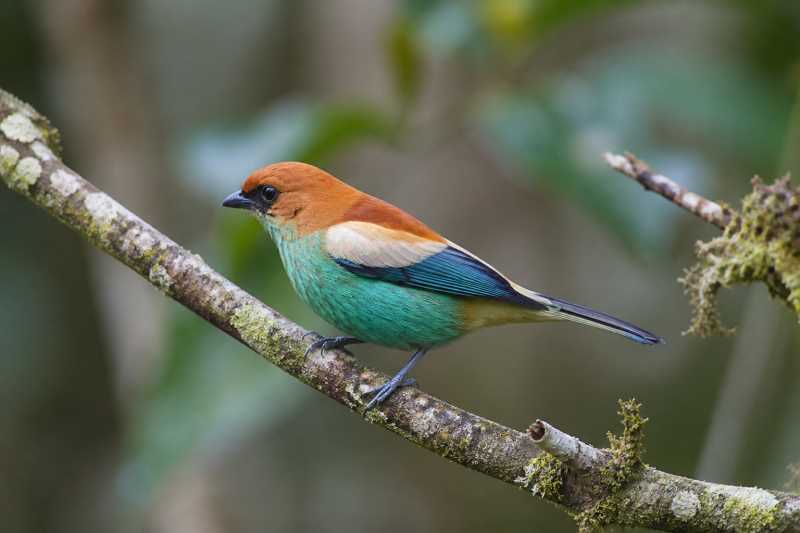
The Chestnut-backed Tanager is renowned for its stunning coloration. As its name suggests, the bird features a rich chestnut hue on its back, which contrasts beautifully with its turquoise-blue head, wings, and tail. The belly is typically a lighter shade of blue or even white, providing a striking contrast to the darker upper parts. This vibrant coloration is not just for show; it plays a crucial role in mate selection and territorial displays. Males and females exhibit similar plumage, although males tend to have slightly more vivid colors.
In terms of size, the Chestnut-backed Tanager is relatively small, measuring about 11 to 12 centimeters in length and weighing between 12 to 15 grams. Despite its diminutive size, its presence is quite noticeable in its native habitats, thanks to its bright colors and active behavior.
Habitat and Distribution
The Chestnut-backed Tanager is predominantly found in the subtropical and tropical regions of South America, with its range extending across countries such as Brazil, Bolivia, Paraguay, and Argentina. It prefers humid forest environments, thriving in both lowland and montane forests, as well as in forest edges and secondary growth areas. This adaptability to various habitats is a key factor in its relatively stable population status.
The bird’s preference for dense foliage provides ample opportunities for foraging and nesting while offering protection from predators. Its presence in both primary and secondary forests highlights its adaptability, although it does show a preference for areas with abundant fruiting trees and shrubs.
Behavior and Social Structure
The Chestnut-backed Tanager is a highly social bird, often seen in small flocks or mixed-species groups. This social structure allows it to maximize foraging efficiency and provides added protection against predators. The flocks are generally composed of 5 to 10 individuals, although larger gatherings can occur during the breeding season or in areas with abundant food resources.
Communication among Chestnut-backed Tanagers is facilitated through a variety of vocalizations, including melodic songs and sharp calls. These vocalizations play a crucial role in maintaining group cohesion, establishing territories, and attracting mates. Observations have shown that these tanagers are quite vocal, especially during the early morning and late afternoon when foraging activity is at its peak.
Diet and Foraging Habits
The diet of the Chestnut-backed Tanager is primarily frugivorous, with a strong preference for a wide variety of fruits and berries. However, it also supplements its diet with insects and small invertebrates, which provide essential proteins and nutrients. This dietary flexibility allows the Chestnut-backed Tanager to adapt to seasonal variations in food availability.
Foraging is typically conducted in the mid to upper levels of the forest canopy, where the bird uses its agile flight and dexterous movements to access food resources. The tanager’s strong, slightly curved bill is well-adapted for handling a variety of food items, from soft fruits to tougher insect prey.
Reproduction and Lifespan
Breeding in the Chestnut-backed Tanager is closely linked to the availability of food resources, with the breeding season typically occurring during the wet season when fruits and insects are most abundant. The nesting process begins with the male engaging in elaborate courtship displays, often involving vocalizations and physical displays to attract a mate.
Once paired, the female takes on the primary role of building the nest, which is usually constructed in a concealed location within dense foliage. The nest is cup-shaped, made from twigs, leaves, and other plant materials. Clutch sizes typically range from two to three eggs, with the female incubating them for about 12 to 14 days. Both parents are involved in feeding and caring for the chicks, which fledge after approximately two weeks.
In the wild, the Chestnut-backed Tanager can live for several years, with some individuals reaching up to a decade or more under optimal conditions.
Conservation Status and Threats
The Chestnut-backed Tanager is currently classified as Least Concern by the International Union for Conservation of Nature (IUCN), primarily due to its wide distribution and adaptability to various habitats. However, like many other bird species, it faces threats from habitat loss and fragmentation due to deforestation and agricultural expansion.
Conservation efforts aimed at preserving tropical forests and promoting sustainable land use practices are crucial for ensuring the long-term survival of the Chestnut-backed Tanager and the myriad other species that share its habitat. Additionally, initiatives that promote ecotourism and birdwatching can provide economic incentives for local communities to engage in conservation efforts.
Ecological Significance
The Chestnut-backed Tanager plays a vital role in its ecosystem as both a seed disperser and a predator of insects. By consuming fruits and subsequently dispersing seeds through its droppings, the tanager contributes to the regeneration and maintenance of forest biodiversity. Its predation on insects also helps regulate insect populations, providing an ecological balance.
Conclusion
The Chestnut-backed Tanager is a remarkable species that embodies the beauty and complexity of tropical ecosystems. Its vibrant plumage, social behavior, and ecological significance make it a fascinating subject for study and observation. As we continue to explore and understand the natural world, the Chestnut-backed Tanager serves as a reminder of the intricate connections that exist within our planet’s ecosystems and the importance of preserving these natural wonders for future generations.
References
- Cabanis, J. (1850). "Description of Stilpnia preciosa." Journal of Ornithology.
- BirdLife International (2023). "Stilpnia preciosa." IUCN Red List of Threatened Species.
- Ridgely, R. S., & Tudor, G. (2009). "Field Guide to the Songbirds of South America: The Passerines."
- Schulenberg, T. S., et al. (2010). "Birds of Peru: Revised and Updated Edition."
- Various field observations and studies on the behavior and ecology of the Chestnut-backed Tanager.
Related posts