The Enigmatic Bornean Shortwing: A Jewel of Southeast Asia
The Bornean shortwing (Brachypteryx erythrogyna) is a captivating avian species that graces the dense forests of Borneo. This elusive bird, belonging to the family Muscicapidae, has piqued the interest of ornithologists and bird enthusiasts alike due to its restricted range and distinctive characteristics. In this article, we delve into the intriguing life of the Bornean shortwing, exploring its habitat, behavior, conservation status, and the efforts being made to ensure its survival.
Habitat and Distribution
The Bornean shortwing is endemic to the island of Borneo, which is politically divided among three countries: Malaysia, Indonesia, and Brunei. This bird thrives in the montane forests of the central and northern regions, particularly favoring elevations between 1,000 to 3,000 meters. Its presence is predominantly recorded in the Malaysian states of Sabah and Sarawak, as well as in the Indonesian provinces of Kalimantan.
Borneo’s montane forests, where the Bornean shortwing resides, are characterized by a cool and moist climate that supports a rich biodiversity. The undergrowth in these forests is dense, offering ample cover for the bird to forage and nest. The Bornean shortwing’s preference for such a specialized habitat underscores the importance of preserving these unique ecosystems.
Physical Characteristics
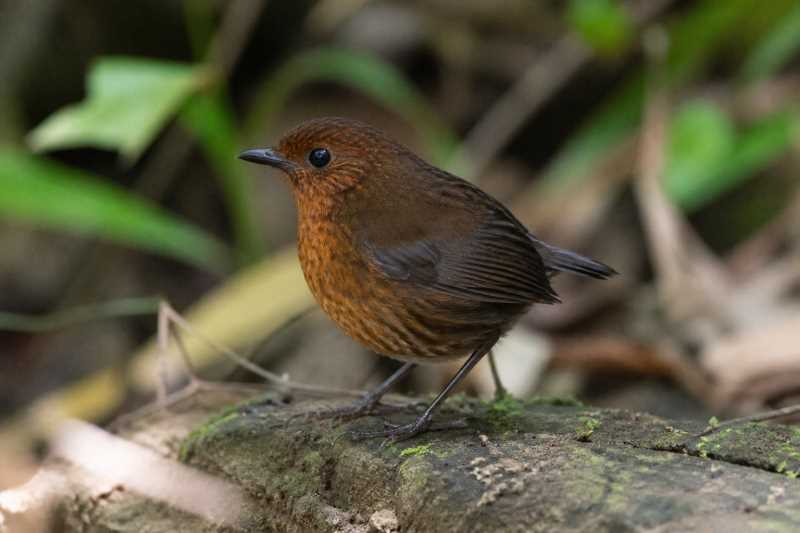
The Bornean shortwing is a small, stout bird, measuring approximately 13 to 14 centimeters in length. Its plumage is predominantly a rich chestnut brown, with a subtle reddish hue that gives the bird its species name, erythrogyna, meaning "red woman" in Greek. The underparts are lighter, providing a gentle contrast to the darker upper body. The bird’s short wings and tail are adapted for maneuvering through dense foliage rather than long-distance flight.
One of the distinguishing features of the Bornean shortwing is its striking eye ring, which is a bright white or pale blue. This eye ring is not only an essential identification marker but also adds to the bird’s charismatic appearance. The beak is short and sturdy, perfect for its ground-feeding habits.
Behavior and Diet
Bornean shortwings are known for their secretive and elusive nature, often remaining hidden within the thick underbrush. They are primarily solitary birds, although they may occasionally be observed in pairs during the breeding season. Their behavior is characterized by low, deliberate movements as they forage on the forest floor.
The diet of the Bornean shortwing consists mainly of insects and other small invertebrates. They exhibit a foraging technique known as "gleaning," where they pick prey from leaves, branches, and the ground. This diet is indicative of their role in the forest ecosystem, helping to control insect populations.
Breeding and Nesting
Breeding activity for the Bornean shortwing is typically observed between March and July, aligning with the region’s rainy season. During this time, the lush environment provides ample food resources and nesting materials. The nests are usually constructed close to the ground, hidden among roots or vegetation to protect against predators.
The female is primarily responsible for building the nest, which is a compact structure made from moss, leaves, and twigs. She typically lays two to three eggs, which are incubated for approximately two weeks. Both parents are involved in feeding and caring for the nestlings until they fledge and become independent.
Conservation Status and Challenges
The International Union for Conservation of Nature (IUCN) currently categorizes the Bornean shortwing as Near Threatened, reflecting concerns over its limited range and the ongoing threats to its habitat. Deforestation and habitat degradation, driven by logging, agriculture, and infrastructure development, pose significant risks to the montane forests of Borneo.
Conservation efforts are underway to mitigate these threats, with initiatives focused on protecting critical habitats and promoting sustainable land-use practices. Organizations and government agencies are working together to establish protected areas and enforce regulations that safeguard Borneo’s rich biodiversity.
Conclusion
The Bornean shortwing is a testament to the ecological richness of Borneo’s montane forests. Its unique adaptations and behaviors make it a fascinating subject of study, while its conservation status highlights the urgent need for action to preserve its natural habitat. Protecting the Bornean shortwing is not only crucial for maintaining biodiversity but also for ensuring that future generations can continue to marvel at this enchanting bird.
As the challenges of environmental change persist, the story of the Bornean shortwing serves as a reminder of the delicate balance within our ecosystems and the critical role of conservation in safeguarding our planet’s natural heritage.
Related posts