Exploring the Enigmatic Madagascar Buttonquail (Turnix nigricollis)
The Madagascar Buttonquail, scientifically known as Turnix nigricollis, is a captivating bird species that draws the interest of ornithologists and bird enthusiasts alike. This enigmatic bird, endemic to the unique ecosystems of Madagascar, offers a fascinating insight into the evolutionary pathways and ecological niches of island avifauna. In this article, we delve into the characteristics, habitat, behavior, and conservation status of the Madagascar Buttonquail.
Taxonomy and Description
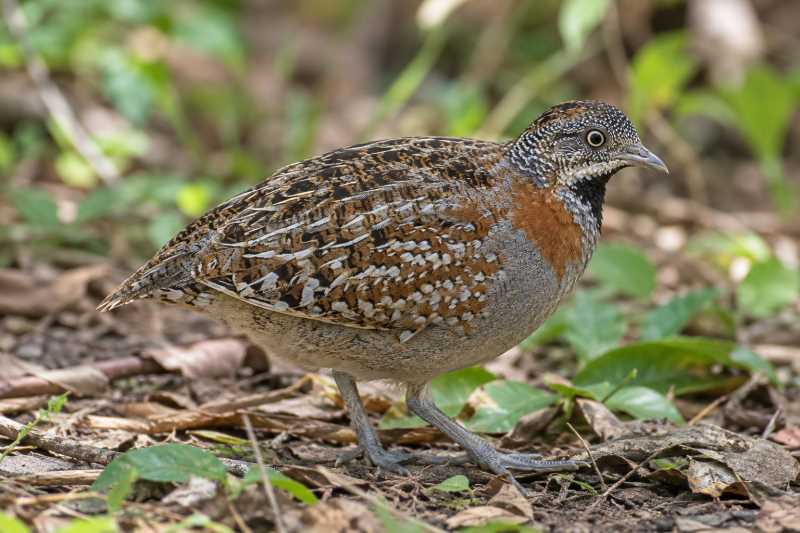
The Madagascar Buttonquail belongs to the family Turnicidae, which comprises small terrestrial birds often referred to as buttonquails. Despite their name, buttonquails are not true quails and are instead more closely related to shorebirds. The species Turnix nigricollis was first described scientifically in the 19th century and is distinguished by its relatively small size, reaching about 15 cm in length.
The plumage of the Madagascar Buttonquail is primarily a mottled brown, providing excellent camouflage against the forest floor. It features a distinctive black collar, or "nigricollis," which is the basis of its scientific name. Its underparts are lighter with a subtle buff hue, and both sexes are similar in appearance, though females are often slightly larger and more vividly marked.
Habitat and Distribution
The Madagascar Buttonquail is found exclusively on the island of Madagascar, where it inhabits a range of environments, including dry deciduous forests, grasslands, and scrublands. This adaptability is crucial for survival on an island where habitats can vary drastically across relatively short distances. The species is known to be more abundant in areas with dense undergrowth that provides cover and foraging opportunities.
Madagascar, known for its high level of endemic species, provides a unique backdrop for the Madagascar Buttonquail. The island’s distinct biogeography, characterized by its isolation and varied landscapes, has enabled the evolution of many unique species, the buttonquail among them.
Behavior and Ecology
The Madagascar Buttonquail is predominantly terrestrial, foraging on the ground for seeds, insects, and other small invertebrates. Its feeding behavior involves a characteristic method of scratching and pecking at the leaf litter, a technique that helps uncover hidden prey.
One of the most intriguing aspects of the Madagascar Buttonquail is its reproductive behavior. Unlike many other bird species, the female buttonquail plays the dominant role in courtship and territorial defense. She is larger, more colorful, and often initiates courtship displays to attract a mate. Once the eggs are laid, it is the male who assumes the primary responsibility for incubation and chick-rearing, a role reversal that challenges typical avian gender roles.
The breeding season of the Madagascar Buttonquail is largely dictated by the availability of food, which in turn is influenced by the island’s wet and dry seasons. During favorable conditions, females may mate with multiple males, each tending their own clutch of eggs.
Conservation Status
The conservation status of the Madagascar Buttonquail is currently assessed as Least Concern by the International Union for Conservation of Nature (IUCN). However, like many species endemic to Madagascar, it faces threats from habitat destruction and degradation. Deforestation for agriculture, logging, and charcoal production poses significant risks to its natural habitats.
Efforts to conserve the unique biodiversity of Madagascar are crucial for the survival of species like the Madagascar Buttonquail. Protected areas and national parks play a vital role in providing safe havens, but conservationists stress the importance of sustainable land-use practices that balance human needs with ecological preservation.
Conclusion
The Madagascar Buttonquail is a remarkable testament to the evolutionary marvels of island life. Its unique behaviors, ecological niche, and the challenges it faces underscore the complexity and fragility of Madagascar’s ecosystems. As we continue to unravel the mysteries of the natural world, the Madagascar Buttonquail serves as both a subject of scientific intrigue and a symbol of conservation importance.
Preserving the habitats and ecological dynamics that support such species is not only essential for maintaining biodiversity but also for ensuring that future generations can witness the wonders of nature, such as the Madagascar Buttonquail, in their natural environments.
By understanding and appreciating the intricate balance of Madagascar’s ecosystems, we can take informed steps to protect the island’s avian treasures and the larger environmental tapestry they inhabit. As researchers and conservationists work alongside local communities, the hope is to secure a sustainable future for the Madagascar Buttonquail and the myriad of life forms that call this unique island home.
Related posts