Chinstrap Penguins: The Stalwarts of the Antarctic Isles
The Chinstrap Penguin (Pygoscelis antarcticus) is a captivating avian species that thrives in the harsh, icy conditions of the Antarctic and sub-Antarctic regions. Known for their distinctive black band under the chin, these penguins are a testament to the resilience of wildlife in extreme climates. Their ability to navigate the challenging environments of the Antarctic makes them a particularly interesting subject of study for scientists and naturalists alike.
Physical Characteristics
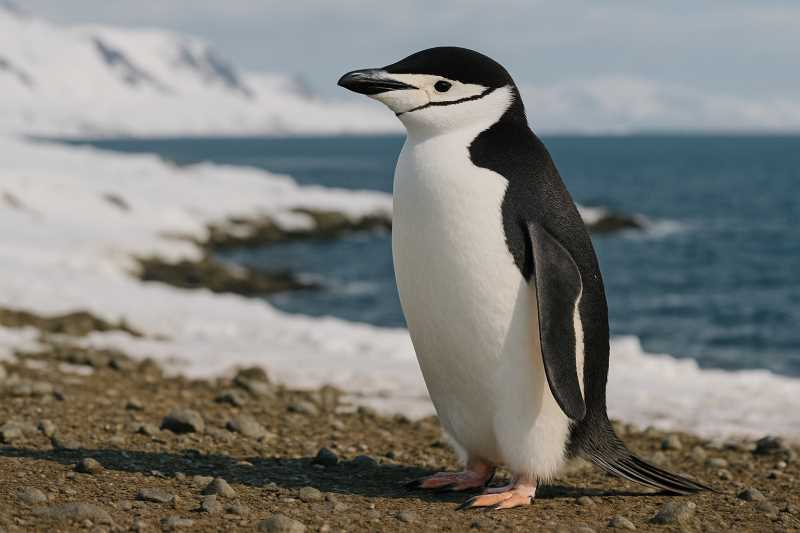
Chinstrap Penguins are medium-sized penguins with an average height of 68 to 76 cm (27 to 30 inches) and weighing around 3.5 to 5 kg (7.7 to 11 pounds). Their striking appearance is marked by a white face and front, contrasting sharply with their black back and flippers. The thin black line running from ear to ear under their chin is not just a defining feature but also lends them their name.
Adapted to cold climates, their bodies are well-insulated with a layer of blubber and densely packed feathers, which help to maintain their body temperature. Their powerful flippers and streamlined bodies make them agile swimmers, capable of reaching speeds up to 30 km/h (18.6 mph) when pursuing prey.
Habitat and Distribution
Chinstrap Penguins predominantly inhabit the islands and shores of the Southern Ocean. They are particularly prevalent in the South Shetland Islands and the Antarctic Peninsula, with smaller populations found in South Georgia, the South Sandwich Islands, and Bouvet Island. The cold waters surrounding these regions are rich in krill and other marine life, providing an abundant food source for these penguins.
During the breeding season, Chinstrap Penguins form large colonies, often numbering in the hundreds of thousands, on rocky slopes and shores. These colonies can be a cacophony of noise and activity as penguins engage in courtship, nest-building, and rearing their young.
Diet and Hunting Behavior
The diet of Chinstrap Penguins is primarily composed of krill, a small crustacean that forms the backbone of the Antarctic food web. They also consume fish and squid but to a lesser extent. Chinstrap Penguins are skilled hunters, using their keen eyesight and swift swimming abilities to catch their prey.
Foraging trips can last from a few hours to several days, depending on the availability of food and the needs of their chicks. These penguins can dive to depths of around 70 meters (230 feet), although most of their hunting occurs within the top 45 meters (148 feet) of the ocean.
Reproductive Behavior
Breeding occurs during the austral summer, from November to March. Chinstrap Penguins are monogamous and often return to the same nesting site each year. Males arrive first to claim and prepare the nest site, using stones to construct a simple nest.
Once the female arrives, the pair engages in a series of courtship displays, including mutual preening and synchronized movements. Females typically lay two eggs, which both parents incubate in shifts over a period of 37 days. After hatching, the chicks are brooded and fed by both parents until they are ready to join a crèche, or group of young penguins, at about three weeks old.
Conservation Status and Challenges
The International Union for Conservation of Nature (IUCN) currently classifies the Chinstrap Penguin as a species of Least Concern. However, their populations face challenges from climate change, which affects the availability of krill, and human activities such as fishing and tourism.
Warming temperatures in the Antarctic region have led to changes in sea ice patterns, impacting the abundance and distribution of krill. Additionally, increased human activity poses risks through habitat disturbance and potential oil spills.
Efforts to monitor and conserve Chinstrap Penguins include tracking population trends, studying their ecology and behavior, and implementing measures to mitigate the impact of human activities. Conservationists emphasize the importance of protecting the Antarctic ecosystem to ensure the long-term survival of these remarkable birds.
Conclusion
Chinstrap Penguins are an integral part of the Antarctic ecosystem, showcasing the incredible adaptability and resilience of wildlife in one of the planet’s most extreme environments. Understanding their behavior, diet, and the challenges they face is crucial for their conservation and the preservation of the delicate balance of life in the Southern Ocean. Through continued research and conservation efforts, we can hope to secure a future for these fascinating creatures and the unique world they inhabit.
This is one of the species covered in our book Penguins Of The World which is part of our Kings Birds of the world series, and one of the Kings Guides.

Related posts