Olivaceous Greenlet: A Comprehensive Guide to Hylophilus olivaceus
The Olivaceous Greenlet, scientifically known as Hylophilus olivaceus, is a captivating avian species found primarily in the neotropical regions of South America. Known for its subtle beauty and fascinating behaviors, this bird has garnered interest among ornithologists and bird watchers alike. In this article, we delve into the intriguing world of the Olivaceous Greenlet, exploring its habitat, physical characteristics, behavior, and conservation status.
Habitat and Distribution
Hylophilus olivaceus is primarily found in the humid forests of the Amazon Basin, with a distribution range that stretches across several countries, including Brazil, Colombia, Venezuela, Ecuador, Peru, and Bolivia. These birds thrive in lowland tropical forests, often inhabiting the mid-story and lower canopy layers of dense, humid woodlands.
The Olivaceous Greenlet prefers regions with abundant foliage, which provides both food and shelter. The dense vegetation not only serves as a rich feeding ground but also offers protection from predators. As a result, these birds are often heard more than seen, their melodic calls echoing through the forest.
Physical Characteristics
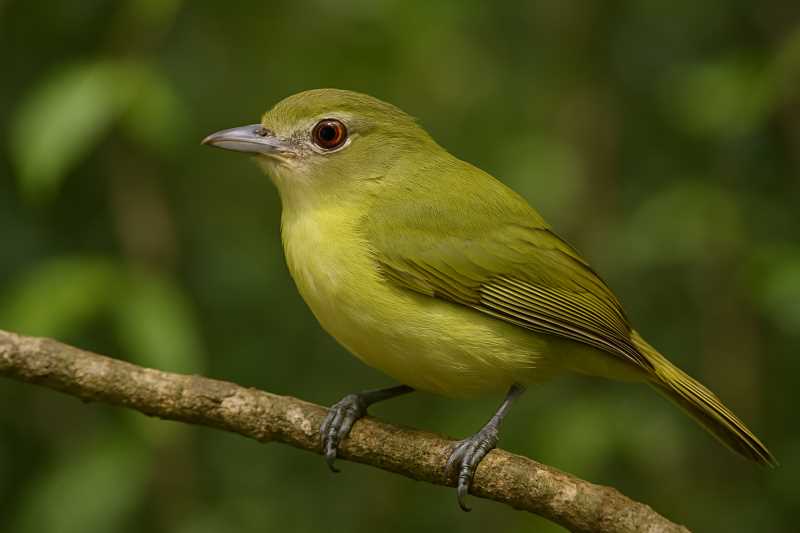
The Olivaceous Greenlet is a small bird, measuring approximately 12 to 13 centimeters in length and weighing around 10 to 14 grams. Its plumage is predominantly olive-green, which provides excellent camouflage against the verdant backdrop of its natural habitat. This coloration is particularly advantageous for avoiding predators.
The bird’s head is relatively plain, with a faintly marked, pale eye ring that adds a subtle contrast to its overall appearance. Its beak is short and robust, well-suited for its omnivorous diet, while its eyes are a striking feature, often appearing large relative to its head size.
Behavior and Diet
Olivaceous Greenlets are primarily insectivorous, foraging actively among leaves and branches for insects and other small invertebrates. However, they also consume fruit and berries, making them opportunistic feeders. Their foraging behavior is often energetic, involving rapid movements and occasional acrobatics as they glean food from foliage.
These birds are known for their vocalizations, which include a series of melodious whistles and chirps. Their calls are a vital part of their communication, used for both mating and territorial purposes. Despite their relatively plain appearance, their vocal prowess makes them one of the more noticeable species in their habitat.
Reproduction and Lifespan
The breeding season of the Olivaceous Greenlet varies depending on its geographical location, but it generally coincides with the wet season, when food resources are abundant. The species is known for its monogamous mating system, with pairs often remaining together for several breeding seasons.
Nesting typically occurs in trees or shrubs, with the female constructing a small cup-shaped nest made from twigs, leaves, and other plant materials. The female lays a clutch of two to three eggs, which she incubates for about two weeks. Both parents participate in feeding and caring for the chicks, which fledge approximately 12 to 15 days after hatching.
The lifespan of Olivaceous Greenlets in the wild is not well-documented, but like many small passerines, they are likely to live for several years, facing threats from predation and habitat loss.
Conservation Status
Currently, the Olivaceous Greenlet is classified as Least Concern by the International Union for Conservation of Nature (IUCN). It benefits from a relatively stable population, largely owing to its wide distribution and adaptability to different forest environments.
However, the species is not immune to the threats facing many tropical birds. Deforestation, driven by agriculture, logging, and urban expansion, poses a significant risk to its habitat. Conservation efforts aimed at preserving tropical forests are essential to safeguarding the future of the Olivaceous Greenlet and countless other species that depend on these ecosystems.
Conclusion
The Olivaceous Greenlet is a fascinating bird that embodies the rich biodiversity of the Amazon rainforest. Its subtle beauty, distinctive vocalizations, and adaptive behaviors make it a subject of interest for both scientific study and birdwatching enthusiasts. While currently not at immediate risk, ongoing conservation efforts are crucial to ensuring that this species continues to thrive in its natural habitat.
As we strive to protect our planet’s biodiversity, the Olivaceous Greenlet serves as a reminder of the intricate web of life that exists within our forests, urging us to appreciate and preserve these vital ecosystems for future generations.
Related posts