The Black Bee-eater: A Jewel of the African Canopy
The Black Bee-eater (Merops gularis) is a striking bird species belonging to the Meropidae family, known for its vibrant plumage and graceful aerial acrobatics. This enchanting avian species is native to the dense tropical rainforests and woodlands of West and Central Africa, where it adds a splash of color to the lush green canopy.
Physical Characteristics
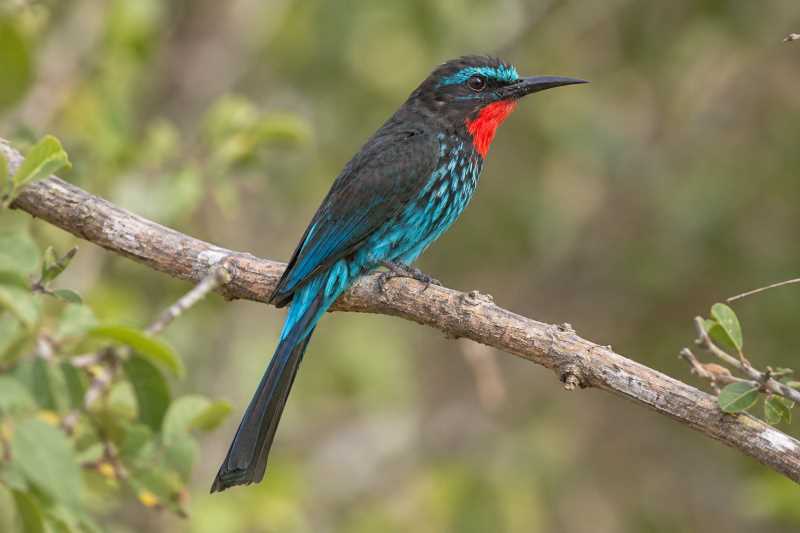
The Black Bee-eater is a small to medium-sized bird, measuring approximately 20 to 22 centimeters in length. It is easily recognizable by its vivid blue underparts and striking black upperparts, which create a stark contrast against the often muted colors of the forest. The bird’s throat is adorned with a brilliant red patch, while its head boasts streaks of iridescent blue and green. Its striking red eyes and long, decurved bill add to its distinctive appearance.
The black bee-eater’s plumage is not only beautiful but also functional. The vibrant colors are believed to play a role in mate selection, signaling health and vitality to potential partners. Additionally, the bird’s streamlined body and long wings make it an adept flyer, capable of agile maneuvers as it chases its insect prey.
Habitat and Distribution
The Black Bee-eater is primarily found in the tropical and subtropical regions of West and Central Africa, including countries like Sierra Leone, Ghana, Nigeria, and Cameroon. It favors humid environments, often inhabiting the upper canopy of lowland rainforests and edge habitats such as forest clearings and riverbanks.
These birds are highly adapted to life in the forest canopy, where they can often be seen perched high on branches, surveying the area for potential prey. However, they are also known to venture into open areas during the dry season, when insect availability in the forest may decrease.
Diet and Foraging Behavior
True to its name, the Black Bee-eater primarily feeds on bees and other flying insects. Its diet includes a variety of hymenopterans (bees and wasps), dragonflies, butterflies, and beetles. The bird’s foraging strategy is both fascinating and efficient. From a perch, it scans the surrounding area for flying insects. Once it spots potential prey, it launches into the air with incredible speed and agility, capturing the insect in its strong, curved bill.
The Black Bee-eater employs a unique method to handle potentially dangerous prey like bees and wasps. After capturing such an insect, the bird will return to its perch and repeatedly beat the insect against the branch. This behavior serves to kill the prey and remove the sting before consumption, ensuring a safe meal.
Breeding and Reproduction
The breeding season of the Black Bee-eater generally coincides with the rainy season, varying slightly depending on the geographical location. During this time, male bee-eaters perform elaborate courtship displays to attract females. These displays often involve a combination of aerial acrobatics and vocalizations, showcasing both the bird’s physical prowess and its vibrant plumage.
Once a pair forms, they will collaborate to excavate a nest burrow, typically in sandy banks or flat ground. The female lays a clutch of 2 to 4 eggs, which both parents incubate for approximately 18 to 20 days. After hatching, the chicks are altricial, meaning they are born blind and helpless, requiring extensive parental care. Both parents take turns feeding the chicks, bringing back a steady supply of insects.
Fledging occurs after about 24 to 30 days, though the young birds often remain with their parents for several weeks thereafter, honing their flying and hunting skills.
Conservation Status
Currently, the Black Bee-eater is classified as a species of "Least Concern" by the International Union for Conservation of Nature (IUCN). However, like many forest-dependent species, it faces threats from habitat destruction due to logging, agriculture, and human settlement expansion. Protecting the remaining forest habitats is crucial for ensuring the long-term survival of this and many other species.
Conservation efforts focused on preserving and restoring natural habitats, along with raising awareness about the importance of biodiversity, are essential to maintaining healthy populations of Black Bee-eaters and other forest-dwelling species.
Conclusion
The Black Bee-eater is a remarkable representation of the beauty and diversity of the African avifauna. Its vibrant plumage and agile flight make it a standout species in the forest canopy, while its ecological role as an insect predator highlights its importance within the ecosystem. By appreciating and protecting these magnificent birds and their habitats, we contribute to the preservation of the rich biodiversity that characterizes Africa’s tropical rainforests.
Whether you’re an avid birdwatcher or simply an admirer of nature’s wonders, the Black Bee-eater offers a glimpse into the vibrant life that thrives in the heart of the African wilderness.
Related posts