Belding’s Yellowthroat: An Endearing Avian Marvel
Belding’s Yellowthroat (Geothlypis beldingi) is a small, charismatic bird that has captured the interest of ornithologists and birdwatchers alike. Endemic to the Baja California Peninsula in Mexico, this species is a member of the Parulidae family, which encompasses the various New World warblers. Its limited range and distinct characteristics make it a focal point for avian conservation efforts in the region.
Physical Characteristics
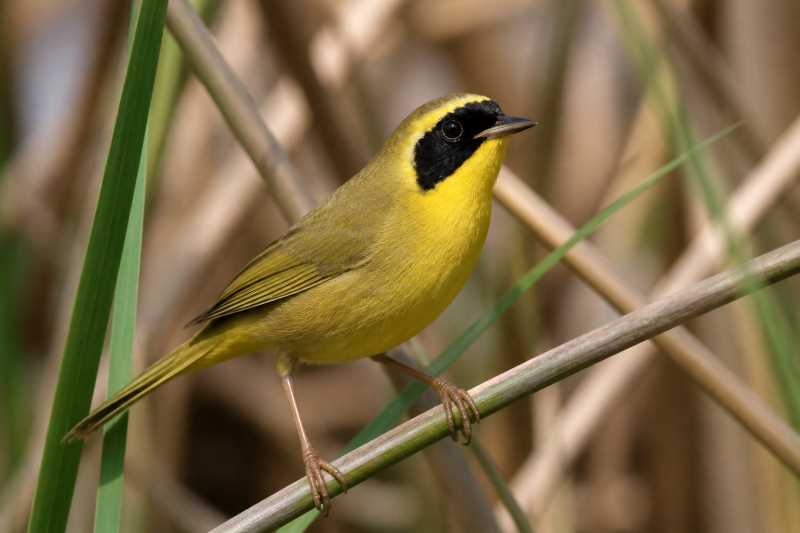
Belding’s Yellowthroat is a medium-sized warbler, with males and females exhibiting slightly different plumages. The male, with its vibrant yellow throat and breast, is easily recognizable. It boasts a striking black mask that extends from the beak over the eyes, creating a captivating contrast against its olive-brown upper parts. The female, while more subdued in coloration, still displays a charming yellow hue on her throat and breast, albeit less intensely than the male.
Both sexes have a compact body, measuring approximately 12-15 cm in length, with a wingspan of about 17-20 cm. Their short wings and long tail are adapted for their preferred habitat of dense marsh vegetation, where agility is more beneficial than speed.
Habitat and Distribution
The Belding’s Yellowthroat is predominantly found in freshwater marshes, dense shrubby areas, and the edges of streams and rivers. These birds are particularly adapted to the reed and cattail environments, which provide both nourishment and protection from predators. However, the species’ range is extremely limited; it is primarily confined to the southern tip of the Baja California Peninsula. This narrow distribution makes it vulnerable to habitat destruction and environmental changes.
Behavior and Diet
Belding’s Yellowthroat is an insectivorous bird, primarily feeding on a diet of insects and spiders. This diet is supplemented with small seeds and berries, especially during the winter months when insects are less abundant. Typically, they forage by hopping through dense vegetation, gleaning insects from leaves and stems, or catching them in flight.
These birds are known for their distinctive vocalizations. The male’s song is a series of musical notes, often described as a cheerful ‘witchity-witchity-witchity,’ which is used to establish territory and attract mates. Their calls and songs are an integral part of their behavioral repertoire, serving as a tool for communication and interaction within their habitat.
Reproduction and Lifespan
The breeding season for Belding’s Yellowthroat generally occurs between March and July. During this time, males engage in elaborate displays of song and courtship to attract females. Nesting takes place in dense vegetation, often low to the ground, where the female builds a cup-shaped nest using grasses and plant fibers.
The female typically lays 2-4 eggs per clutch, which are incubated for about 12 days. Both parents are involved in feeding and caring for the young, which fledge approximately 10 days after hatching. The lifespan of Belding’s Yellowthroat in the wild is not well-documented, but many small passerines live for several years if they can survive past their first year.
Conservation Status
Belding’s Yellowthroat is currently classified as an endangered species by the International Union for Conservation of Nature (IUCN). The primary threat to its survival is habitat destruction, particularly the draining and development of wetlands for agricultural and urban expansion. Climate change also poses a significant risk, with alterations in weather patterns potentially impacting the availability of suitable habitats.
Conservation efforts are focused on habitat protection and restoration. Initiatives to preserve and restore wetland areas in the Baja California Peninsula are critical for the survival of this species. Additionally, public awareness and education campaigns aim to highlight the importance of conserving the unique biodiversity of the region.
Conclusion
Belding’s Yellowthroat is a testament to the incredible diversity of avian life. Its vibrant colors, distinctive song, and unique adaptations make it a fascinating subject of study and a symbol of the delicate balance within ecosystems. Protecting this species requires a concerted effort to preserve its natural habitat, ensuring that future generations can continue to enjoy its presence in the wild.
As we continue to grapple with environmental challenges, the story of Belding’s Yellowthroat serves as a reminder of the interconnectedness of life and the importance of conservation efforts in maintaining the rich tapestry of our natural world.
Related posts