Introduction
The Dusky-throated Hermit (Phaethornis squalidus) is a small hummingbird endemic to Brazil. It is associated mainly with the humid Atlantic Forest of southeastern and southern Brazil, where it forages in shaded forest understorey and dense secondary growth. Although unobtrusive in colour, its long bill, dusky throat and distinctive hermit-like shape make it a specialised member of the forest hummingbird community.
Physical Description
The Dusky-throated Hermit is a small, slender hummingbird with a long, slightly curved bill and elongated tail. Published specimens have weighed approximately 3.0 to 3.5 grams, although body mass can vary with sex, condition and locality.
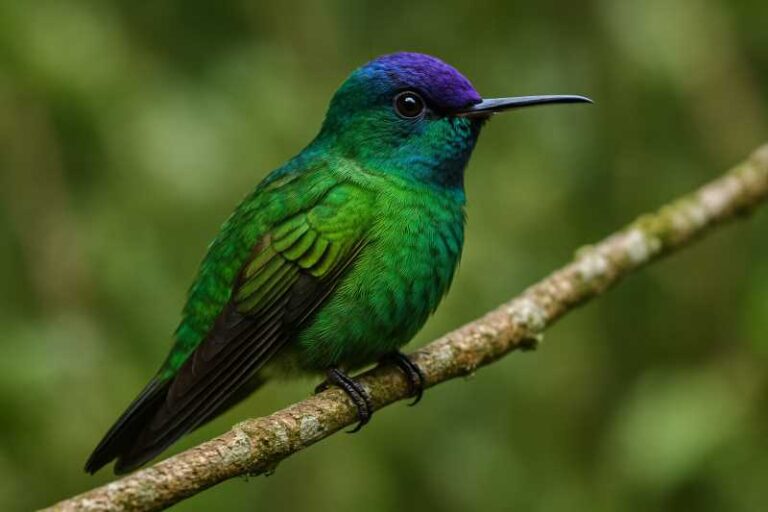
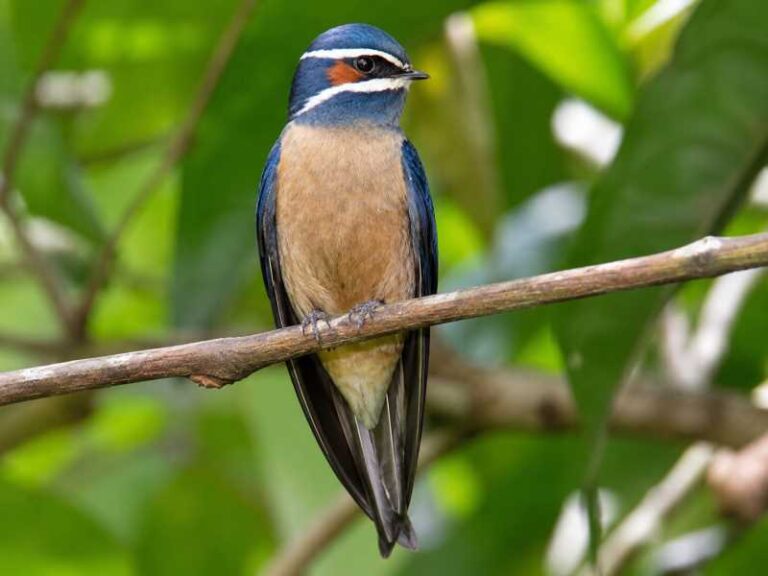
Its plumage is mainly brownish or olive-green, with darker areas on the head and a noticeable dusky throat. A pale buff or whitish stripe behind the eye can be visible in good light. The underparts are generally subdued brownish-grey, while the tail feathers show pale or buff markings that can be useful when the bird moves through shadowy vegetation.
Males and females are broadly similar in appearance, and reliable field separation by sex is difficult. Juveniles may appear duller and less sharply marked than adults. As with other hummingbirds, the long bill is adapted for reaching nectar in tubular flowers.
Range and Habitat
The Dusky-throated Hermit is endemic to Brazil. Its range extends from southern Minas Gerais and Espírito Santo through Rio de Janeiro and São Paulo, southwards into Paraná and Santa Catarina. It is generally treated as a resident species rather than a long-distance migrant, although local movements may occur in response to food availability and flowering patterns.
It inhabits humid Atlantic Forest, including coastal rainforest, montane forest, forest edges and dense secondary growth. The species is most often associated with the understorey and mid-level vegetation, rather than exposed high canopy. It occurs from low elevations into mountainous areas, and has been recorded at substantially higher elevations in the southeastern Brazilian highlands.
Habitat quality is important. Continuous forest provides shelter, nesting sites and a dependable supply of nectar-producing plants and small arthropods, while connected patches of secondary vegetation may also provide useful feeding habitat.
Where to See This Species
Intervales State Park, São Paulo, Brazil
The Dusky-throated Hermit is documented at Intervales State Park, where it has been recorded in Atlantic Forest understorey and around flowering plants. The park is a recognised birdwatching destination, and the species has been observed following regular feeding routes between nectar sources. Look along forest tracks, shaded clearings and dense vegetation, particularly where bromeliads and other tubular flowers are present.
Nearby accommodation: The park has visitor accommodation and camping facilities, while the nearby towns of Ribeirão Grande and Capão Bonito provide additional guest houses, hotels and self-catering options.
Itatiaia National Park, Rio de Janeiro, Brazil
Itatiaia National Park supports humid Atlantic Forest across a wide elevational range, and the Dusky-throated Hermit has been documented in the park, including lower forest areas and the Maromba sector. Forest trails, gardens and flowering plants around visitor facilities can provide opportunities for observation, although the species may remain difficult to detect in dense vegetation.
Nearby accommodation: The town of Itatiaia and the Penedo area provide hotels, guest houses, lodges and self-catering accommodation near park access points.
Serra dos Órgãos National Park, Rio de Janeiro, Brazil
The species is included in documented bird records for the Serra dos Órgãos region. Its humid montane Atlantic Forest and dense understorey are suitable habitat, especially at lower and intermediate elevations rather than exposed high-altitude ridges. Quiet observation along forest trails offers the best chance of detecting a bird moving between flowering plants.
Nearby accommodation: Teresópolis, Petrópolis and Guapimirim are practical gateway towns with hotels, guest houses, lodges and camping options.
Behaviour and Diet
The Dusky-throated Hermit is usually encountered alone and is often elusive. It moves quickly through shaded understorey, sometimes pausing to hover at flowers before moving on. Like other hermits, it may follow a regular feeding route, or trapline, visiting nectar sources at intervals rather than defending a single feeding station continuously.
Nectar forms an important part of its diet. Recorded food plants include bromeliads and other tubular flowers, and Heliconia has also been reported among plants visited by the species. It supplements nectar with small insects and spiders, which provide protein and other nutrients.
By carrying pollen between flowers, the species contributes to pollination in Atlantic Forest plant communities. At Intervales, Dusky-throated Hermits were observed returning repeatedly to flowering bromeliads at regular intervals.
Detailed information about its breeding biology remains limited. The female is responsible for nest construction and incubation. The nest is a small cup-like structure suspended beneath a leaf or similar support, and the usual clutch is reported as two white eggs. The young hatch in an altricial condition and require extended parental care.
Identification Tips
- Look for a small, slim hummingbird with a long, gently curved bill and subdued brownish-green plumage.
- The dusky throat, darker head and pale stripe behind the eye can be useful at close range.
- In flight or when moving away, note the elongated tail and pale or buff tail markings.
- Search shaded forest understorey, dense edges and flowering bromeliads rather than open treetops.
- The species can occur with the similar Scale-throated Hermit (Phaethornis eurynome). Careful attention to throat pattern, overall colour, tail markings, elevation and habitat is recommended, as brief views can be difficult to identify confidently.
- Its regular movement between flowers may help distinguish it from hummingbirds that remain concentrated around a defended feeding territory.
Conservation Status
The Dusky-throated Hermit is currently classified as Least Concern by the IUCN. Its population size and precise population trend are not well quantified, so the category should not be interpreted as evidence that the species is unaffected by habitat change.
The principal long-term concern is the loss and fragmentation of Atlantic Forest. Agriculture, urban expansion, roads, logging and other land-use changes can reduce suitable forest understorey and isolate populations. Conservation priorities include protecting remaining forest, maintaining habitat connections, supporting effective management of protected areas and restoring native vegetation in fragmented landscapes.
Birdwatchers and local communities can assist research by submitting well-documented observations, photographs and recordings to recognised biodiversity databases. Such records help clarify local distribution, habitat use and seasonal patterns, provided that sensitive nesting locations are not publicised in ways that could cause disturbance.
Frequently Asked Questions
Where is the Dusky-throated Hermit found?
It is endemic to Brazil and occurs mainly in the Atlantic Forest of southeastern and southern Brazil, from southern Minas Gerais and Espírito Santo southwards through states including Rio de Janeiro, São Paulo, Paraná and Santa Catarina.
Is the Dusky-throated Hermit a migratory bird?
It is generally considered resident. Local movements may occur, but it is not known for long-distance seasonal migration.
What does the Dusky-throated Hermit eat?
Its diet consists mainly of nectar from tubular flowers, supplemented by small insects and spiders. Bromeliads and other forest flowers are important food sources.
Where is the best place to see this species?
Intervales State Park, Itatiaia National Park and Serra dos Órgãos National Park are documented wildlife-viewing locations within its range. It is most likely to be found in humid forest understorey and dense vegetation near flowering plants.
How can the Dusky-throated Hermit be identified?
Look for a small, subdued brownish-green hermit with a long curved bill, dusky throat, darker head, pale facial stripe and elongated tail. It is often detected moving quickly through shaded understorey.
Is the Dusky-throated Hermit endangered?
The species is currently assessed as Least Concern, but Atlantic Forest loss and fragmentation remain important conservation concerns. Continued protection and restoration of native forest are necessary to maintain secure habitat.
References
- BirdLife International
- IOC World Bird List
- Birds of the Serra dos Órgãos, State of Rio de Janeiro, Southeastern Brazil: A Review
Related posts