The Elusive Fine-banded Woodpecker: A Detailed Exploration
The Fine-banded Woodpecker, scientifically known as *Campethera taeniolaema*, is an elusive and captivating species found predominantly in the dense forests of Central Africa. This species, while not as widely recognized as some of its woodpecker relatives, plays a crucial role in its ecosystem and offers fascinating insights into avian biodiversity and adaptation.
Physical Characteristics
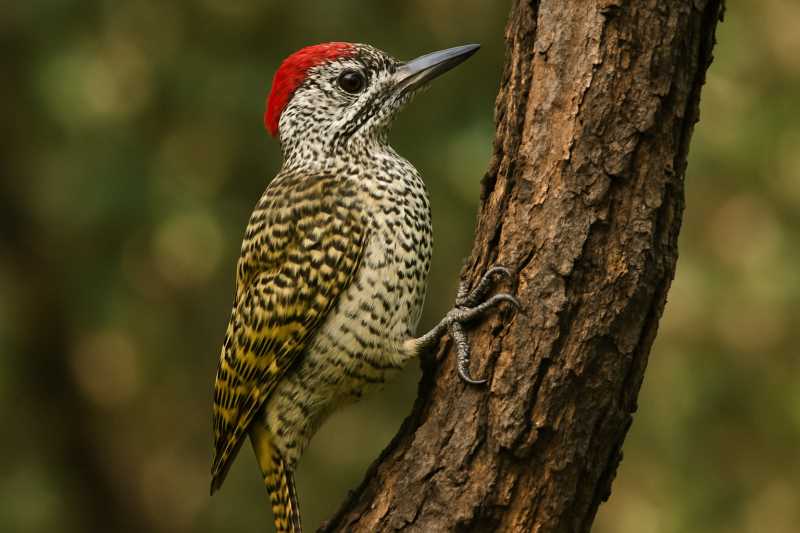
The Fine-banded Woodpecker is a medium-sized bird, typically ranging between 20 to 25 centimeters in length. Its most distinguishing feature is its striking plumage, characterized by fine, intricate bands of black and white across its back and wings. The bird exhibits sexual dimorphism, with males showcasing a vibrant red patch on the nape, contrasting sharply with the more subdued coloration of the females. This red patch serves as a distinguishing feature during mating displays and territorial disputes.
The underparts of the Fine-banded Woodpecker are pale yellowish, adorned with subtle spots that provide excellent camouflage against the dappled light of its forest habitat. Its strong, chisel-like bill is perfectly adapted for drilling into wood, a characteristic behavior of woodpeckers that aids in foraging for insects and creating nesting sites.
Habitat and Distribution
The Fine-banded Woodpecker is predominantly found in the lush, humid forests of Central Africa, with populations recorded in countries such as Cameroon, the Democratic Republic of the Congo, and Uganda. It prefers lowland and montane forests, thriving in areas with dense canopy cover and abundant dead wood, which are essential for its feeding and nesting habits.
This species is non-migratory, tending to maintain territories year-round. Its choice of habitat is crucial for its survival, as it relies on the availability of large trees both for sustenance and shelter. Unfortunately, deforestation and habitat degradation pose significant threats to its habitat, potentially impacting population stability.
Behavior and Diet
The Fine-banded Woodpecker exhibits the typical foraging behavior of the Picidae family, using its robust bill to extract insects from beneath the bark of trees. Its diet primarily consists of ants, beetles, and their larvae, supplemented with fruits and seeds when available. This dietary flexibility allows the woodpecker to adapt to varying food availability, an essential trait for survival in the fluctuating conditions of tropical forests.
Socially, the Fine-banded Woodpecker is relatively solitary, although it may be seen in pairs during the breeding season. Its vocalizations are a series of sharp, high-pitched calls, often heard during territorial displays or while communicating with a mate. The drumming behavior, a characteristic trait of woodpeckers, is used both for communication and as a method to dislodge prey hidden within tree bark.
Breeding and Reproduction
Breeding in Fine-banded Woodpeckers typically occurs during the rainy season when food resources are abundant. The species is monogamous, with pairs forming strong bonds that last through multiple breeding seasons. The courtship process involves vocal displays and drumming sequences, with the male often showcasing its red nape patch as a visual signal.
Nesting occurs in tree cavities, which the woodpecker excavates itself. These cavities are usually located high in large trees, providing protection against predators. A clutch typically consists of 2 to 4 eggs, which both parents incubate for about two weeks. Post-hatching, both male and female share responsibilities in feeding and caring for the chicks until they fledge, approximately 4 weeks after hatching.
Conservation Status
Currently, the Fine-banded Woodpecker is classified as Least Concern by the International Union for Conservation of Nature (IUCN). However, ongoing threats such as deforestation and habitat fragmentation could potentially alter its conservation status. Conservation efforts aimed at preserving Central African forests are crucial for maintaining healthy populations of this and many other species.
Importance to Ecosystem
Woodpeckers, including the Fine-banded species, play a vital role in their ecosystems. By controlling insect populations and contributing to the formation of tree cavities, they assist in maintaining forest health and biodiversity. These cavities are often reused by other species, including small mammals and birds, which rely on them for nesting sites.
Conclusion
The Fine-banded Woodpecker is a remarkable example of avian adaptation and ecological importance. Its presence in Central African forests is a testament to the intricate balance of these ecosystems. As conservationists and ornithologists continue to study and protect this species, understanding its behavior and habitat needs will be crucial in ensuring its survival in the face of environmental challenges.
Preserving the habitats of the Fine-banded Woodpecker not only safeguards this striking species but also supports the rich biodiversity of the forests it inhabits. Ongoing research and conservation efforts will be key in maintaining the ecological integrity of these vital ecosystems.
Related posts