The Speckle-breasted Woodpecker: A Study of Nature’s Artisan
The Speckle-breasted Woodpecker, scientifically known as *Dendropicos poecilolaemus*, is a captivating bird species whose presence graces the rich biodiversity of sub-Saharan Africa. This medium-sized woodpecker is a member of the family Picidae, best known for its striking plumage and unique pecking behavior which not only attracts bird enthusiasts but also plays an essential role in the ecosystems it inhabits.
Appearance and Identification
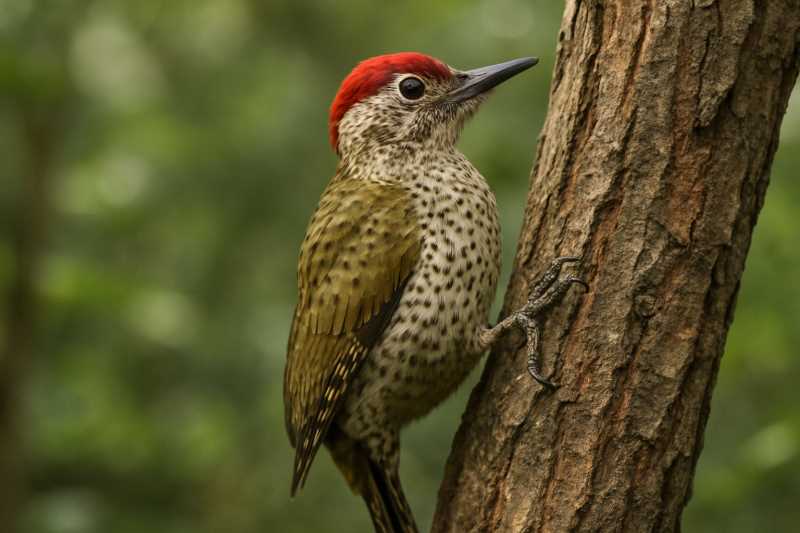
The Speckle-breasted Woodpecker is aptly named for its distinctive speckled breast, a feature that makes it relatively easy to identify among other woodpeckers. Its plumage is primarily olive green on the upper parts, blending seamlessly into the lush foliage of its habitat, while its underparts are adorned with a white belly speckled with fine black spots. This speckling pattern can vary in intensity between individual birds, adding an element of uniqueness to each. The head is marked by a striking combination of a white eyebrow stripe and a red crown in males, while females exhibit a more subdued coloration with a black crown.
Its relatively small size, measuring around 18-21 centimeters in length, and its characteristic undulating flight pattern make the Speckle-breasted Woodpecker a delightful sight for bird watchers. The bird’s strong, chisel-like bill is perfectly adapted for its lifestyle, allowing it to excavate nests in tree trunks and forage for insects beneath the bark.
Habitat and Distribution
The Speckle-breasted Woodpecker inhabits a range of forested environments across sub-Saharan Africa. Its distribution includes countries such as Cameroon, Gabon, the Democratic Republic of the Congo, and Uganda. This species demonstrates a preference for lowland and montane forests, often thriving in both primary and secondary growth forests. The dense canopy and rich undergrowth of these habitats provide ample food sources and nesting opportunities.
Despite their adaptability, these woodpeckers are sensitive to deforestation and habitat degradation. As human activities encroach on their natural habitats, the availability of suitable nesting sites and foraging grounds decreases, posing a threat to their populations. Conservation efforts focused on preserving forest ecosystems are crucial for maintaining the delicate balance that allows the Speckle-breasted Woodpecker to thrive.
Behavior and Diet
The Speckle-breasted Woodpecker is a diurnal bird, actively foraging during the daylight hours. Its diet predominantly consists of insects and larvae, which it skillfully extracts from tree bark using its powerful bill. These woodpeckers are also known to consume fruits and seeds, showcasing their adaptability in varying environmental conditions.
A fascinating aspect of their behavior is their drumming and tapping on trees, a method used not only for foraging but also for communication. These rhythmic sounds serve multiple purposes, including territory establishment and attracting mates. The drumming patterns are unique to each individual, allowing them to convey specific messages to potential rivals or partners.
During the breeding season, which varies depending on geographic location, the Speckle-breasted Woodpecker engages in courtship displays that involve intricate aerial maneuvers and vocalizations. Once a pair forms, they work collaboratively to excavate a nest cavity in a tree trunk, where the female will lay a clutch of 2-4 eggs. Both parents share the responsibilities of incubating the eggs and feeding the hatchlings, demonstrating a strong familial bond.
Conservation Status and Challenges
Currently, the Speckle-breasted Woodpecker is not listed as a threatened species, largely due to its wide distribution and adaptability to different forest types. However, ongoing habitat loss and fragmentation pose significant threats to its long-term survival. The expansion of agricultural lands, logging, and infrastructure development continue to reduce the availability of suitable habitats.
Conservation strategies aimed at protecting forested areas and promoting sustainable land use practices are essential to ensure the survival of this species. Initiatives such as establishing protected areas, promoting reforestation, and raising awareness about the ecological importance of woodpeckers can contribute to safeguarding their populations.
Conclusion
The Speckle-breasted Woodpecker is a remarkable bird species that embodies the resilience and adaptability of nature. Its presence in the forests of sub-Saharan Africa is a testament to the intricate web of life that sustains these ecosystems. By understanding and appreciating the role of this woodpecker within its environment, we can take meaningful steps towards its conservation and the preservation of biodiversity as a whole.
In conclusion, the Speckle-breasted Woodpecker is more than just a bird — it is a vital part of the ecological tapestry, serving as both a steward and a symbol of the vibrant life that flourishes within the forests it calls home.
Related posts