########################################################################################################################################################## The Majestic Blyth’s Kingfisher: A Jewel of the Forest
In the lush, verdant forests of South and Southeast Asia, a vibrant flash of azure and orange can sometimes be seen darting through the undergrowth or perched silently by a clear stream. This is Blyth’s Kingfisher (Alcedo hercules), a rare and elusive bird that captures the imagination of birdwatchers and ornithologists alike.
Taxonomy and Naming
Blyth’s Kingfisher belongs to the family Alcedinidae, which includes other kingfishers known for their vivid plumage and distinctive fishing habits. The species was named in honor of Edward Blyth, a 19th-century British zoologist who made significant contributions to the study of Asian wildlife.
Physical Characteristics
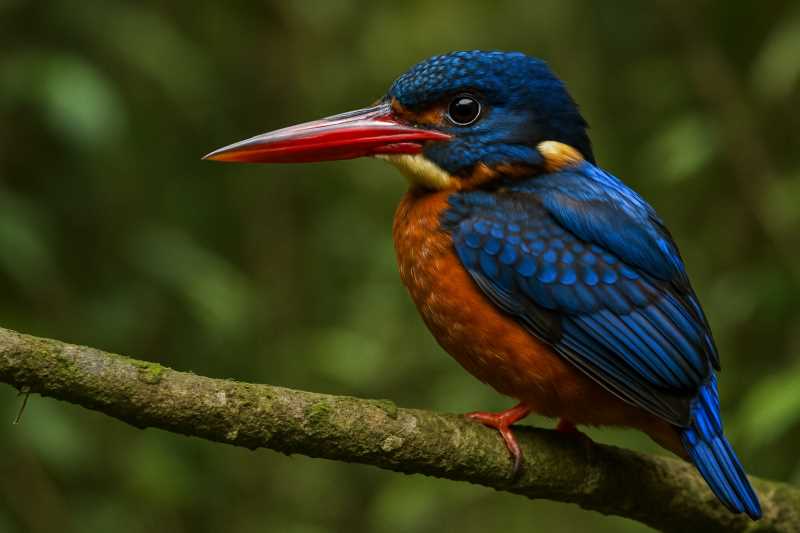
Blyth’s Kingfisher is one of the largest species in the Alcedo genus, measuring approximately 22–23 centimeters in length. Its striking appearance is characterized by a deep blue upper body and an orange underbelly. The bird’s large, robust bill is adapted for catching fish, while its short legs and strong feet are perfect for perching on branches overhanging water bodies.
Habitat and Distribution
This magnificent kingfisher is primarily found in the Himalayan foothills, extending through parts of northeastern India, Bhutan, Myanmar, and northern Thailand. Its preferred habitat includes subtropical or tropical moist lowland forests and riverside areas, where it can be found near streams, rivers, and other freshwater bodies.
Behavior and Diet
Blyth’s Kingfisher is a solitary and territorial bird. It is known for its patient hunting technique, often seen perched silently before diving into the water to catch fish. Its diet mainly consists of small fish, aquatic insects, and occasionally amphibians. The bird’s excellent vision allows it to spot prey beneath the water surface, making it an adept hunter.
Breeding and Nesting
The breeding season of Blyth’s Kingfisher typically occurs from March to June. The species is known to nest in riverbanks, where it digs burrows to lay and incubate its eggs. The nest is usually a tunnel, approximately 1 meter deep, ending in a small chamber. Both male and female participate in the excavation and take turns incubating the eggs.
Conservation Status
The IUCN Red List classifies Blyth’s Kingfisher as Near Threatened, primarily due to habitat loss and degradation. Deforestation, pollution, and the damming of rivers pose significant threats to the species’ habitat. Conservation efforts are crucial to ensure the survival of these magnificent birds. Protecting riverine forests and implementing sustainable land-use practices can help preserve their natural habitat.
Research and Observation
Despite its striking appearance, Blyth’s Kingfisher remains one of the least studied among its family. Limited access to its habitat and its shy nature contribute to the scarcity of comprehensive research. However, ongoing studies aim to gather more data on its ecology, behavior, and population dynamics to aid in conservation efforts.
Cultural Significance
In many cultures within its range, Blyth’s Kingfisher is admired for its beauty and is often considered a symbol of good fortune. Its presence is a reminder of the rich biodiversity found within the forests of South and Southeast Asia and the need to preserve these ecosystems.
Conclusion
Blyth’s Kingfisher is a testament to the wonders of avian biodiversity, a living jewel of the forest that inspires awe and curiosity. Protecting this species requires concerted efforts to preserve its habitat and mitigate threats from human activity. Through increased awareness and dedicated conservation initiatives, we can ensure that future generations will continue to marvel at the beauty and grace of Blyth’s Kingfisher.
For bird enthusiasts and conservationists alike, the sight of Blyth’s Kingfisher is a rare and rewarding experience. Its existence highlights the intricate connections within ecosystems and the importance of preserving these delicate natural balances.
Related posts