The Hooded Vulture: A Critical Conservation Story
The Hooded Vulture (Necrosyrtes monachus) is a fascinating yet critically endangered species that plays a crucial role in the ecosystems of sub-Saharan Africa. Known for its unique appearance and vital ecological functions, the Hooded Vulture is a bird that commands both attention and urgent conservation efforts. This article delves into the various aspects of the Hooded Vulture’s life, its ecological significance, and the challenges it faces in the wild.
Physical Characteristics and Behavior
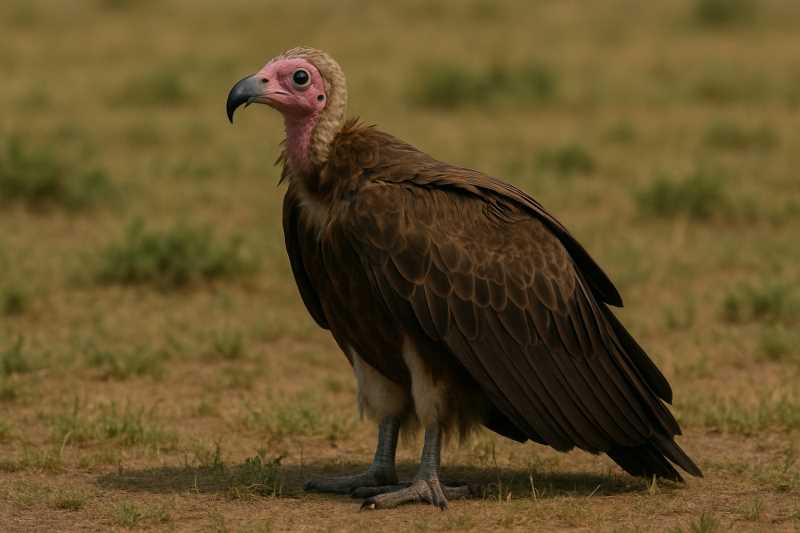
The Hooded Vulture is a small to medium-sized vulture, with adults weighing between 1.5 to 2.6 kilograms and possessing a wingspan of about 155 to 165 centimeters. As the name suggests, these vultures are distinguished by their ‘hooded’ appearance, characterized by a bare, pale pinkish head and a contrasting dark feathered body. The hooded look is accentuated by their slender, hooked beak which is perfectly adapted for scavenging carcasses.
In terms of behavior, Hooded Vultures are known for their social nature. Often seen in pairs or small groups, they are highly opportunistic feeders, thriving on carrion, which they locate using their acute sense of sight. Unlike some of their larger vulture counterparts, Hooded Vultures are often the first to arrive at a carcass due to their ability to detect potential meals from a distance while soaring high above the ground.
Habitat and Distribution
Hooded Vultures inhabit a range of environments across sub-Saharan Africa, including savannas, woodlands, and areas close to human settlements. They are notably adaptable, often seen feeding at rubbish dumps and abattoirs. However, their adaptability is a double-edged sword, as proximity to humans also exposes them to numerous threats.
Historically, their range extended across vast regions of Africa, but in recent decades, their populations have suffered significant declines. The IUCN Red List categorizes the Hooded Vulture as Critically Endangered, with habitat loss, poisoning, and human-wildlife conflict posing severe threats.
Ecological Significance
Vultures, including the Hooded Vulture, play a pivotal role in ecosystems as nature’s clean-up crew. By consuming carcasses, they prevent the spread of diseases that could otherwise devastate wildlife populations and potentially affect human health. Their scavenging activities contribute to nutrient cycling and help maintain ecological balance.
The decline of vulture populations can lead to increased carcass decomposition times, providing more opportunities for disease vectors like feral dogs and rats to proliferate. This change can have cascading effects on both biodiversity and human communities.
Conservation Challenges
The survival of the Hooded Vulture is threatened by several factors. One major issue is poisoning, often a result of human-wildlife conflict where livestock carcasses are deliberately laced with poison to kill predators like lions or hyenas. Unfortunately, vultures become unintended victims when they consume these poisoned carcasses.
Another significant threat is the illegal wildlife trade. Vultures are often targeted for traditional medicine practices and belief-based uses, particularly in parts of Africa where they are believed to have psychic qualities.
Habitat loss due to agricultural expansion, urbanization, and infrastructure development further exacerbates the challenges faced by the Hooded Vulture. As their natural habitats are encroached upon, they are forced into closer proximity with human activities, increasing the likelihood of negative interactions.
Conservation Efforts
Effective conservation of the Hooded Vulture requires a multi-faceted approach. International and local organizations are working tirelessly to monitor vulture populations, protect critical habitats, and raise awareness about the importance of these birds.
One promising strategy is community-based conservation, which involves local communities in conservation efforts. By educating communities about the ecological role of vultures and the consequences of their decline, conservationists hope to foster a sense of stewardship and encourage sustainable practices.
Additionally, legal protection measures are being strengthened to combat illegal hunting and trading. Some regions have implemented vulture-safe zones, where poisoning is strictly monitored and controlled.
Conclusion
The Hooded Vulture is a remarkable species that embodies both the beauty and fragility of our natural world. Its plight serves as a stark reminder of the interconnectedness of ecosystems and the urgent need for conservation initiatives. By protecting the Hooded Vulture, we not only preserve a vital ecological player but also safeguard the health of ecosystems that countless species, including humans, rely on.
The fight to save the Hooded Vulture is ongoing, but with concerted efforts and collaboration between governments, NGOs, and local communities, there is hope that this unique bird will continue to grace the skies of Africa for generations to come.
This is one of the species covered in our book Vultures and Condors Of The World which is part of our Kings Birds of the world series, and one of the Kings Guides.

Related posts