The Short-eared Owl: A Majestic Nomad of the Skies
The Short-eared Owl (Asio flammeus) is a bird of prey that captivates both ornithologists and bird enthusiasts alike with its widespread distribution, distinctive appearance, and intriguing behaviors. Known for its adaptability and resilience, this species is found across the globe, inhabiting a variety of environments from the tundra and grasslands to marshes and farmlands.
Distinctive Features and Identification
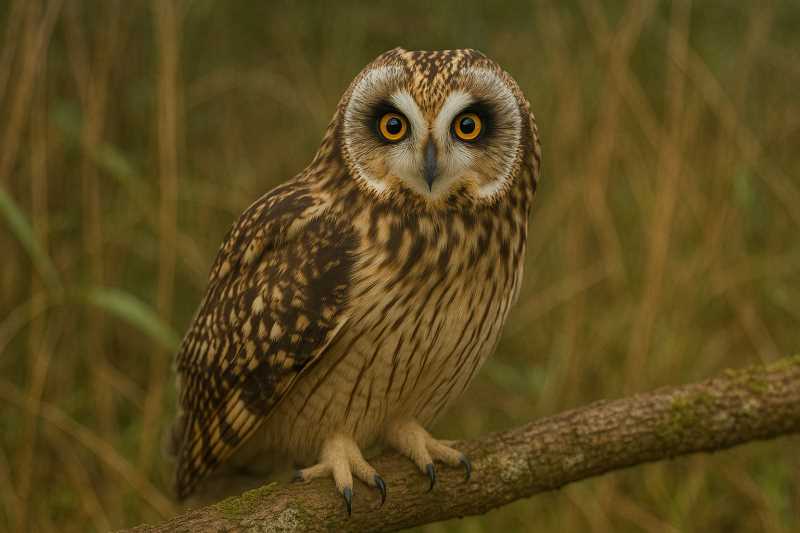
The Short-eared Owl is a medium-sized owl, measuring approximately 34-43 centimeters in length, with a wingspan ranging from 85 to 103 centimeters. Its plumage is a mottled mix of brown, buff, and white, providing excellent camouflage within its natural habitat. The name “Short-eared” derives from the small tufts of feathers on its head, which resemble ears but are not always visible. These tufts are often raised when the owl is alert or agitated.
One of the most distinguishing features of the Short-eared Owl is its striking yellow eyes set within a pale facial disc, framed by a black outline. This facial structure is not only iconic but also functional, aiding in the direction of sound to the owl’s ears, enhancing its exceptional auditory hunting skills.
Habitat and Distribution
Short-eared Owls have an expansive range, being one of the most widely distributed owls in the world. They are found across North and South America, Europe, Asia, Africa, and various island chains. Their habitat preferences are equally diverse, with a penchant for open landscapes such as grasslands, prairies, marshes, and agricultural fields.
This owl species is migratory in many parts of its range, moving south during the winter months in search of more abundant food sources. However, some populations are resident, depending on the availability of prey and weather conditions.
Behavior and Diet
Unlike many other owls, the Short-eared Owl is primarily diurnal, often seen hunting during the early morning and late afternoon. This daylight activity provides a unique opportunity for bird watchers to observe their flight and hunting techniques. The owl’s flight is buoyant and moth-like, characterized by slow, deliberate wing beats as it patrols its territory in search of prey.
Their diet mainly consists of small mammals, particularly voles, which they hunt using their acute hearing and keen eyesight. They will also consume birds, insects, and occasionally, reptiles and amphibians. The Short-eared Owl’s role as a predator is crucial for controlling rodent populations, making it an important species for maintaining ecological balance.
Conservation Status and Challenges
Currently, the Short-eared Owl is listed as “Least Concern” by the IUCN Red List. However, certain regional populations are experiencing declines due to habitat loss, changes in land use, and agricultural practices. The conversion of grasslands to croplands, drainage of wetlands, and urban development are significant threats that reduce available habitats and food resources for these owls.
Conservation efforts are focused on habitat preservation and restoration, alongside monitoring population trends to ensure these majestic birds continue to thrive. Public awareness and education are also vital components in fostering a greater understanding and appreciation of the Short-eared Owl and the challenges it faces.
Observing the Short-eared Owl
For those keen on observing the Short-eared Owl, timing and location are key. They are most active during the crepuscular hours of dawn and dusk. Observers are likely to spot these owls in open fields and marshlands, where they may perch on fence posts or low branches, scanning the ground for prey.
It is important to approach these experiences with respect and consideration for the wildlife. Keeping a safe distance ensures that the owls can continue their activities without disturbance, allowing for a natural and rewarding observation experience.
Conclusion
The Short-eared Owl is a remarkable species that embodies adaptability and grace. Its widespread presence across the globe underscores its resilience, while its ecological role highlights the importance of conservation efforts to protect these birds and their habitats. By understanding and supporting these efforts, we can ensure that future generations continue to enjoy the sight of this spectacular owl gracing our skies.
Related posts