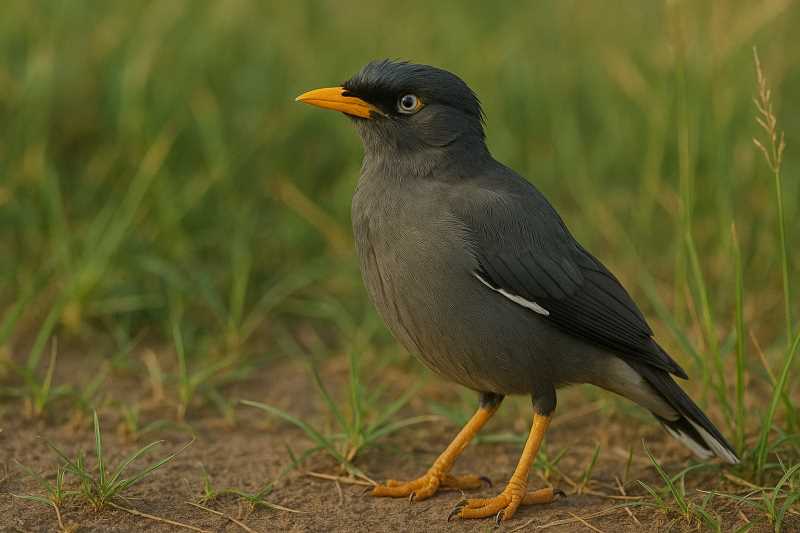
The Jungle Myna, scientifically known as Acridotheres fuscus, is a fascinating bird species belonging to the starling family, Sturnidae. This bird is predominantly found in South and Southeast Asia, thriving in a variety of habitats ranging from open woodlands and agricultural lands to urban areas. Its adaptability to different environments has contributed to its widespread presence across these regions.
Measuring about 23 centimeters in length, the Jungle Myna is a medium-sized bird characterized by its glossy black plumage, bright orange-yellow eye patches, and a robust, sharp bill. The bird’s tail is relatively short, and its wings are rounded, which aids in its agile flight. Both males and females share similar appearances, making it difficult to distinguish between the sexes in the field.
One of the most striking features of the Jungle Myna is its vocal ability. These birds are known for their wide range of calls and songs, which they use for communication, mating, and territorial defense. Their vocalizations include melodious whistles, squawks, and harsh calls, often mimicking sounds from their environment, including human-made noises. This mimicry ability is one reason the Jungle Myna is popular among bird enthusiasts and aviculturists.
The Jungle Myna’s diet is omnivorous, consisting of a variety of foods such as insects, fruits, seeds, and grains. Their feeding habits are highly opportunistic, allowing them to exploit different food resources depending on availability. This adaptability in diet is another factor that has enabled the Jungle Myna to thrive in diverse environments, including urban settings where they often feed on scraps and leftovers.
Breeding behavior in Jungle Mynas is also quite fascinating. They are monogamous birds that often form lifelong pairs. The breeding season varies depending on their geographical location but generally occurs during the warmer months. The birds build their nests in tree hollows, crevices, or even in man-made structures. Females typically lay between 3 to 6 eggs, which are incubated by both parents. The chicks are altricial, meaning they are born naked and helpless, requiring extensive parental care before they are ready to fledge.
The conservation status of the Jungle Myna is currently listed as "Least Concern" by the International Union for Conservation of Nature (IUCN). Despite their stable population, the birds face threats from habitat destruction, pollution, and competition with other bird species, particularly in urban areas. Conservation efforts are crucial to ensure their habitats are preserved and that they continue to thrive in their natural environments.
In addition to their ecological significance, Jungle Mynas hold cultural importance in many regions. They are often regarded as symbols of adaptability and intelligence, and in some cultures, they are considered harbingers of good fortune. Their presence in folklore and local traditions highlights the deep connection between these birds and the communities they coexist with.
For bird watchers and nature enthusiasts, the Jungle Myna offers a delightful subject for observation due to its lively behavior and vocal prowess. Observing these birds in their natural habitat provides valuable insights into their social structures, feeding habits, and interaction with their environment.
The Jungle Myna serves as a reminder of the rich biodiversity that exists within our urban and rural landscapes. Protecting these birds and their habitats is vital not only for their survival but also for maintaining ecological balance in the regions they inhabit. As urbanization continues to encroach upon natural habitats, it is imperative to implement conservation measures that promote coexistence between humans and wildlife, ensuring that species like the Jungle Myna continue to thrive for generations to come.
Related posts