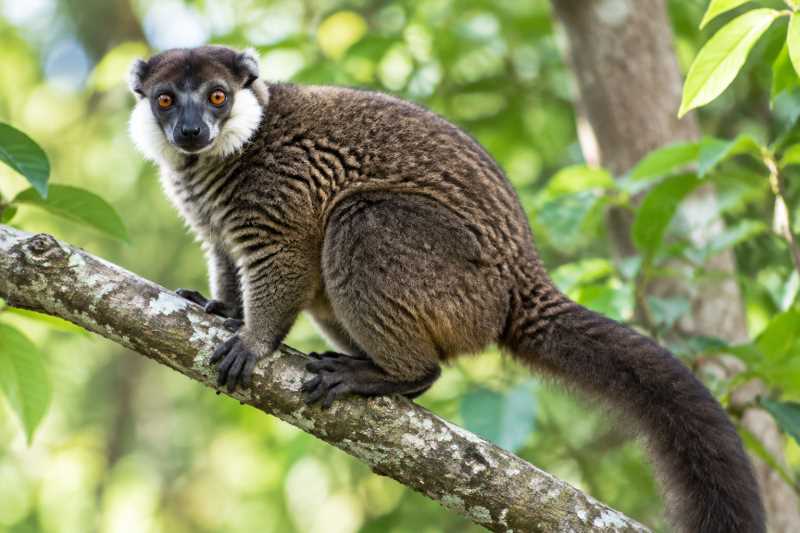
White-collared Brown Lemur (Eulemur cinereiceps)
Introduction
Madagascar, an island renowned for its unique biodiversity, is home to an array of fascinating species, none more so than its lemurs. Among these, the White-collared Brown Lemur (Eulemur cinereiceps) stands out for its distinctive features and intriguing behaviors. This lemur species is not only an integral part of Madagascar’s rich ecosystem but also a symbol of the critical conservation challenges facing the island. In this article, we delve into the world of the White-collared Brown Lemur, exploring its physical characteristics, habitat, behavior, and conservation status, while providing essential identification tips for enthusiasts and researchers alike.
Physical Description
The White-collared Brown Lemur is a primate species characterized by its medium size and distinctive coloration. Adults typically weigh between 2.2 to 2.4 kilograms and measure around 39 to 40 centimeters in body length, with a tail often extending another 50 centimeters. This species exhibits sexual dimorphism, with males and females sporting subtly different colorations.
Males are notable for their brownish-gray fur, which is accentuated by a stark white collar encircling their necks—a feature that gives the species its common name. Their faces are darker, often appearing blackish, which contrasts sharply with their lighter collars. Females, on the other hand, are generally lighter in color, with more of a brown hue dominating their fur. Both sexes share bright orange eyes that contribute to their keen sense of sight.
Range and Habitat
The White-collared Brown Lemur is endemic to southeastern Madagascar, where it inhabits primary and secondary forests. Its range is relatively restricted, stretching primarily across the lowland and mid-altitude rainforests of the region. These forests provide a rich tapestry of biodiversity and serve as a critical habitat for the lemurs.
The lemurs are arboreal, spending most of their time in the trees, where they navigate the dense canopy with agility. They favor forest areas with abundant fruit-bearing trees, which are essential to their diet. Unfortunately, the lemur’s habitat is under constant threat from deforestation and human encroachment, significantly impacting its population.
Behavior and Diet
White-collared Brown Lemurs are diurnal, meaning they are active during the day. They are social animals, living in groups that can range from three to twelve individuals. These groups are typically composed of multiple males and females, although there is a dominance hierarchy among the females.
Their diet is primarily frugivorous, consisting mainly of fruits, though they also consume leaves, flowers, and occasionally small invertebrates. This diverse diet reflects the availability of resources in their forest habitats. The lemurs play a crucial ecological role as seed dispersers, aiding in the maintenance of the forest ecosystem.
Identification Tips (Field Recognition Cues)
Recognizing the White-collared Brown Lemur in the field involves noting several key features. First, look for the species’ signature white collar, which contrasts with the darker fur on the rest of the body. Males tend to have a more pronounced white collar compared to females.
The lemur’s face is another distinctive feature, with males exhibiting darker facial fur compared to females. Additionally, their bright orange eyes are conspicuous and can be a helpful identification cue when observing from a distance.
Lastly, consider their behavior and habitat. Observing their social interactions and preferred forest areas can provide further confirmation of their identity.
Conservation Status (with Threats and Protections)
The White-collared Brown Lemur is currently listed as Critically Endangered on the IUCN Red List. This status is primarily due to habitat loss, driven by deforestation for agriculture, logging, and charcoal production. Additionally, hunting and illegal pet trade pose significant threats to their population.
Conservation efforts are underway to protect this species, including habitat restoration projects and the establishment of protected areas. Organizations are also working to engage local communities in conservation activities, promoting sustainable practices that benefit both the lemurs and the people living in these regions.
Frequently Asked Questions
- What is the lifespan of a White-collared Brown Lemur?
White-collared Brown Lemurs can live up to 20 years in the wild, though lifespan can vary based on environmental conditions and threats.
- How does the White-collared Brown Lemur contribute to its ecosystem?
As a frugivore, the lemur plays a vital role in seed dispersal, helping to maintain the health and diversity of Madagascar’s forest ecosystems.
- What efforts are being made to conserve the White-collared Brown Lemur?
Conservation efforts include habitat protection, reforestation projects, and community education programs aimed at reducing hunting and illegal trade.
- How do White-collared Brown Lemurs communicate?
These lemurs communicate through vocalizations, body language, and scent markings, which help maintain social bonds and establish territories.
- Can White-collared Brown Lemurs adapt to changes in their environment?
While they are somewhat adaptable, significant habitat changes and human pressures have severely impacted their populations, making conservation efforts crucial.
Related posts