Introduction
The Northern Giant Pouched Rat (Cricetomys gambianus) is a fascinating and often misunderstood mammal native to sub-Saharan Africa. Known for its impressive size and keen sense of smell, this species has garnered attention not only for its ecological role but also for its utility in humanitarian efforts, such as landmine detection and tuberculosis diagnosis. This article delves into the various aspects of the Northern Giant Pouched Rat, offering insights into its physical characteristics, habitat, behavior, and conservation status.
Physical Description
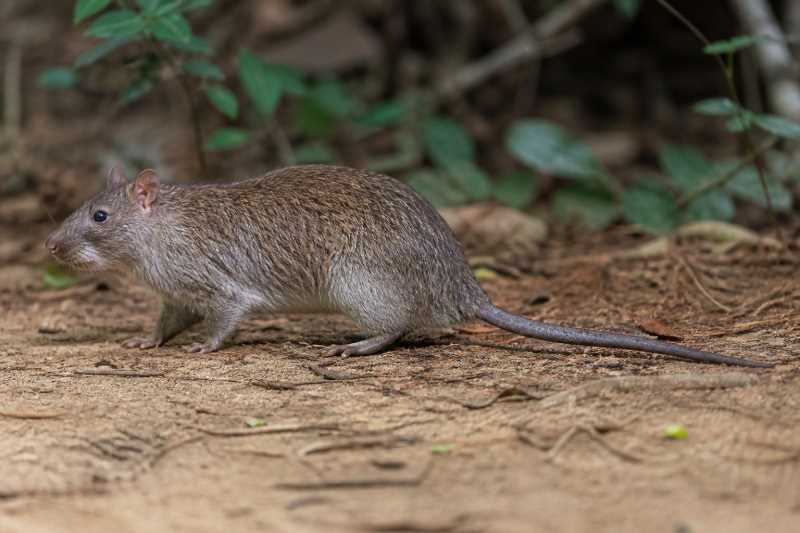
The Northern Giant Pouched Rat is one of the largest muroid rodents, with adults typically weighing between 1.0 to 1.5 kilograms and measuring 60 to 90 centimeters in length, including the tail. Its fur is generally coarse and varies in color from brown to grey, with a lighter underbelly. The species is named for its distinctive cheek pouches, which it uses to carry food and nesting materials.
One of the most striking features of the Northern Giant Pouched Rat is its large, prominent eyes and ears, which are well-adapted for nocturnal activity. The tail is long and scaly, providing balance and aiding in climbing. Strong hind legs allow this rodent to cover ground quickly and efficiently, a crucial trait for evading predators.
Range and Habitat
The Northern Giant Pouched Rat is distributed widely across sub-Saharan Africa, from Senegal to Kenya and south to Zimbabwe and Mozambique. It thrives in a variety of habitats, including forests, savannas, and even urban areas. This adaptability is a testament to the species’ resilience and ability to exploit diverse environments.
These rodents prefer areas with ample cover, such as dense vegetation or rocky outcrops, which provide protection against predators. They are also known to inhabit agricultural lands, where they can become agricultural pests by feeding on crops. However, their presence in these areas underscores their adaptability and resourcefulness.
Behavior and Diet
Northern Giant Pouched Rats are primarily nocturnal, emerging at dusk to forage for food. They are omnivorous, with a diet that includes seeds, fruits, insects, and small vertebrates. Their cheek pouches allow them to transport large quantities of food back to their burrows, where they cache supplies for future use.
Socially, these rodents are relatively solitary, although they may form loose colonies in areas with abundant resources. Communication is primarily through scent marking and vocalizations, including high-pitched squeaks and grunts. Their keen sense of smell is not only crucial for foraging but also for detecting danger in their environment.
Identification Tips (field recognition cues)
Identifying the Northern Giant Pouched Rat in the field can be facilitated by a few key characteristics:
- Size: Its large size is one of the most distinguishing features compared to other rodents in its range.
- Tail: Note the long, scaly tail which is often longer than the body.
- Cheek Pouches: Visible when filled, these pouches are a definitive trait of the species.
- Coloration: Look for the coarse, brown to grey fur with a lighter underbelly.
- Behavior: Observations during dusk or nighttime when they are most active can provide clues to identification.
Conservation Status (with threats and protections)
The Northern Giant Pouched Rat is currently listed as Least Concern by the International Union for Conservation of Nature (IUCN) due to its wide distribution and presumed large population. However, certain threats loom, including habitat destruction due to agricultural expansion and urbanization, which can lead to localized population declines.
Despite these threats, the species benefits from its adaptability and resilience, allowing it to survive in fragmented habitats. Conservation efforts are generally focused on habitat preservation and mitigating human-wildlife conflict in agricultural areas.
In some regions, these rats are protected by law due to their ecological importance and role in scientific research, particularly in detecting landmines and diagnosing diseases.
Frequently Asked Questions
1. How are Northern Giant Pouched Rats used in landmine detection? Northern Giant Pouched Rats have an excellent sense of smell, enabling them to detect the scent of explosives. Trained rats can cover large areas quickly, identifying landmines without triggering them, making them invaluable for demining operations in post-conflict areas.
2. Are Northern Giant Pouched Rats dangerous to humans? Generally, these rats are not dangerous to humans. They are shy and avoid human interaction. However, like all wild animals, they can bite if threatened and should be treated with caution and respect.
3. What adaptations help the Northern Giant Pouched Rat survive in urban areas? Their adaptability, omnivorous diet, and ability to navigate complex environments allow them to thrive in urban settings. They can exploit food resources from human waste and find shelter in man-made structures.
4. What is the lifespan of a Northern Giant Pouched Rat in the wild? In the wild, these rats typically live for around five to seven years, although this can vary based on environmental conditions and predation pressure.
5. Can Northern Giant Pouched Rats be kept as pets? While they are sometimes kept as exotic pets, Northern Giant Pouched Rats require specific care and a suitable environment to thrive. Potential owners should be aware of their size, dietary needs, and the legal regulations regarding exotic pet ownership in their area.
Related posts