The Surucua Trogon: A Jewel of the Subtropical Forests
In the heart of the South American subtropical forests, a vibrant bird with a striking appearance captures the attention of both avid birdwatchers and casual observers alike. The Surucua Trogon (Trogon surrucura), known for its resplendent plumage and distinctive calls, is not just a visual delight but also an intriguing subject for ornithologists. This article delves into the habitat, behavior, and conservation status of this remarkable bird, offering insights into its unique role within its ecosystem.
Habitat and Distribution
The Surucua Trogon is primarily found in the Atlantic Forest biome, a region that spans parts of Brazil, Paraguay, and Argentina. This biome is one of the most diverse ecosystems on the planet, characterized by its humid climate and dense vegetation. The lush environment provides an ideal habitat for the Surucua Trogon, which thrives in the canopy and understory of these forests.
Within this habitat, the Surucua Trogon tends to favor areas with abundant fruit trees, as its diet mainly consists of fruits, supplemented by insects and small vertebrates. Its presence in the Atlantic Forest is crucial, as it plays a significant role in seed dispersal, thereby aiding in forest regeneration and maintaining biodiversity.
Physical Characteristics
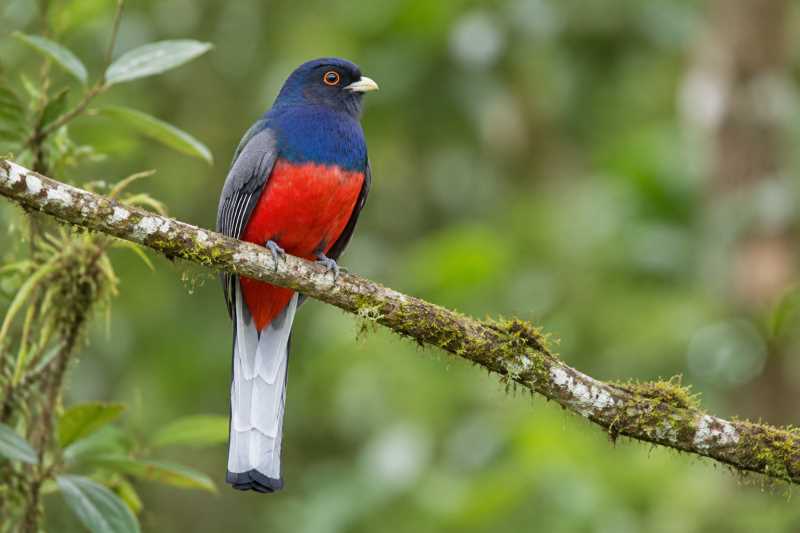
The Surucua Trogon is a medium-sized bird, measuring approximately 27 to 30 centimeters in length. One of its most distinguishing features is its vibrant plumage, which serves as a key identification marker. The upperparts are a striking metallic green or blue, while the breast is a vivid red. The underparts are marked by a unique pattern of horizontal black and white bars. The male and female Surucua Trogons can be differentiated by the intensity and pattern of their plumage, with males generally exhibiting more vivid colors.
The bird’s eyes are surrounded by a ring of bare skin, which varies in color from yellow to blue, adding to its distinctive appearance. Its tail, long and rounded, aids in agile maneuvering through the dense foliage of its forest home.
Behavior and Breeding
Surucua Trogons are generally solitary or found in pairs, especially during the breeding season. They are known for their calm demeanor, often perching motionless for long periods. This behavior can make them surprisingly difficult to spot despite their bright colors.
Breeding for the Surucua Trogon typically occurs during the spring and summer months. They are cavity nesters, often utilizing holes in trees excavated by woodpeckers or natural cavities for nesting. The female typically lays two to three eggs, which both parents take turns incubating. After hatching, the chicks are cared for by both parents until they fledge.
Vocalizations
The vocalizations of the Surucua Trogon are another fascinating aspect of this species. Their calls are often described as soft, melodious whistles that resonate through the forest. These calls serve multiple purposes, including territory establishment and communication between mates.
Conservation Status
The Surucua Trogon is currently listed as a species of Least Concern by the International Union for Conservation of Nature (IUCN). However, this status does not mean the species is free from threats. The primary challenge facing the Surucua Trogon is habitat loss, driven by deforestation and land conversion for agriculture and urban development.
Conservation efforts are crucial to ensure the survival of the Surucua Trogon and the preservation of the Atlantic Forest. Protected areas and sustainable land-use practices are essential strategies to mitigate habitat destruction and maintain the delicate balance of this biodiverse ecosystem.
The Role in Culture and Ecotourism
In addition to its ecological importance, the Surucua Trogon holds cultural significance in the regions it inhabits. Its striking appearance has made it a subject of local folklore and an emblem of the natural beauty of the Atlantic Forest.
The bird is also a draw for ecotourism, attracting birdwatchers from around the world. The presence of the Surucua Trogon in a forest can enhance the appeal of ecotourism destinations, providing economic incentives for the conservation of its habitat.
Conclusion
The Surucua Trogon is a testament to the vibrancy and diversity of the subtropical forests of South America. As both a key ecological player and a cultural icon, its conservation is vital not only for the species itself but for the health of its entire ecosystem. By understanding and protecting the Surucua Trogon, we take a significant step towards preserving the intricate tapestry of life that defines the Atlantic Forest.
Through continued research, conservation initiatives, and sustainable practices, we can ensure that future generations will have the opportunity to witness the splendor of the Surucua Trogon in its natural habitat.
Related posts