The Blue-naped Mousebird: A Study in Avian Adaptability
The Blue-naped Mousebird, scientifically known as Urocolius macrourus, is a captivating avian species that belongs to the Coliiformes order. Native to sub-Saharan Africa, this bird is renowned not only for its striking appearance but also for its remarkable adaptability in various habitats. As one of the six species in the mousebird family, the Blue-naped Mousebird offers intriguing insights into avian behavior, ecology, and evolutionary biology.
Taxonomy and Distribution
The Blue-naped Mousebird is part of the Coliidae family and was first described by Vieillot in 1817. The species is widely distributed across the savannas, woodlands, and shrublands of East Africa, extending from Ethiopia and Sudan down through Kenya, Uganda, and Tanzania. These regions provide an ideal environment with a combination of open landscapes and dense vegetation, facilitating both foraging and nesting.
Physical Characteristics
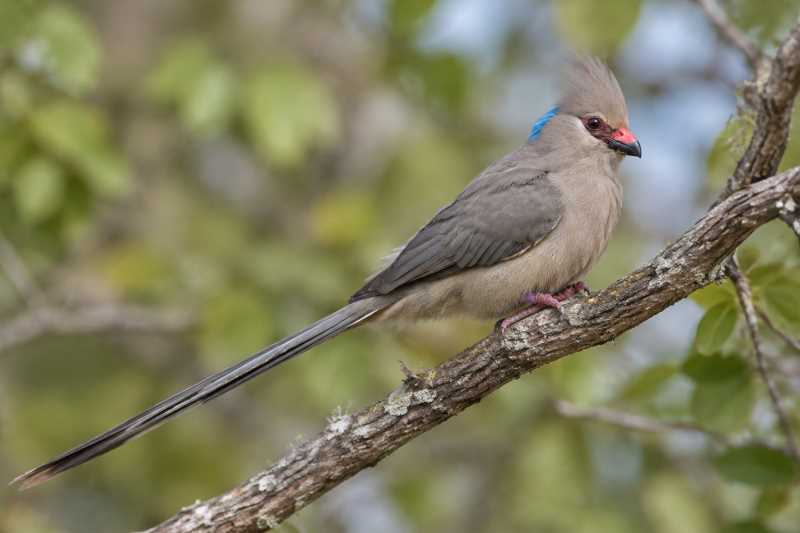
The Blue-naped Mousebird is easily identifiable by its distinctively elongated tail and an overall length ranging from 13 to 15 inches. Its plumage is predominantly gray with a bluish tinge on the nape, which gives the species its name. The bird’s head features a short crest, and its eyes are surrounded by a distinctive patch of bare skin, adding to its unique appearance. These birds have zygodactyl feet, meaning two toes face forward and two backward, an adaptation that aids in their climbing abilities.
Behavior and Social Structure
Mousebirds are highly social creatures, and the Blue-naped Mousebird is no exception. They are often found in small flocks ranging from a few individuals to groups of up to 20 birds. These flocks exhibit tight-knit social structures, engaging in mutual preening and communal roosting. Such behaviors not only strengthen social bonds but also serve practical purposes, such as reducing predation risks and conserving body heat.
Diet and Foraging
The Blue-naped Mousebird is primarily frugivorous, with a diet consisting largely of fruits, berries, and buds. However, they are also known to consume leaves and nectar when fruit is scarce, demonstrating a flexible dietary adaptation. Their foraging habits often involve clambering through foliage with the agility reminiscent of rodents, a behavior that has contributed to their common name. This ability to exploit a range of food sources allows them to thrive in varying ecological conditions.
Reproduction and Nesting
Breeding in Blue-naped Mousebirds is not strictly seasonal and can occur year-round, often influenced by food availability. These birds are monogamous, and both parents participate in building the nest, which is typically situated in the fork of a tree branch. The nest is a loosely constructed cup made of twigs, leaves, and grass. Female mousebirds lay two to three eggs per clutch, and both parents share incubation duties. After hatching, the chicks are altricial, meaning they are born in a relatively undeveloped state and require significant parental care. Fledgling occurs about two to three weeks after hatching, with young birds remaining with their parents for a few more weeks post-fledging.
Ecological Role
As frugivores, Blue-naped Mousebirds play a crucial role in seed dispersal, contributing to the health and regeneration of their habitats. By consuming fruits and excreting seeds at different locations, they facilitate plant diversity and help maintain the ecological balance in their environments.
Conservation Status
Currently, the Blue-naped Mousebird is listed as a species of Least Concern by the International Union for Conservation of Nature (IUCN). Despite this favorable status, they face threats from habitat destruction caused by agricultural expansion and urban development. Conservation efforts focused on habitat preservation are essential to ensure the continued survival of these birds.
Conclusion
The Blue-naped Mousebird exemplifies the beauty and adaptability of avian species. Its ability to thrive across diverse habitats, coupled with its social nature and ecological importance, makes it a fascinating subject of study. As we continue to explore the complexities of avian life, the Blue-naped Mousebird remains a testament to the intricate balance of nature and the resilience of wildlife in the face of environmental challenges.
For bird enthusiasts and researchers alike, understanding the life and habits of the Blue-naped Mousebird provides valuable insights into the broader ecological systems of sub-Saharan Africa, highlighting the intricate relationships between species and their environments.
Related posts