The Enigmatic Black Wood Pigeon: A Conservation Perspective
Introduction
The Black Wood Pigeon, scientifically known as Columba janthina, is a remarkable species within the Columbidae family. This pigeon species, notable for its elusive nature and striking plumage, inhabits the forested regions of East Asia. Its presence spans across Japan, South Korea, Taiwan, and parts of China. Despite its striking appearance, the Black Wood Pigeon remains relatively unknown outside of ornithological circles. This article delves into the characteristics, habitat, and conservation status of this unique bird.
Physical Characteristics
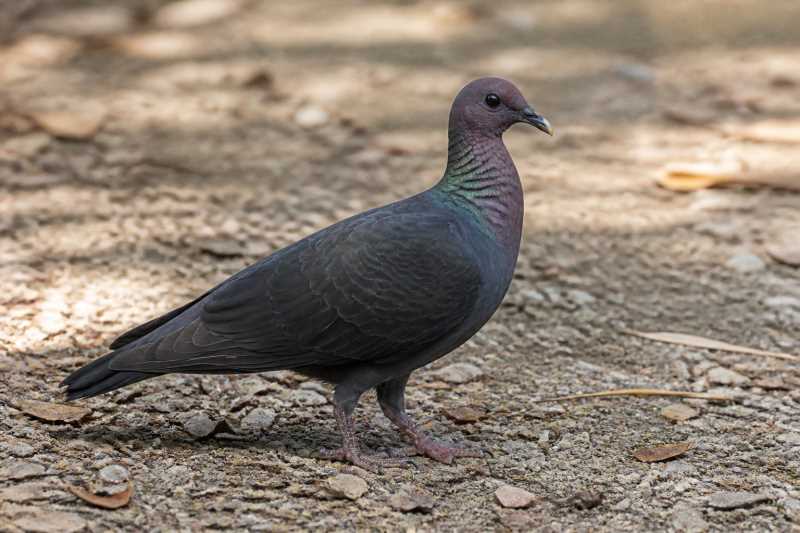
The Black Wood Pigeon is distinguished by its dark, glossy plumage, which ranges from deep black to iridescent green and purple, depending on the light and the bird’s posture. Adult pigeons can reach a length of 43 centimeters, making them relatively large compared to other pigeon species. Their eyes are a vivid yellow, contrasting sharply with their dark feathers, and they possess a robust, black beak. The subtle beauty of their plumage often draws comparisons to the more well-known Nicobar pigeon.
Habitat and Distribution
Primarily inhabiting dense forests, the Black Wood Pigeon prefers subtropical and temperate regions. These birds are arboreal, spending most of their time in the forest canopy. Their distribution is quite fragmented, limited to islands and coastal areas where their preferred habitats remain relatively undisturbed by human activity.
In Japan, they are primarily found on the Ryukyu Islands, while in Korea, they are seen on Jeju Island. Taiwanese populations are mostly concentrated in the mountainous regions. The habitat choice is largely influenced by the availability of food resources and nesting sites, as these pigeons rely heavily on fruit-bearing trees for sustenance.
Behavior and Diet
Black Wood Pigeons are known for their reclusive and shy nature, often staying hidden from human eyes. They are predominantly frugivorous, feeding on a variety of fruits, seeds, and occasionally, small invertebrates. Their diet is crucial for the seed dispersal of many forest trees, highlighting their ecological importance.
These pigeons are monogamous, forming strong pair bonds. Breeding season varies depending on the region but generally occurs in the warmer months. Nests are typically built high in the trees to protect from ground predators, using twigs and leaves to create a simple yet effective structure. Females usually lay one or two eggs per clutch, which are incubated by both parents.
Conservation Status
The Black Wood Pigeon is currently listed as Near Threatened on the IUCN Red List. The primary threats to their survival include habitat loss due to deforestation and human encroachment, as well as predation by introduced species such as rats and snakes. In some areas, climate change poses an additional threat by altering the distribution and availability of their food sources.
Efforts to conserve this species focus on habitat preservation and restoration, along with monitoring populations to better understand their ecology and behavior. Some local governments have implemented protected areas to safeguard critical habitats, and ongoing research aims to develop effective conservation strategies.
Conclusion
The Black Wood Pigeon is a symbol of the rich biodiversity found in East Asian forests. Its survival is intricately linked to the health of its forest habitat, making it an important species for conservation efforts. As we continue to learn more about these enigmatic birds, it becomes increasingly clear that their protection requires a concerted effort from local communities, governments, and international conservation organizations.
Preserving the habitat of the Black Wood Pigeon not only supports this unique species but also benefits the broader ecosystem. By fostering a deeper understanding and appreciation of these remarkable birds, we can ensure that future generations have the opportunity to experience the beauty and mystery of the Black Wood Pigeon.
References
- BirdLife International. "Columba janthina." The IUCN Red List of Threatened Species 2021.
- Ornithological Society of Japan. "Birds of Japan: Field Guide and Conservation."
- Global Forest Watch. "Forests of East Asia: Biodiversity and Conservation Challenges."
Related posts