The Kosrae Fruit Dove: A Jewel of the Pacific’s Avifauna
Nestled in the heart of the Pacific Ocean, the island of Kosrae in Micronesia serves as a sanctuary for a variety of unique species. Among its most colorful residents is the Kosrae Fruit Dove (Ptilinopus hernsheimi), a bird that captivates both ornithologists and nature enthusiasts alike. This article delves into the fascinating world of the Kosrae Fruit Dove, exploring its characteristics, habitat, and conservation challenges.
Physical Characteristics
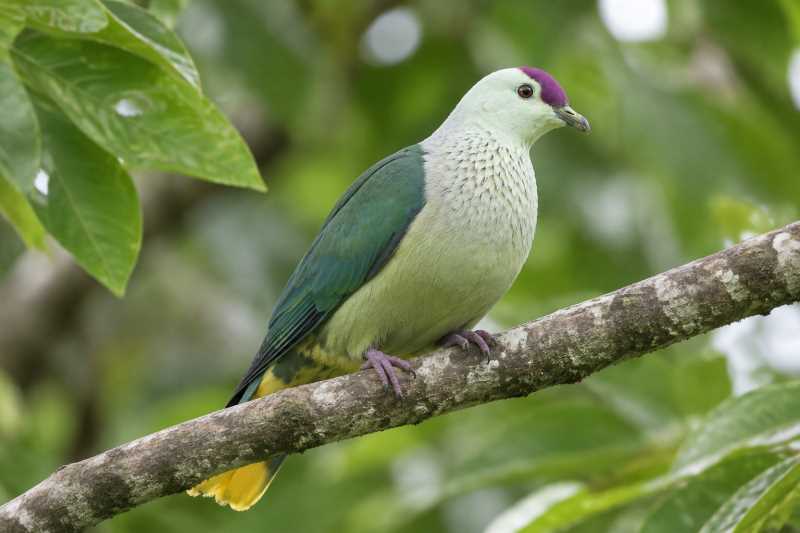
The Kosrae Fruit Dove is a small yet striking bird. Measuring about 20-23 centimeters in length, it is adorned with a vibrant plumage that ranges from lush greens to bright yellows, providing a perfect camouflage within the island’s dense forest canopy. The dove’s head and neck feature a softer shade of green, seamlessly blending into its surroundings. Its eyes are a deep red, contrasting beautifully with the subtle hues of its feathers.
This species is known for its gentle cooing, a soothing sound that resonates through the forest and contributes to the tranquil ambiance of Kosrae’s natural landscape. The dove’s call is a crucial aspect of its behavior, serving as a communication tool among its kind, especially during the breeding season.
Habitat and Diet
The Kosrae Fruit Dove thrives in the island’s tropical rainforest, a habitat that offers ample food sources and nesting sites. The bird is frugivorous, primarily feeding on a variety of fruits, berries, and occasionally seeds. Its diet plays a significant role in the ecological balance of the island, as the dove aids in seed dispersal through its feeding habits, thereby contributing to the regeneration of the forest.
These doves are typically found in the upper and mid-canopy levels of the forest, where they can easily access fruiting trees and avoid ground predators. The lush, humid environment of Kosrae provides the perfect setting for the Kosrae Fruit Dove to thrive, although this paradise is not without its challenges.
Breeding and Behavior
Breeding season for the Kosrae Fruit Dove usually occurs during the wetter months, when food is abundant. The species practices monogamy, with pairs forming long-lasting bonds. The male dove is known for its courtship display, which involves a series of elaborate dances and vocalizations designed to woo the female.
Once a pair bonds, they work together to build a nest, typically a flimsy structure made of twigs and leaves, carefully positioned in the fork of a tree. The female usually lays one or two eggs, which both parents incubate. This shared parenting continues after hatching, with both male and female taking turns feeding the chicks until they are ready to fledge.
Conservation Status and Challenges
While the Kosrae Fruit Dove is currently classified as Least Concern by the International Union for Conservation of Nature (IUCN), it faces several threats that could impact its future. Habitat loss due to deforestation and land development poses a significant threat to the species. Additionally, the introduction of invasive species, such as rats and snakes, could disrupt the delicate ecological balance of the island, preying on eggs and young birds.
Conservation efforts are crucial to ensure the survival of this unique species. Protecting the natural habitat of the Kosrae Fruit Dove is paramount, requiring collaboration between local authorities, conservationists, and the community. Sustainable land use practices and environmental education can help mitigate some of the threats faced by this beautiful bird.
Importance to Kosrae and Beyond
The Kosrae Fruit Dove holds cultural significance for the local people, often featured in traditional stories and artwork. Its presence is not only a symbol of the island’s rich biodiversity but also a reminder of the interconnectedness of all living things.
Globally, the Kosrae Fruit Dove serves as a symbol of the unique biodiversity of the Pacific Islands. It highlights the importance of preserving these isolated ecosystems, which harbor species found nowhere else on Earth. By protecting these environments, we safeguard a wealth of natural heritage and ensure that future generations can continue to marvel at the wonders of nature.
In conclusion, the Kosrae Fruit Dove is more than just a bird; it is an ambassador of its island home. Its vibrant presence and ecological role are vital to the health of Kosrae’s forests. Through concerted conservation efforts, we can ensure that the gentle cooing of the Kosrae Fruit Dove continues to echo through the island’s lush canopies for years to come.
Related posts