The Graceful Pitta: A Jewel of the Indonesian Rainforests
In the lush, verdant rainforests of Indonesia, a vibrant avian gem flits through the dense undergrowth — the Graceful Pitta (Erythropitta venusta). Known for its striking plumage and elusive nature, this bird captivates ornithologists and birdwatchers alike, representing the rich biodiversity of Southeast Asia. With the ever-increasing pressures of environmental change, understanding and preserving such species has never been more crucial.
Taxonomy and Description
The Graceful Pitta belongs to the family Pittidae, a group of birds renowned for their vivid colors and ground-dwelling habits. The scientific name Erythropitta venusta reflects its enchanting beauty, with ‘Erythro’ referring to the reddish hues predominant in its plumage, while ‘venusta’ translates to charming or graceful.
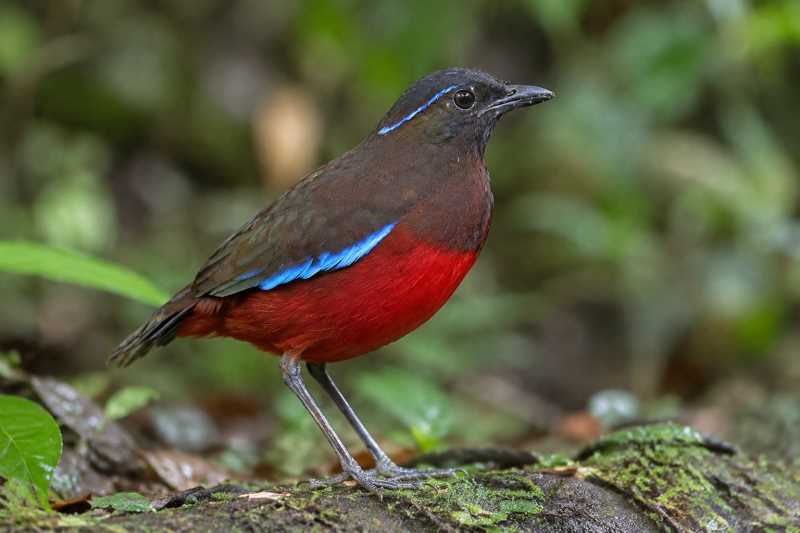
This species is relatively small, measuring about 15 to 17 centimeters in length and weighing approximately 50 to 70 grams. The Graceful Pitta’s plumage is a work of art — a vibrant palette of crimson, azure, and emerald. Its back and wings are primarily a bright red, contrasted with a deep blue crown and tail. The underparts are a soft brown, providing a subtle counterpoint to its bold coloration. These vivid colors serve as both a means of communication among individuals and a strategy for camouflage amid the forest’s dappled light.
Habitat and Distribution
Endemic to Sumatra, an island in western Indonesia, the Graceful Pitta inhabits lowland and montane forests. These ecosystems are characterized by their dense canopy and rich biodiversity, providing ample resources and cover for the species. Typically, the bird is found at elevations ranging from sea level up to 1,500 meters.
The species’ preference for intact, primary forests makes it particularly vulnerable to habitat destruction. Deforestation for agriculture, logging, and human settlement encroaches on its habitat, fragmenting the forest and threatening its survival. Conservation efforts are crucial to preserving these vital habitats, not only for the Graceful Pitta but for countless other species that share its home.
Behavior and Ecology
As a ground-dwelling bird, the Graceful Pitta spends much of its time foraging on the forest floor. Its diet primarily comprises insects, earthworms, and small invertebrates, which it skillfully extracts from the leaf litter using its stout bill. This foraging behavior plays a critical role in the forest ecosystem, aiding in the decomposition process and nutrient cycling.
Graceful Pittas are known for their elusive nature, often heard rather than seen. Their calls, a series of melodious whistles, echo through the forest, serving as a primary means of communication and territorial defense. Breeding usually occurs during the wet season, when food resources are abundant. The nest, constructed from leaves and twigs, is typically built on the ground, hidden among the dense undergrowth.
Conservation Status
The International Union for Conservation of Nature (IUCN) currently classifies the Graceful Pitta as Near Threatened. This designation reflects its decreasing population and the ongoing threats to its habitat. Despite its elusive nature, the species’ reliance on pristine forest environments makes it particularly susceptible to habitat loss.
Conservation initiatives aimed at protecting the Graceful Pitta focus on preserving its natural habitat through the establishment of protected areas and promoting sustainable land-use practices. Additionally, raising awareness about the importance of biodiversity and the plight of endemic species like the Graceful Pitta is vital for garnering support for conservation efforts.
The Importance of Biodiversity
The Graceful Pitta is more than just a beautiful bird; it is an integral part of the forest ecosystem. Its presence indicates the health of its environment, acting as a barometer for the overall wellbeing of the forest. Protecting such species is crucial not only for their intrinsic value but also for the ecosystem services they provide.
Biodiversity is essential for maintaining ecosystem function and resilience. The variety of life forms, from the smallest microorganisms to the largest mammals, contributes to the stability and productivity of ecosystems. Each species plays a unique role, and the loss of even one can have cascading effects throughout the ecosystem.
Conclusion
The Graceful Pitta stands as a symbol of the natural beauty and biodiversity of the Indonesian rainforests. Its vibrant plumage and elusive behavior captivate all who are fortunate enough to encounter it. However, the challenges it faces underscore the broader environmental issues threatening countless species worldwide.
Conserving the Graceful Pitta requires a multi-faceted approach, combining habitat protection, sustainable development, and public education. By safeguarding habitats and promoting biodiversity, we can ensure that future generations will continue to be inspired by the wonders of the natural world.
As stewards of the planet, it is our responsibility to protect and preserve the rich tapestry of life that surrounds us. The Graceful Pitta, with its delicate balance of beauty and vulnerability, reminds us of the fragility and resilience of nature.
Through concerted conservation efforts and a commitment to sustainability, we can help secure a future where the Graceful Pitta and myriad other species thrive in the wild, enriching our world with their presence and diversity.
Related posts