The Elusive North Island Kōkako: A Treasure of New Zealand’s Avian World
Introduction
New Zealand, a land renowned for its unique biodiversity, is home to a plethora of extraordinary bird species. Among these, the North Island Kōkako (Callaeas wilsoni) stands out not only for its striking appearance but also for its hauntingly beautiful song. This article delves into the world of the North Island Kōkako, exploring its habitat, behavior, conservation status, and the efforts being undertaken to ensure its survival.
Description and Characteristics
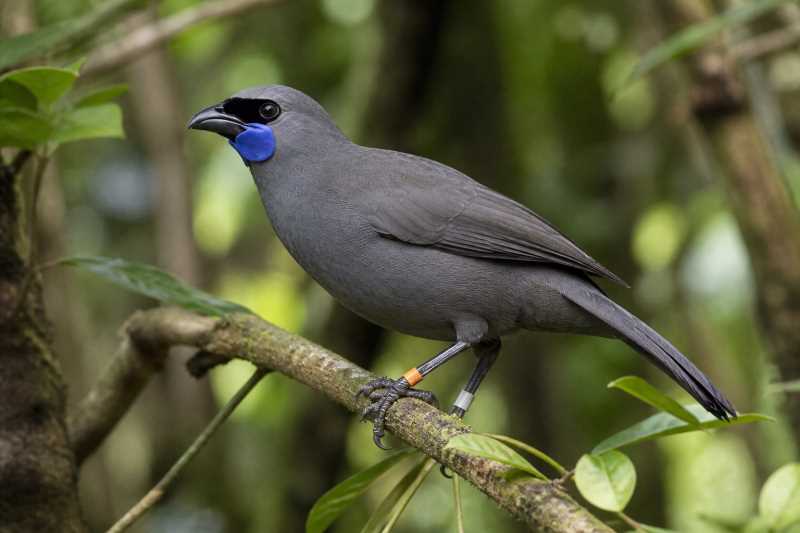
The North Island Kōkako is a medium-sized bird, approximately 38 cm in length, with a distinctive blue-grey plumage that glistens in the dappled forest light. One of its most striking features is the pair of bright blue wattles that hang from the corners of its beak, which can become engorged and more vibrant during the breeding season. The bird’s long tail and strong legs are well-adapted for its life in the forest canopy.
Kōkako are known for their enchanting song, often described as a series of rich, melodious notes that can carry over long distances. This song is not only a means of communication but also plays a crucial role in territorial defense and mate attraction.
Habitat and Distribution
Historically, the North Island Kōkako was widespread across the North Island of New Zealand. However, due to habitat destruction and the introduction of predatory species, its range has significantly diminished. Today, these birds are primarily found in isolated pockets of native forest, including areas such as the Pureora Forest Park, the Hunua Ranges, and the Rotoehu Forest.
Kōkako prefer mature, dense forests where they can find abundant food sources and suitable nesting sites. Their diet consists mainly of fruits, leaves, and invertebrates, making them important players in the ecosystem as seed dispersers.
Behavior and Ecology
Kōkako are generally sedentary and territorial birds. They are often seen in pairs or small family groups, foraging through the forest canopy. Their strong, agile legs allow them to navigate the dense foliage with ease, although they are weak fliers and tend to glide from tree to tree rather than engage in sustained flight.
The breeding season for the North Island Kōkako typically runs from October to March. During this time, pairs engage in elaborate courtship displays, which include singing duets and mutual preening. Nests are constructed high in the canopy using twigs and lined with softer materials. Both parents share the responsibility of incubating the eggs and feeding the chicks.
Conservation Status and Threats
The North Island Kōkako is currently classified as "At Risk – Recovering" under New Zealand’s Threat Classification System. This status reflects the ongoing conservation efforts that have helped stabilize and, in some areas, increase their population numbers. However, the species remains vulnerable to a range of threats.
Habitat loss due to logging and land conversion has been a significant historical threat to the Kōkako. Additionally, introduced predators such as rats, stoats, and possums pose a significant risk by preying on eggs, chicks, and even adult birds. Conservationists also face the challenge of genetic bottlenecking, as the remaining populations are often small and isolated.
Conservation Efforts
Conservation efforts for the North Island Kōkako have been multi-faceted, involving habitat protection, predator control, and active management of populations. One of the most successful initiatives has been the establishment of pest-free sanctuaries, where intensive predator control measures are implemented to create safe havens for Kōkako and other native species.
Translocation programs have also been employed to establish new populations in areas where Kōkako have been locally extinct. These programs involve capturing birds from stable populations and releasing them into suitable habitats that have been cleared of predators.
Community involvement has been a cornerstone of Kōkako conservation efforts. Local communities, iwi (Māori tribes), and conservation groups work together to monitor populations, carry out pest control, and educate the public about the importance of preserving these iconic birds.
The Role of Research and Monitoring
Scientific research and monitoring play crucial roles in the conservation of the North Island Kōkako. Studies on their ecology, behavior, and genetics provide valuable insights that inform management strategies. Regular population surveys help track the success of conservation efforts and identify areas where additional work is needed.
Emerging technologies such as bioacoustic monitoring are also being utilized to study Kōkako populations. These technologies allow researchers to record and analyze bird calls, providing data on population density, distribution, and behavior without the need for direct observation.
Conclusion
The North Island Kōkako is a symbol of New Zealand’s unique natural heritage. While the species faces numerous challenges, the dedicated efforts of conservationists, researchers, and local communities offer hope for its continued recovery. By protecting and restoring native forests, controlling predators, and fostering public awareness, New Zealand can ensure that the haunting song of the Kōkako will continue to echo through its forests for generations to come.
The story of the North Island Kōkako is one of resilience and hope, serving as a testament to the power of collaborative conservation efforts. As we look to the future, it is imperative that these efforts continue to ensure the survival of this remarkable bird and the rich biodiversity of New Zealand.
Related posts