Moreno’s Ground Dove: A Subtle Jewel of the Andes
Nestled within the rugged terrains of the Andes, Moreno’s Ground Dove (Metriopelia morenoi) represents a unique facet of avian biodiversity. Though not as flamboyant as some of its tropical cousins, this bird captivates with its understated beauty and intriguing behaviors. Understanding its habitat, behavior, and conservation status sheds light on the delicate balance of ecosystems in which it thrives.
Habitat and Distribution
Moreno’s Ground Dove is endemic to the high-altitude regions of northwestern Argentina and southern Bolivia. This bird is adapted to life in puna grasslands and rocky slopes, typically found at elevations ranging from 2,000 to 4,000 meters above sea level. The harsh environment of the Andes, characterized by its thin air and cool temperatures, has shaped the dove’s physical and behavioral adaptations.
The puna ecosystem, where Moreno’s Ground Dove predominantly resides, is a high-altitude grassland with scattered shrubs and grasses. It is a biome that supports a variety of wildlife, including other bird species, rodents, and a range of plant life. The dove’s ability to thrive in this ecosystem highlights its adaptability and specialized nature.
Physical Characteristics
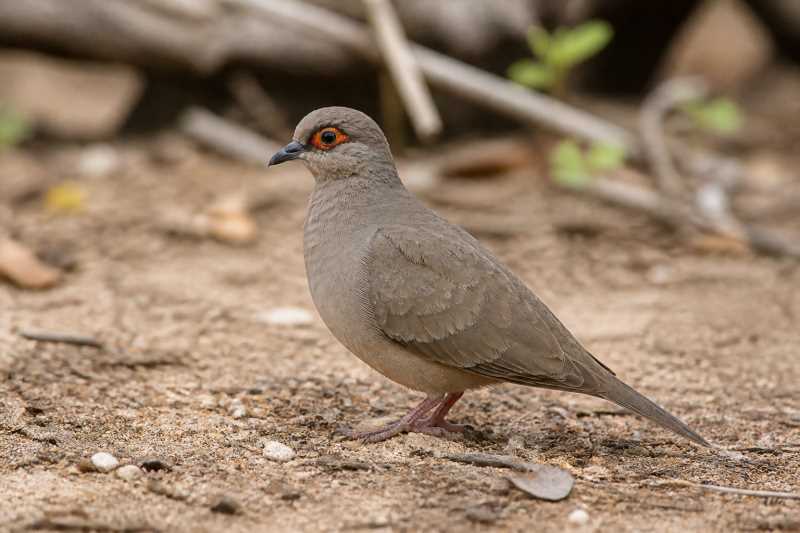
Moreno’s Ground Dove is a small bird, measuring about 18 to 20 centimeters in length. It possesses a compact body, which aids in heat retention—a crucial adaptation for survival in cooler mountain climates. Its plumage is primarily a soft gray, with subtle pinkish hues on the chest and a distinctive white band on the wings visible in flight. This coloration provides excellent camouflage against the rocky terrain and sparse vegetation of its habitat.
The dove’s eyes are adorned with a thin ring of bare skin, which can vary in color from yellow to orange. This feature, along with its straight, short bill and relatively long legs, aids in its foraging habits. Moreno’s Ground Dove is ground-dwelling, primarily feeding on seeds and small insects, foraging through the grasses and undergrowth.
Behavior and Ecology
Social structures within Moreno’s Ground Dove populations are relatively simple. They are often seen in pairs or small flocks, especially during the breeding season. Their vocalizations are soft and cooing, serving as both mating calls and territorial signals. Breeding usually coincides with the rainy season, when food is most abundant.
Nesting sites are typically constructed on the ground, well-hidden within dense grass tufts or under shrubs. The female lays one or two eggs, and both parents share the duties of incubation and chick-rearing. This cooperative breeding strategy enhances the chances of offspring survival in the challenging highland environment.
Conservation Status
The conservation status of Moreno’s Ground Dove is currently listed as Least Concern by the International Union for Conservation of Nature (IUCN). However, this does not imply that the species is free from threats. Habitat degradation, primarily due to overgrazing by livestock and agricultural expansion, poses significant risks to the puna ecosystem. Climate change is another looming threat, potentially altering the delicate balance of high-altitude habitats.
Conservation efforts are focused on habitat preservation and sustainable land management practices. By working with local communities to promote eco-friendly agriculture and livestock practices, conservationists aim to protect not only Moreno’s Ground Dove but the entire puna biome.
The Importance of Moreno’s Ground Dove
Moreno’s Ground Dove serves as a critical indicator species for the health of the puna ecosystem. Its presence reflects the ecological balance and the availability of resources in the region. Protecting this bird means conserving a whole suite of biodiversity, ensuring that the unique high-altitude ecosystems of the Andes continue to thrive.
Moreover, studying Moreno’s Ground Dove provides valuable insights into the adaptations and survival strategies of birds in extreme environments. This knowledge can inform broader conservation strategies and enhance our understanding of avian ecology in mountainous regions.
In conclusion, while Moreno’s Ground Dove may not boast the vibrant colors or widespread fame of some other avian species, its subtle charm and ecological significance make it a vital component of the Andean landscape. Continued research and conservation efforts are essential to ensure that this understated jewel of the Andes continues to grace the skies and slopes of its mountainous home.
Related posts