Introduction
The Striped Roundleaf Bat, scientifically known as Macronycteris vittata, is a fascinating and lesser-known species within the mammalian order Chiroptera. Bats are the only mammals capable of sustained flight, and within this group, the Striped Roundleaf Bat holds a distinctive place. This species is recognized for its unique facial structure, which includes a leaf-shaped projection on its nose. This article provides a comprehensive overview of the Striped Roundleaf Bat, highlighting its physical characteristics, natural habitat, behaviors, and the conservation challenges it faces.
Physical Description
The Striped Roundleaf Bat is a member of the family Hipposideridae, which is characterized by its complex nose-leaf structures used for echolocation. Adult bats typically measure between 50 to 70 mm in forearm length, with a wingspan ranging from 300 to 350 mm. They weigh approximately 12 to 20 grams, making them relatively light and agile fliers.
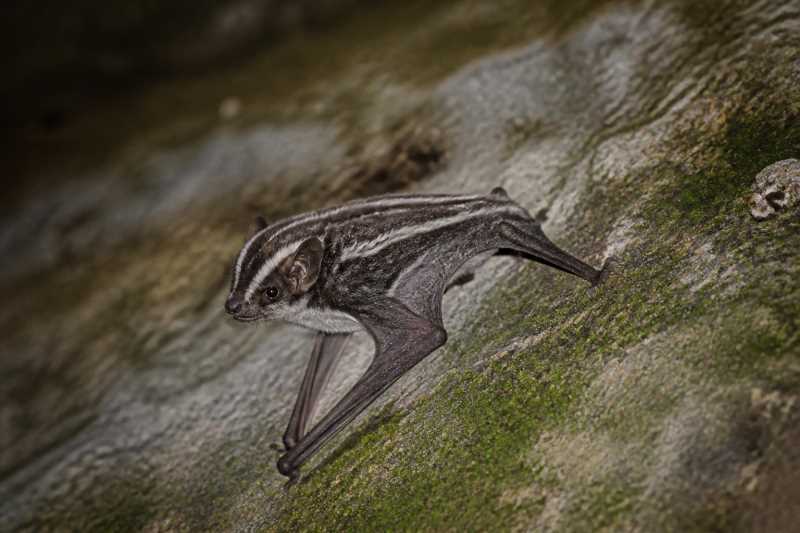
This species is named for the faint stripe that runs across its back, although this feature can sometimes be subtle and vary in prominence. The fur is usually a brown or rusty color, providing effective camouflage in the forested environments it inhabits. The most distinguishing feature, however, is the roundleaf-like structure on its nose, which aids in its sophisticated echolocation abilities.
Range and Habitat
The Striped Roundleaf Bat is predominantly found in Sub-Saharan Africa, with its range spanning several countries including Ghana, Ivory Coast, Nigeria, and Cameroon. These bats thrive in tropical and subtropical forests, where they roost in caves, hollow trees, and sometimes in man-made structures.
Their preferred habitats are humid and dense, offering ample opportunities for feeding and roosting. The presence of water bodies within these forests is crucial, as it supports a rich biodiversity of insects, which constitute the primary diet of these bats. Seasonal migrations are observed in some populations, likely in response to climatic changes and food availability.
Behavior and Diet
Striped Roundleaf Bats are nocturnal creatures, emerging at dusk to forage. They are insectivorous, relying heavily on echolocation to hunt. Their diet primarily consists of moths, beetles, and other small flying insects. The bats use their complex nose-leaf structure to emit and receive high-frequency sound waves, allowing them to navigate and capture prey with remarkable precision.
Socially, these bats are known to form small colonies, often consisting of a few dozen individuals. These groups roost together during the day and disperse at night to forage independently. Communication within colonies involves a series of vocalizations and social grooming, which helps strengthen social bonds.
Identification Tips (Field Recognition Cues)
Identifying the Striped Roundleaf Bat in the field can be a rewarding experience for bat enthusiasts and researchers. Key identification features include:
- Nose-leaf Structure: The prominent roundleaf structure on the nose is a primary diagnostic feature.
- Back Stripe: Look for the subtle stripe running along the back, though its visibility can vary.
- Echolocation Calls: Using bat detectors, the echolocation frequency can help distinguish this species from others.
- Size and Color: Note the small size and brown or rusty fur color.
- Habitat: Observing them in dense, humid forests can be a strong indicator.
Conservation Status (with Threats and Protections)
The International Union for Conservation of Nature (IUCN) currently lists the Striped Roundleaf Bat as a species of Least Concern. However, like many bat species, it faces several threats that could impact its population in the future. Habitat destruction due to logging and agricultural expansion is a significant threat, reducing the availability of suitable roosting and foraging sites.
Additionally, hunting and disturbance at roost sites pose risks, particularly in regions where bats are considered a source of bushmeat. Climate change also presents a looming threat, potentially altering the distribution and abundance of their insect prey.
Conservation efforts for the Striped Roundleaf Bat include habitat protection and restoration, as well as raising awareness about the ecological benefits of bats. Legal protections in some countries help safeguard key habitats, and research into their distribution and ecology continues to be vital.
Frequently Asked Questions
What is the primary diet of the Striped Roundleaf Bat?
The Striped Roundleaf Bat primarily feeds on insects such as moths and beetles. They use echolocation to hunt these small flying insects at night.
How does the Striped Roundleaf Bat use echolocation?
These bats emit high-frequency sound waves through their nose-leaf structure. The returning echoes help them navigate and locate prey in the dark.
Where can I typically find Striped Roundleaf Bats?
They are commonly found in tropical and subtropical forests across Sub-Saharan Africa, roosting in caves, hollow trees, and sometimes buildings.
Are Striped Roundleaf Bats endangered?
Currently, they are listed as Least Concern by the IUCN, but they face threats from habitat destruction and hunting, which could affect their populations.
Why is the Striped Roundleaf Bat important to the ecosystem?
As insectivores, they play a crucial role in controlling insect populations, thus maintaining ecological balance and reducing pest-related damages.
Related posts