Introduction
The Turkestani Long-eared Bat (Otonycteris leucophaea) is a captivating species of vesper bat known for its distinctive long ears and unique lifestyle. It inhabits a range of environments in Central Asia and the Middle East, often adapting to arid and semi-arid regions. This bat species plays a crucial role in controlling insect populations, thereby maintaining ecological balance in its native habitats. Despite its ecological importance, the Turkestani Long-eared Bat faces various challenges that threaten its survival, making it imperative to understand and protect this remarkable species.
Physical Description
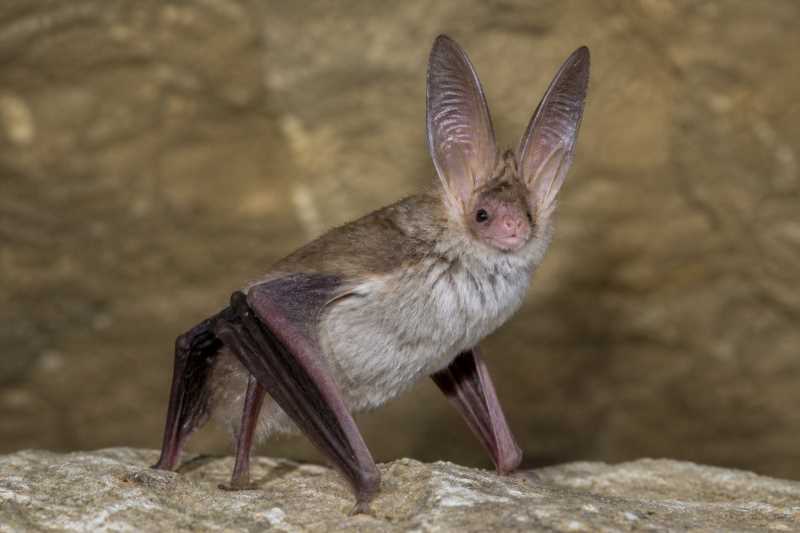
The Turkestani Long-eared Bat is easily distinguishable by its exceptionally long ears, which can measure up to 37 mm, extending well beyond its head. This feature not only aids in echolocation but also gives the bat its namesake. The bat’s body length ranges from 60 to 90 mm, with a wingspan of approximately 350 mm, making it a medium-sized bat within its genus.
The fur of the Turkestani Long-eared Bat is typically a pale, sandy color, which provides excellent camouflage in its desert and semi-desert habitats. The underside is usually lighter, ranging from white to pale grey. This coloration is an adaptation to its dry environment, offering protection against predators by blending into the surrounding landscape.
Another distinctive feature is its broad, leathery wings, which are adapted for agile flight and rapid maneuvers. The tail is relatively short, measuring between 40 to 55 mm, and is partially enclosed within the interfemoral membrane, assisting in balance and flight control.
Range and Habitat
The Turkestani Long-eared Bat is primarily found in the central and western parts of Asia, with its range extending across countries such as Uzbekistan, Kazakhstan, Turkmenistan, Iran, and Afghanistan. It prefers arid and semi-arid habitats, including deserts, dry scrublands, and rocky terrains. These environments provide the necessary cover and roosting sites that the bats need for survival.
Roosting sites are often found in rock crevices, caves, and old buildings. The bats are also known to inhabit abandoned mines and other human-made structures, where they can find shelter from the harsh external conditions.
These bats are adapted to extreme temperatures, often found in areas with significant temperature fluctuations between day and night. This adaptability is crucial for their survival in some of the world’s most challenging environments.
Behavior and Diet
The Turkestani Long-eared Bat is primarily nocturnal, emerging from its roosts at dusk to forage for food. Its diet mainly consists of insects, particularly moths, beetles, and other flying insects. The bat uses echolocation to locate its prey, emitting high-frequency sounds that bounce off objects, allowing it to detect and capture insects with remarkable precision.
During the day, these bats rest in their chosen roosts, often in groups, which provides them with added protection against predators. Social behavior varies, with some bats roosting alone while others prefer the company of small colonies.
The breeding season typically occurs in the spring, with females giving birth to a single pup after a gestation period of approximately two months. The young are born blind and helpless, relying entirely on their mothers for warmth and nourishment until they are capable of flying and hunting on their own.
Identification Tips
To accurately identify the Turkestani Long-eared Bat in the field, look for the following key characteristics:
- Long Ears: The most prominent feature is the bat’s long ears, which are significantly larger than those of most other bat species.
- Coloration: Note the pale, sandy coloration of the fur, which helps it blend into its desert surroundings.
- Size: Medium-sized with a wingspan of around 350 mm and a body length of 60 to 90 mm.
- Roosting Behavior: Often found in rock crevices, caves, and old structures, especially in arid regions.
These identification cues can help researchers and enthusiasts distinguish the Turkestani Long-eared Bat from other bat species in its range.
Conservation Status
The conservation status of the Turkestani Long-eared Bat is currently classified as "Least Concern" by the International Union for Conservation of Nature (IUCN). However, this does not mean the species is free from threats. Habitat destruction, particularly due to human expansion and development, poses a significant risk to their populations. Additionally, climate change and pesticide use reduce insect prey availability, further threatening their survival.
Conservation efforts are essential to mitigate these threats. Protecting natural habitats and implementing measures to reduce pesticide use can help preserve the populations of this and other bat species. Research and monitoring are also critical to understanding population trends and developing effective conservation strategies.
Frequently Asked Questions
1. What do Turkestani Long-eared Bats eat?
Turkestani Long-eared Bats primarily feed on insects, including moths and beetles. They use echolocation to detect and capture their prey with precision.
2. Where can I find Turkestani Long-eared Bats?
These bats are found in Central Asia and the Middle East, inhabiting arid and semi-arid environments such as deserts and rocky terrains.
3. How do Turkestani Long-eared Bats use their long ears?
The long ears of these bats aid in echolocation, allowing them to detect high-frequency sounds and locate prey in the dark.
4. What threats do Turkestani Long-eared Bats face?
Major threats include habitat destruction due to human activities, climate change, and reduced prey availability due to pesticide use.
5. Are Turkestani Long-eared Bats social animals?
While some individuals may roost alone, others form small colonies for protection and social interaction.
Understanding and conserving the Turkestani Long-eared Bat is crucial for maintaining ecological balance in its native habitats. Through continued research and conservation efforts, we can ensure the survival of this unique and fascinating species.
Related posts