Introduction
The Baker’s Yellow-shouldered Bat, scientifically known as Sturnira bakeri, is a fascinating mammal that belongs to the family Phyllostomidae. This species is part of the larger group of New World leaf-nosed bats, renowned for their diverse range of ecological roles and adaptations. Named after its distinctive yellow shoulder patches, the Baker’s Yellow-shouldered Bat is a key player in its ecosystem, contributing to seed dispersal and pollination. This article delves into the various aspects of this intriguing species, including its physical characteristics, habitat, behavior, and conservation status.
Physical Description
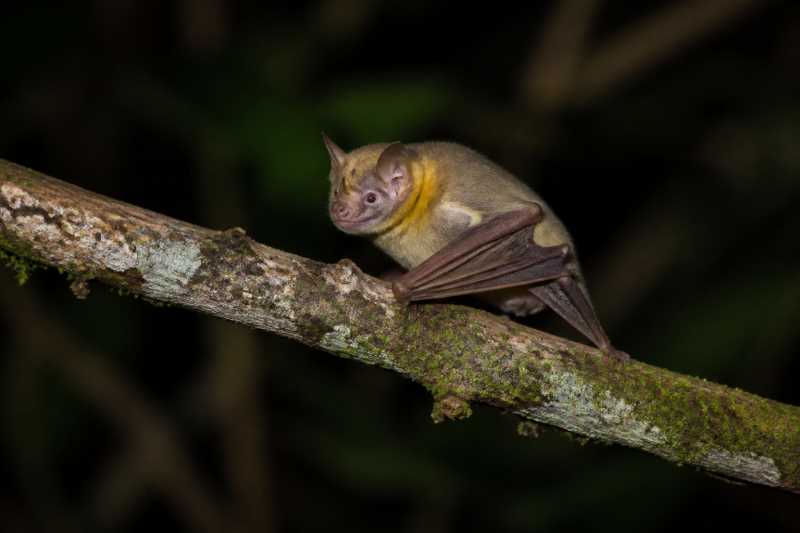
Baker’s Yellow-shouldered Bat is characterized by its medium size, typically measuring between 60 to 80 millimeters in length, with a wingspan of 30 to 35 centimeters. The bat’s fur is predominantly dark gray or brown, providing excellent camouflage against the bark and foliage of its arboreal habitat. However, its most distinguishing feature is the striking yellow patches on its shoulders, which are more pronounced in males and serve as a visual cue during mating rituals.
The bat’s face is adorned with a leaf-like nose structure, a hallmark of the Phyllostomidae family, which aids in echolocation and foraging. Its ears are moderately sized and rounded, with a keen sense of hearing that complements its nocturnal lifestyle. The dental structure of Sturnira bakeri is adapted for its frugivorous diet, with sharp canines and molars capable of crushing fruit pulp and seeds.
Range and Habitat
Sturnira bakeri is primarily found in the tropical and subtropical regions of Central and South America. Its range extends from southern Mexico through Central America, reaching as far south as northern Colombia and Venezuela. The bat prefers humid, lowland rainforests, but it can also be found in montane forests and agricultural areas where fruit trees are abundant.
The species is highly adaptable and can thrive in both primary and secondary forests. It tends to roost in tree cavities, banana plants, and occasionally in man-made structures. Such adaptability in habitat selection ensures its survival across a range of environmental conditions, although it is sensitive to large-scale habitat destruction.
Behavior and Diet
Baker’s Yellow-shouldered Bat is primarily nocturnal, emerging from its roost at dusk to forage for food. Its diet is predominantly frugivorous, consisting mainly of fruits from plants such as figs, guavas, and various Piper species. The bat plays an essential role in seed dispersal, as it often carries the fruits away from the parent plant before consuming them, thereby aiding in forest regeneration.
In addition to fruits, Sturnira bakeri occasionally supplements its diet with nectar and pollen, making it an occasional pollinator. Social behavior is prominent in this species, with individuals often roosting in small groups. Vocalizations and scent markings are used to communicate within these groups, particularly during mating seasons.
Identification Tips (Field Recognition Cues)
Identifying the Baker’s Yellow-shouldered Bat in the field requires careful observation of several key characteristics:
- Yellow Shoulder Patches: Look for the distinctive yellow patches on the shoulders, especially in males.
- Leaf-like Nose: The prominent nose leaf is a reliable identifier of the Phyllostomidae family.
- Size and Coloration: Note the medium size and dark fur coloration, which helps in distinguishing it from other bat species in the area.
- Flight Pattern: Observe its agile and acrobatic flight, common in frugivorous bats as they navigate through dense forest canopies.
Conservation Status (with Threats and Protections)
As of the latest assessments, Baker’s Yellow-shouldered Bat is not listed as endangered, but it faces several threats that could impact its population. The primary threat is habitat loss due to deforestation for agriculture, logging, and urban expansion. The fragmentation of its natural habitat can lead to reduced foraging areas and roosting sites.
Conservation efforts for Sturnira bakeri include habitat protection and restoration, as well as the establishment of protected areas within its range. In some regions, local governments and NGOs are working to educate communities about the ecological importance of bats and promote sustainable land-use practices.
Frequently Asked Questions
1. What do Baker’s Yellow-shouldered Bats eat? Baker’s Yellow-shouldered Bats primarily consume fruits such as figs and guavas. They also occasionally feed on nectar and pollen.
2. Where can Baker’s Yellow-shouldered Bats be found? These bats are found in tropical and subtropical regions of Central and South America, from southern Mexico to northern Colombia and Venezuela.
3. How do Baker’s Yellow-shouldered Bats contribute to the ecosystem? They play a crucial role in seed dispersal and pollination, aiding in forest regeneration and plant diversity.
4. Are Baker’s Yellow-shouldered Bats endangered? While not currently endangered, they face threats from habitat loss due to deforestation and land-use changes.
5. How can I identify a Baker’s Yellow-shouldered Bat? Look for yellow shoulder patches, a leaf-like nose, and observe their size, coloration, and flight patterns.
Related posts